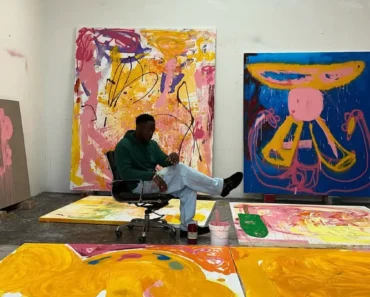
The Iceland pavilion at this year’s Venice Biennale will exhibit pocket universeis a new multidisciplinary project by artist, poet, composer and filmmaker Ásta Fanney Sigurðardóttir.
The exhibition, co-curated by Margrethe Askelsdottir and Unal Aoun, will take place from 9 May to 22 November 2026 at the Cantieri Cucchini pier in the San Pietro di Castro district of Venice, a former shipyard between the Giardini and Armory grounds of the Biennale.
The exhibition will span a range of indoor and outdoor spaces, combining performance, sound, moving image, sculpture and installation. Sigurdóttir’s work often moves between these mediums, bringing together different stories and timelines rather than following a single narrative.
Related articles

The centerpiece of the exhibition is a moving image work that tells the story of a character named “Creature Zero” who sets out to find the “Primordial Rock,” imagined as the first step in the creation of the Earth. Shot in locations associated with mystical or spiritual traditions, the work draws on myths and stories from different cultures to explore how faith and imagination shape the way people move forward in uncertain times.
Throughout the pavilion, recurring elements such as spheres, amulets and talismans appear alongside live actions and performances that take place at different moments during the Biennale.
Sigurðardóttir said part of the project grew out of her reflections on the idea of hope. “Hope is such a strange word,” she said. “It’s only there when you need it, and even then you’re not sure you have it.”
According to the artist, the title of the exhibition also comes from a linguistic coincidence: in Icelandic, the word for vase (an object associated with the myth of Pandora) is the same as the word for pocket. The idea led her to imagine what she describes as “an endless invisible pocket filled with hope that can never be exhausted.”
“I think this exhibition is a place where there are no expectations,” she said. “Wherever the exhibition takes the viewer, that’s where it should go.”
For curator Margrethe Askelsdottir, organizing the pavilion means creating the right conditions for the artist’s open creative process. “With Ásta, everything is possible,” says Áskelsdóttir. “There’s a constant balancing act: How do we hold space for limitless creativity without letting it descend into chaos?”
She describes the role of the curator as supporting the work while guiding the institutional framework of the Biennale.
“Imagine a stairway to heaven made of porcelain plates,” she said. “The artist needs to be able to go all the way into the sky, and it’s our responsibility to make sure the plate doesn’t break beneath her feet.”
The pavilion was commissioned by the Iceland Art Center, which has overseen Iceland’s participation in the Venice Biennale since 2007. Iceland has had a national pavilion at the exhibition since 1984, with recent presentations including projects by Hildigunnur Birgisdóttir in 2024, Sigurður Guðjónsson in 2022 and Shoplifter in 2019.