It seems cats have always been beloved by humans (dog lovers, please look away). They were worshiped, mummified, associated with gods, and prized for their rat-catching abilities and affectionate nature.
But so far, no such extensive book has documented their impact. That’s where Cats, Phaidon’s latest work, comes in, celebrating felines with more than 200 images, edited by Phaidon’s Olivia Clark and accompanied by essays by award-winning kitten rescuer and author Hannah Shaw and Leïla Jarbouai, chief curator of graphic arts and drawings at the Musée d’Orsay.
“I felt like there weren’t any ‘cool’ books about cats in art and pop culture,” says Olivia. “My goal was to produce books that were striking in design and artwork, but still vibrant and not dumbed down, telling diverse and contemporary stories about cats in a visual world, especially emphasizing humans’ love for these animals and the symbiotic relationship that spans time and culture.”
Inside, you’ll find cats, cats, and more cats, depicted in a variety of mediums and backgrounds. Among them are a painting of a cat called Clementine by American artist Hilary Pecis, a reflective cat by Lydia Blakeley, a 19th-century pamphlet from Thailand that reveals the secrets behind Siamese cat markings, as well as works by Tracey Emin, Kerry James Marshall, Louis Wayne Wain, Henri Matisse and Judy Chicago, among others. Not to mention characters like Puss in Boots and the Cheshire Cat.
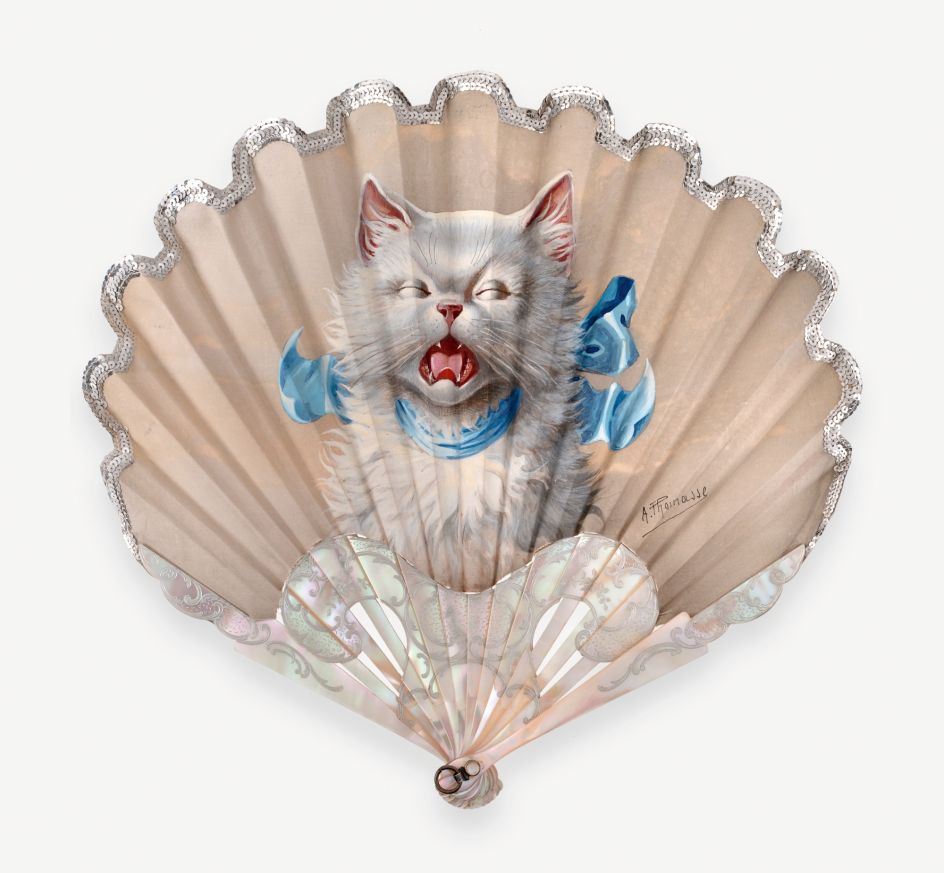
This vintage “cat fan” was painted by French artist Adolphe Thomasse and made by Duvelrooy around 1905
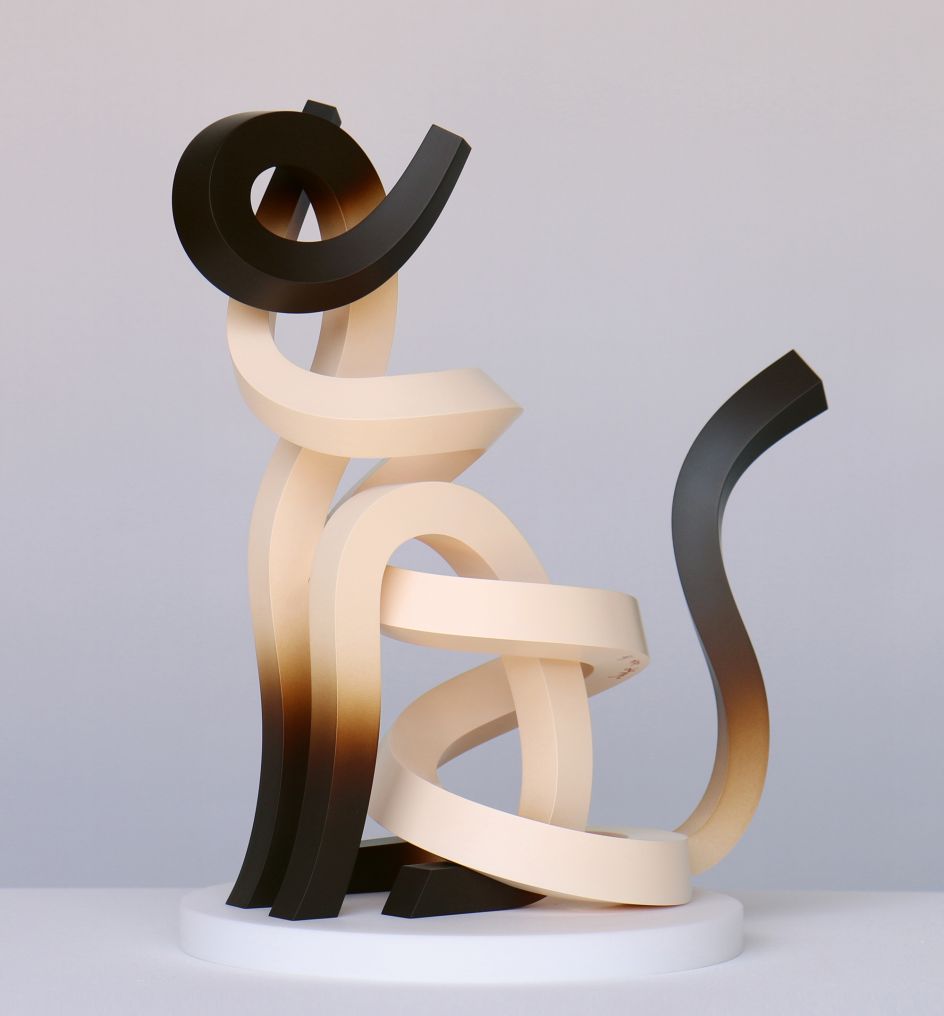
Siamese cat sitting © Lee Sangsoo
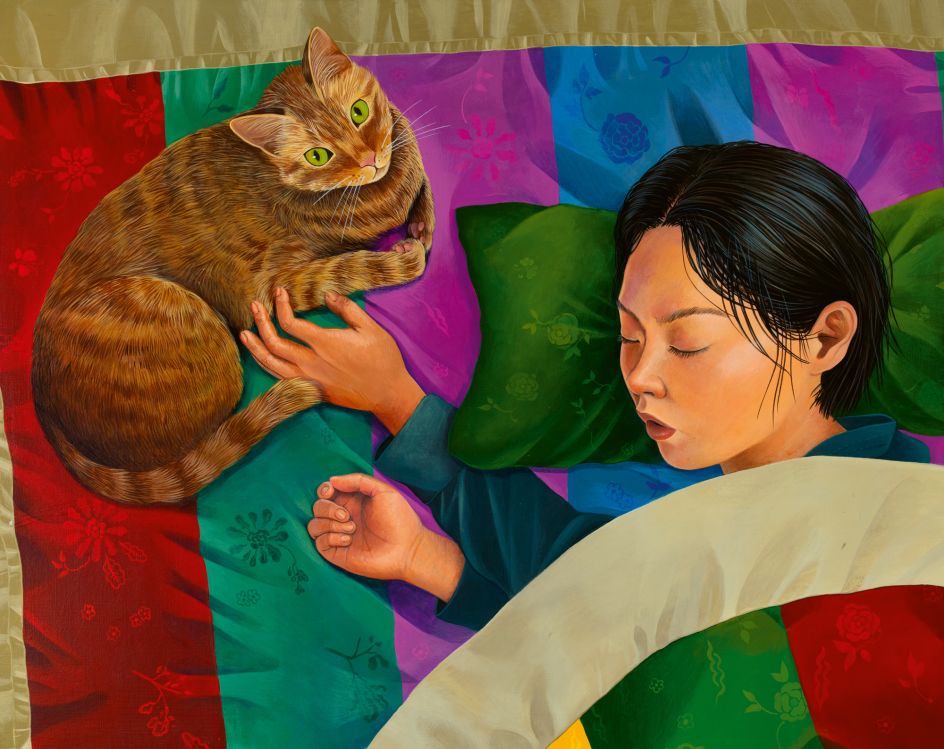
Nap © Jingmei ‘Sally’ Han
With so much work over the years, you can imagine a lengthy editing process to pare it down. Olivia explained that there was initially a long list of nearly 1,000 potential entries, and a panel of experts helped narrow it down to around 200. Olivia also collaborates with an international group of curators, cat behaviourists, artists and the founding director of New York’s first cat museum.
As you leaf through the book, you’ll notice that each image is paired with a corresponding image – demonstrating similarities in style, gesture, or composition, or even juxtapositions between them. “The way we make these books is pretty old-school, where we print out every possible piece and then start matching them into interesting visual juxtapositions,” explains Olivia. “I have cuts all over my floor that my cat Mocha loves to lie on, and then predictably, he swoops over and kicks up a paper tornado, and in that moment I feel like I’ve got it all locked in.” She wanted readers to be captivated by every page, and she didn’t disappoint. Each exhibit feels like its own mini exhibition.
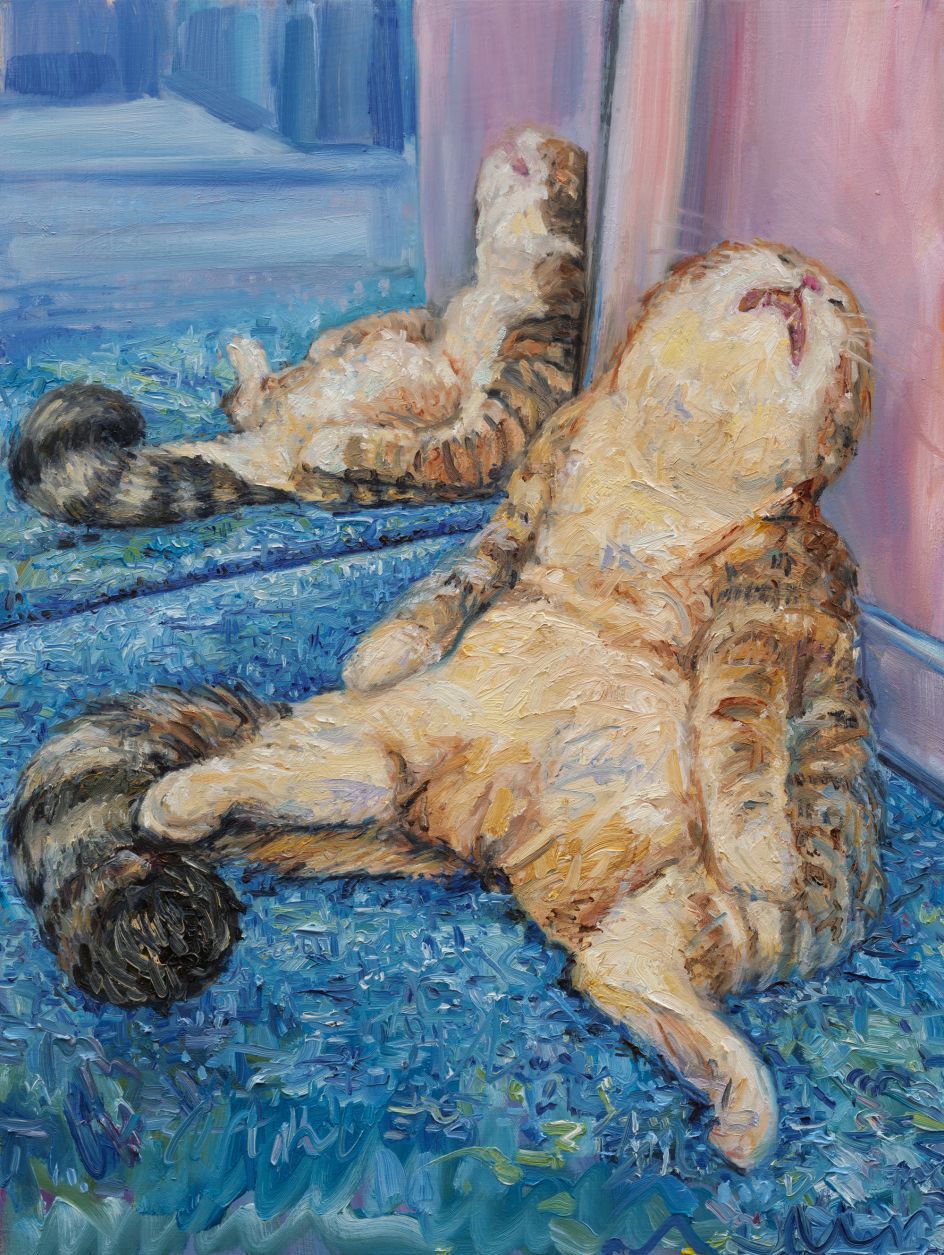
Untitled (#2), 2022 © Jodie Niss
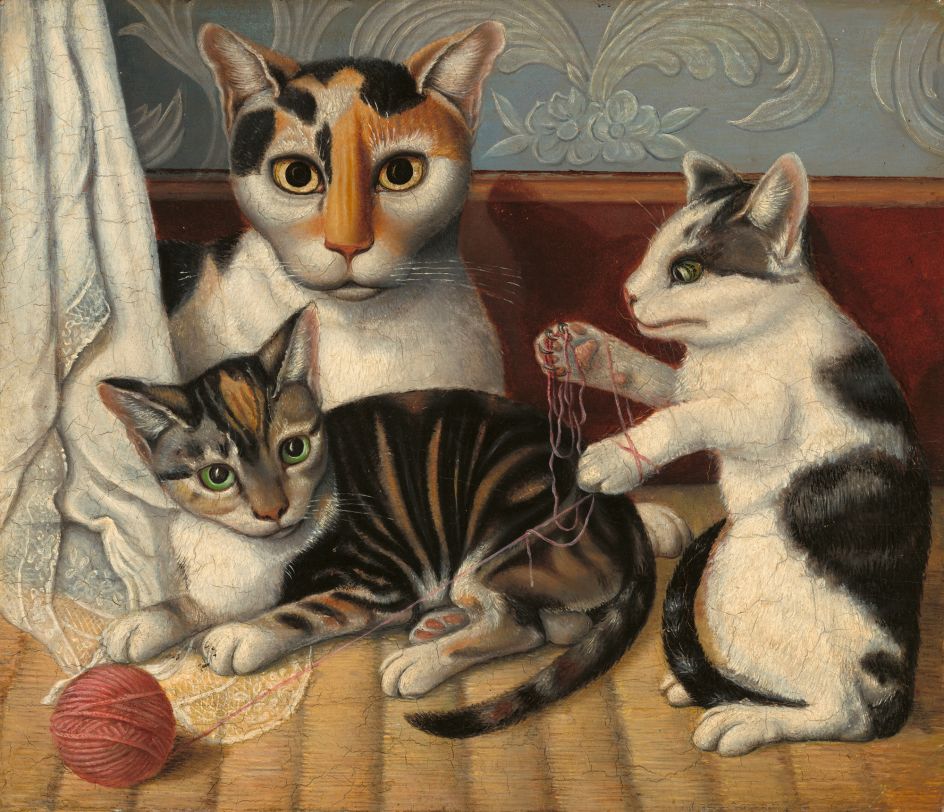
“Cats and Kittens” by Anonymous, c. 1872-83
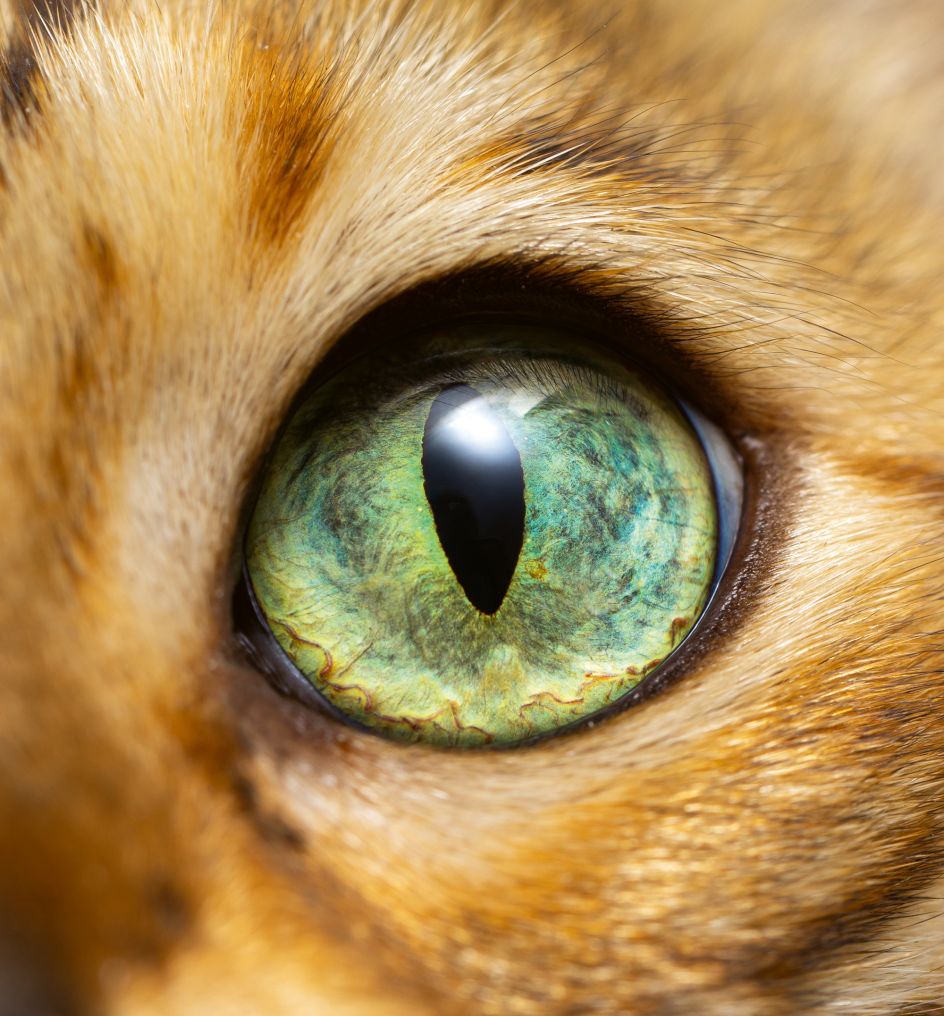
©Andrew Mattila
In one set of works, a psychedelic painting by artist Ting Xiongquan is paired with a neon orange crystal kitten sculpture by Lalique, which also matches the colors. Among other works is a woven piece by textile artist Elizabeth Radcliffe depicting an orange tabby cat named Algie, paired with another tapestry cat – the cover of Carole King’s 1971 album Tapestry, which featured her pet Telemachus. Olivia said this one was a bit “joking,” while some were more historical, suggesting reproduction over time. For example, a textual piece about Siamese cats in 19th-century Thailand is paired with a sculpture of the same species by Korean artist Lee Sangsoo. These visual conversations give the book a sense of pace and play.
However difficult it is to choose, Olivia’s favorite is Jodie Niss’s painting of a “fluffy” cat meowing against a wall; it is paired with Adolphe Thomasse’s Early 20th-Century Opera Fan, in which a blue-ribbon kitten “is overcome with the same intensity of passion.”
She adds, “They both capture this powerful emotion, a sense of excess that both humans and cats can tap into, and luckily their soft, pearlescent color palette only enhances their visual connection.” There’s also Cat, a cover designed by Phaidon’s creative director Julie Hasting, which will undoubtedly make the list of best book covers. “Her illustration of a curled up classic spherical black cat is immediately evocative and captivates readers from the start.”
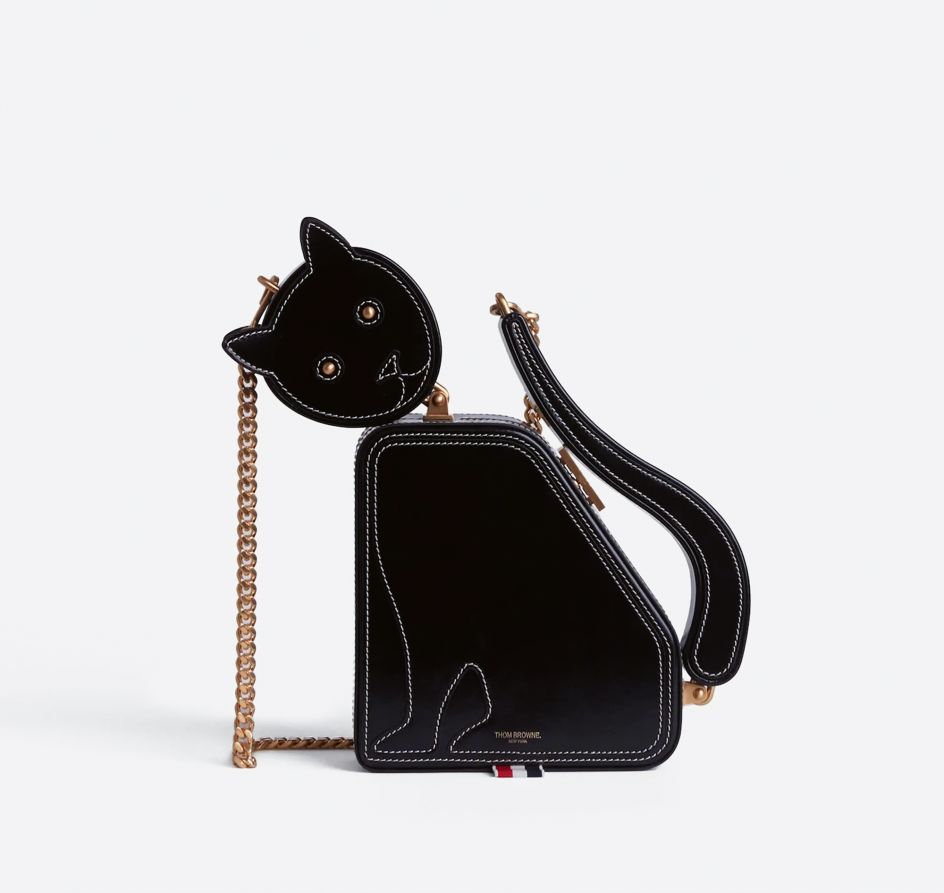
© Thom Browne Cat Icon calfskin clutch
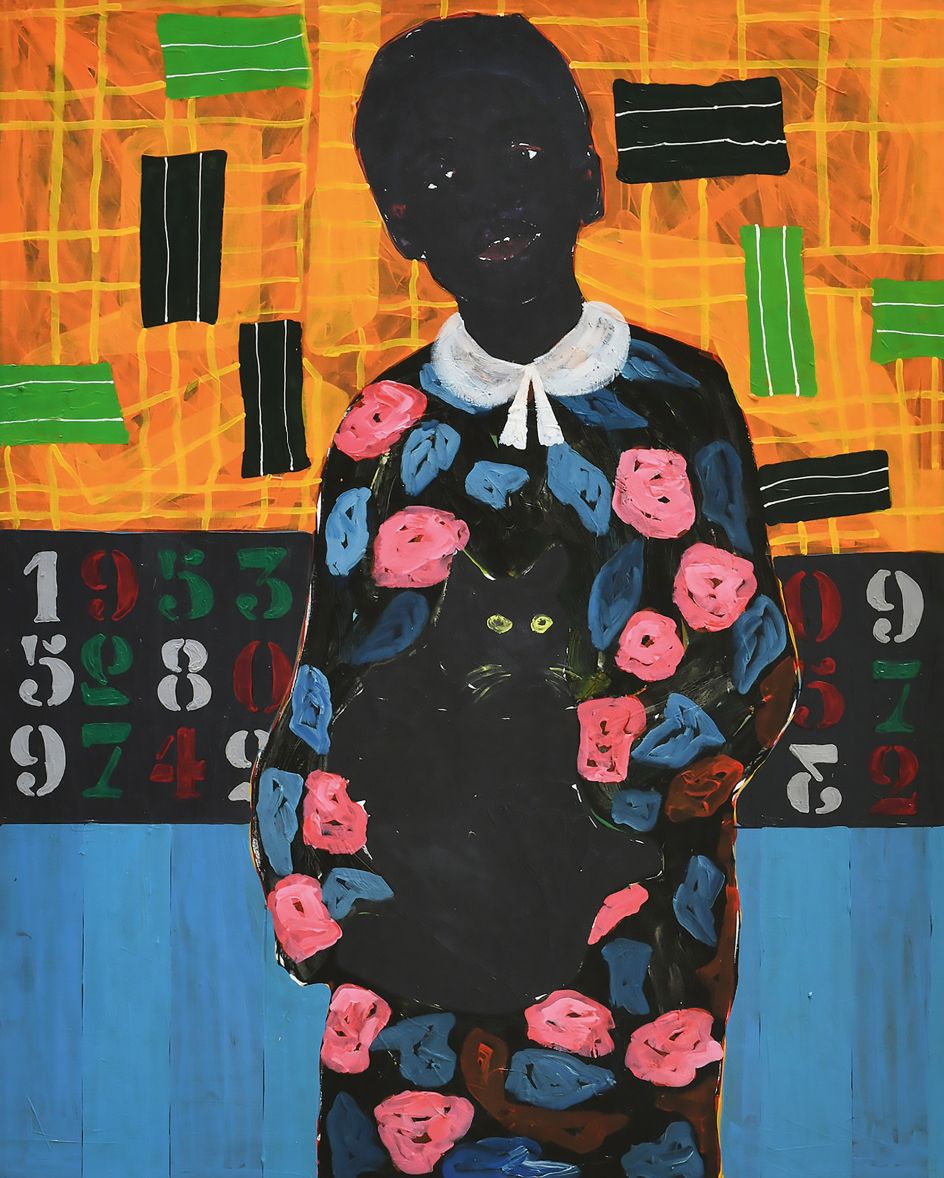
Cat Girl © Godwin Champs Namuyimba
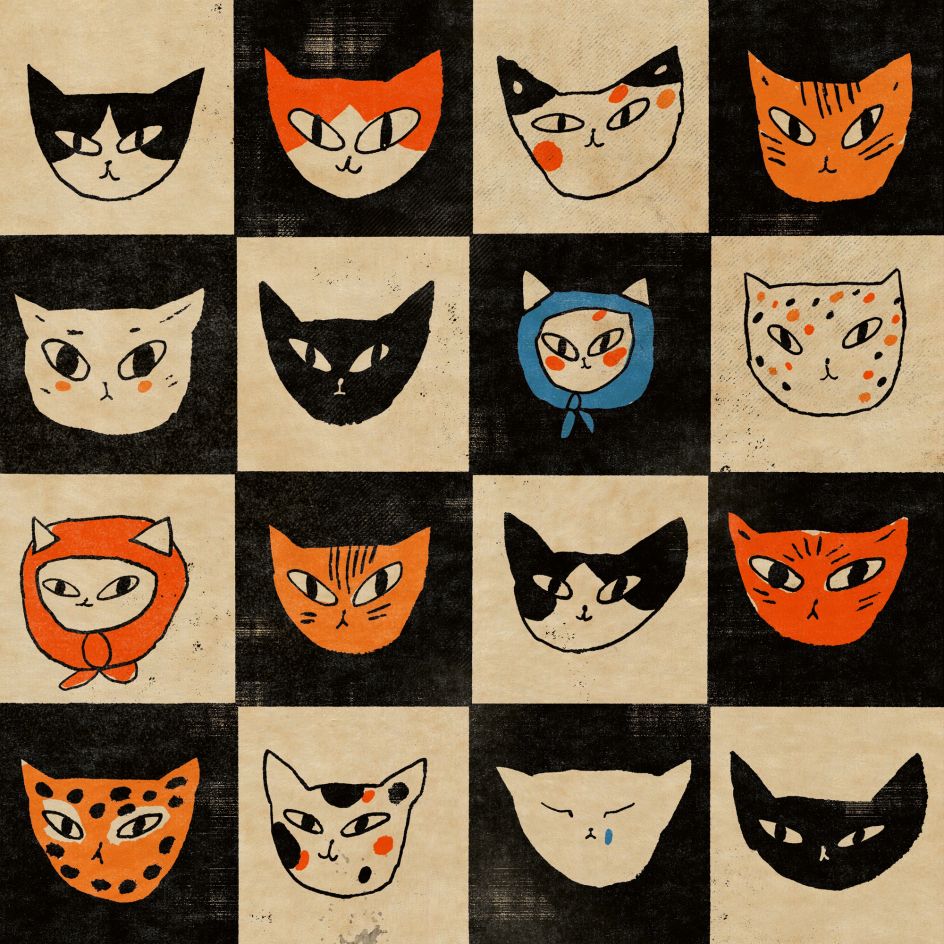
Cat Bingo © Enikő Eged
You might choose this book because you’re a cat fan, or you want to learn more about their long history, or you just like the look of it—whatever the reason, after reading this book, it’s hard not to notice the impact this feline friend has had on the world. Here’s what Olivia will learn from this process.
“When I worked on this project at night, I closed my eyes and saw nothing but cats, fur, curly tails, Egyptian cult statues, impressionist paintings. Even so, I think not only did I not truly understand how many people have loved and continued to love cats since ancient times, but we still seem to have very little understanding of when or how our relationship began. We have a vague sense of when and for what reasons they were domesticated, but our data is not as accurate as it is for dogs.”
Olivia continues: “At some point 10,000 years ago, cats chose to be with us and told us not to ask too many questions. We have worshiped them religiously, painted and photographed them ever since. It’s this passion combined with an ongoing sense of mystery that is so feline to me, and I hope this book captures that spirit.” If the goal is to make a “cool” cat book, then mission accomplished.