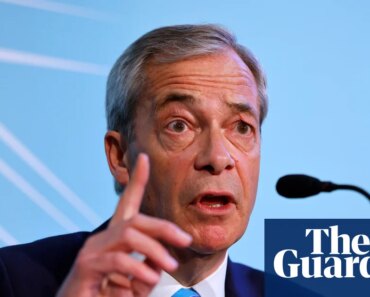
Iran’s Assembly of Experts has chosen Ayotollah Ali Khamenei’s son as its next supreme leader, supporters say, with the announcement delayed by a dispute over voting procedures.
If it is decided that the assembly does not have to meet in person to vote, its secretariat could simply declare that a consensus has been reached.
“Khamenei’s name will continue,” said Hosseinali Eshkevari, a member of the council charged with choosing a new leader. “The vote has been cast and will be announced soon.”
But Hassan Rouhan, the former president, hinted at a delay, saying any announcement should “come at an appropriate time that does not harm public attention on the sacred defense.”
Mojtaba Khamenei’s appointment is likely to be rejected by Donald Trump, who has called it “unacceptable.” The US president has insisted on playing a decisive role in the election, while Israel has threatened to kill the next supreme leader and those who elected him.
However, there are forces in Iran that say handing over wartime power to a relative newcomer would be harmful. They believe defense efforts should be left to the military and Ali Larijani, the experienced secretary of the supreme national security council. Khamenei, who was his slain father’s deputy chief of staff, knows intimately the inner workings of the supreme leader’s office and presents himself as a rejuvenated version of him.
Iran is run by a temporary tripartite leadership council that includes the president, Masoud Pezeshkian. On Saturday, Pezeshkian made an unsuccessful attempt to reset relations with the Gulf states by apologizing to them for Iran’s attacks on their territory. He announced that it had been decided that the attacks would end if the Gulf states did not allow attacks against Iran to be launched from their countries.
Pezeshkian’s comments came after mediation by Russia and a positive response was expected from at least two Gulf states. But immediate domestic opposition to his stance and continued attacks on Gulf states prevented that from happening. Trump also took to Truth Social to call Pezeshkian’s move a humiliating surrender, a triumphalist tone that further weakened Pezeshkian.
Iranian Foreign Minister Abbas Araghchi defended the apology, noting that in Iranian culture asking for forgiveness was “a sign of dignity and strength.”
Pezeshkian’s statement was immediately revoked by the Iranian military, which views US bases in the Gulf as legitimate targets in what they view as an existential war of self-defense. So far, 10,000 civilian buildings have been damaged inside Iran.
The military was also bothered by Pezeshkian’s claim that the Islamic Revolutionary Guard Corps had fired at will.
Larijani clarified Iran’s position in a television interview, saying: “We have told our neighbors and we repeat it: if the Americans are going to be provided a base from their soil to attack Iran from there, it is our indisputable right to respond to those bases. We have said it clearly and we are not lying.”
He also pressured the Gulf states to consider the role of bases if they believed that Israel was the main source of insecurity in the region and that the United States was Israel’s main sponsor.
He said: “It makes no sense for a country to declare its friendship with us, but at the same time its base is in the hands of the enemy to attack Iran. Countries in the region must prevent the United States from using its territory against Iran, or we will.
“The prestige of the United States in the region has been broken and these countries now understand that the United States can no longer provide them with security.”
Military sources said the range of attacks on US assets in the Gulf would be expanded in response to the US attack on Iranian oil refineries and fuel depots. Iran responded to the attack by reducing maximum daily gasoline consumption, but said supplies were stable. Iranian officials did not deny that they were receiving intelligence help from the Russians.
Western diplomats say they have not seen any decline in Iran’s ability to mount drone and missile attacks and warned that the scale of military assets being poured into the region does not suggest the United States intends to make an early unilateral declaration of victory.
Larijani sounded confident in his television interview that Iranian society was not turning against the government and said Trump’s plan to divide the country into an ethnic mosaic would be rejected by Iranians, including the Kurds.
Despite growing anger at Iran for directing much of its fire at the Gulf states, most Gulf governments still do not support a counteroffensive against Iran that would put them on the side of the United States and Israel.
Iran has admitted that 60% of its missiles and drones have been aimed at the Gulf States, compared to 40% at Israel. Arab League foreign ministers met on Sunday to discuss their options, with one Western diplomat saying: “They are running out of patience. The attractiveness of their economies and their reputation for stability are being shattered.”
Oman has been telling its neighbors that Iran’s offer on its nuclear program was serious in talks that were disrupted by the US-Israeli attack. But any agreement is likely to have to be much broader and include a cooperation council between Iran and the Gulf.
The UAE government described the Iranian attacks as brutal and unprovoked and claimed that more than 1,400 ballistic missiles and drones had targeted its infrastructure.
It said: “These attacks constitute a flagrant violation of international law and the UN Charter, an infringement of the sovereignty and territorial integrity of the United Arab Emirates and a direct threat to its security and stability.”
Some Arab diplomats, for all their reservations about Iran’s role in the region, feel that the biggest risk is that Israel emerges stronger from this war. Amr Moussa, former secretary general of the Arab League, warned: “The current attack on Iran is not just an Israeli adventure that (Benjamin) Netanyahu managed to drag the United States into, but a strategic move planned by the United States, in which Washington employed Israel as a regional partner, in an important step to transform the Middle East, including the Arab world, into a regional geopolitical situation that Israel is trying to lead.”