Human rights groups have sharply criticized US Defense Secretary Pete Hegseth for saying there will be “no quarter” for Iran as the US and Israel continue their military campaign against the country.
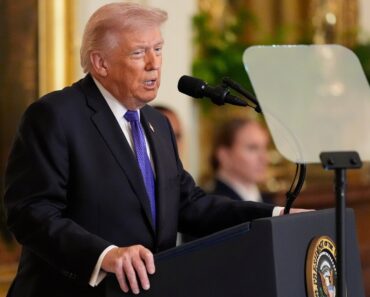
“We will keep pushing. We will keep pushing, we will keep moving forward. No quarter, no mercy for our enemies,” Hegseth told reporters Friday.
Recommended stories
list of 3 itemsend of list
Under the Hague Convention and other international treaties, it is illegal to threaten to give no quarter.
National laws, such as the War Crimes Act 1996, also prohibit such policies. US military manuals also warn that “all-out” threats are illegal.
Brian Finucane, senior adviser to the International Crisis Group, a think tank, said Hegseth’s comments appear to contradict those standards.
“These comments are very surprising,” Finucane told Al Jazeera during a phone call. “This raises questions about whether this belligerent and anarchic rhetoric is translating into how war is being conducted on the battlefield.”
But Hegseth has publicly dismissed concerns about international law, saying he would not abide by “stupid rules of engagement” or “politically correct wars.”
His rhetoric has sparked concern among some experts that measures designed to prevent harm to civilians are being ignored in favor of a “maximum lethality” campaign.
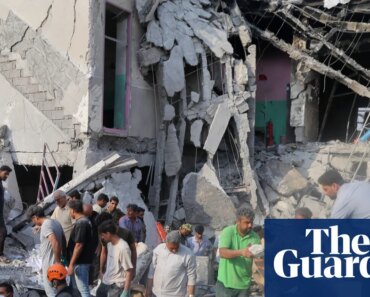
Hegseth’s comments also come after a US attack on a girls’ school in southern Iran that killed more than 170 people, most of them children. The war has left at least 1,444 Iranians dead and millions more displaced.
“Inhumane and counterproductive”
Prohibitions against declaring “no quarter” date back more than a century, as part of an effort to impose restrictions on conduct during war.
The Nuremberg trials after World War II upheld that legal standard, as Nazi officials were prosecuted, in some cases, for denying quarter to enemy forces.
“The basic idea is that it is inhumane and counterproductive to execute people who have laid down their arms,” Finucane said.
He added that the “mere announcement” of “no quarter” by a government official may itself be a war crime.
The United States and Israel have already faced accusations of violating international law during their war against Iran. Experts condemned their initial attack on February 28 as “unprovoked” and considered the conflict an illegal war of aggression.
Iranian officials also protested after a US submarine sank a military ship, the IRIS Dena, off the coast of Sri Lanka as it returned from a ceremonial naval exercise in India. That attack killed at least 84 people.
While warships are considered legal military targets, Iran has said the ship was not fully armed, raising questions about whether it could have been intercepted rather than sunk.
U.S. forces also allegedly refused to help rescue the Dena’s sailors, even though the Geneva Convention largely requires aid to castaways. The Sri Lankan navy eventually helped rescue survivors from the rubble.
In response to the attack, Hegseth described the sinking of the ship as a “quiet death.” He also told reporters: “We are fighting to win.”
US President Donald Trump himself commented that he asked why the ship had been sunk and not captured.
“One of my generals said, ‘Sir, it’s a lot more fun doing it this way,'” Trump said.
‘Serious warning sign’
The US military has faced criticism for killing civilians in military operations for decades.
That includes during the so-called “global war on terrorism,” when airstrikes led to thousands of civilian deaths, including a 2008 attack on a wedding party in Afghanistan.
Even before the war with Iran, the Trump administration had faced accusations of violating international law by attacking suspected drug trafficking vessels in the Caribbean Sea and eastern Pacific Ocean.
At least 157 people have been killed in those attacks since they began on September 2.
The Trump administration, however, never identified the victims or presented evidence against them. Scholars have condemned the attacks as a campaign of extrajudicial killings.
Analysts say the Pentagon’s policies of emphasizing lethality at the expense of human rights concerns have carried over into its war against Iran.
“Death and destruction from the sky all day long. We are playing forever. Our fighters have the highest authorities granted personally by the president and yours truly,” Hegseth said during a March 4 briefing.
“Our rules of engagement are bold, precise, and designed to unleash American power, not shackle it.”
Sarah Yager, director of Human Rights Watch in Washington, called that rhetoric alarming.
“I have been interacting with the US military for two decades and I am shocked by this language. Rhetoric from senior leaders is important because it helps shape the command environment in which US forces operate,” Yager said.
“From an atrocity prevention perspective, language dismissing legal restrictions is a serious red flag.”
While the impact of Hegseth’s rhetoric on combat operations is not certain, a recent report by the watchdog group Airwars found that the pace of the US and Israeli attack on Iran has far surpassed other military operations in modern history.
Reports indicate that the United States lost nearly $5.6 billion worth of ammunition in the first two days of the war alone. Airwars says the US and Israel struck more targets in the first 100 hours of the Iran war than in the first six months of the US campaign against ISIL (ISIS).
Following Hegseth’s remarks on Friday, Senator Jeff Merkley condemned the Pentagon chief as a “dangerous amateur.” He cited the attack on the Iranian girls’ school as an example of the consequences.
“Their rules of engagement ‘undoubtedly’ set the stage for not distinguishing a civilian school from a military target,” Merkley wrote in a social media post.
“The result: more than 150 schoolgirls and teachers killed by an American missile.”