A rare daytime fireball burst into life in the sky over the Midwest on the morning of March 17, creating a loud sonic boom that rattled houses as the meteor arced across the earth before bursting over northern Ohio with the force of 250 tons of TNT. Now the hunt is on to find the precious shards of the ancient wanderer, which have significant scientific and economic value.
7-ton (7,000 kilograms) meteoroid hit Earth’s atmosphere at 8:57 a.m. EDT (12:57 GMT), leaving a fiery trail as it compressed the air molecules in its path, leading to over 200 fireball reports of American Meteor Society website (AMS).
The article continues below
Where did it land?
The fireball’s journey through the atmosphere ended abruptly between the cities of Akron and Canton, Ohio, according to the American Meteor Society’s computer-generated map, which pulls data from eyewitness reports.

Robert Lunsford
Robert Lunsford is the fireball report coordinator, newsletter editor and treasurer of the American Meteor Society, one of the leading sources of information on meteor showers.
However, AMS meteor expert Robert Lunsford adds a caveat to anyone hoping to use the data to find fragments of the meteor. “It should be noted that this trajectory is derived from data provided by those who completed our reports,” Lunsford told Space.com in an email.
“Many of these people are a bit haphazard when it comes to filling out these forms, especially when it comes to time and direction. I had many reports dated 2025 and several Februarys. Therefore, this area could be many miles off in any direction”.
What do the fragments look like?
The meteoroid that created the spectacular daytime fireball is believed to have measured 1.8 meters in diameter when it hit Earth’s atmosphereHowever, the individual shards you may find on the ground after its demise are likely to be much smaller – only 2.5-5 centimeters in diameter.
“They will look different than normal rocks found in the area, as they usually have a fusion crust, created by the intense heat as they pass through the atmosphere,” Lunsford said. “They will probably look like pieces of charcoal on the outside and lighter on the inside if they are broken.”
Several Ohioans have already claimed to have found pieces of the meteor, including a family from Medina County who found a walnut-sized rock in their driveway. “We haven’t touched it yet. It’s definitely pitch black,” she said, “You can see some areas that have been melted as it came through, I guess,” Ohio resident December Harris said in a interview with Fox 8 News.
What to do if you find one
Meteorites are hardy enough to survive the test of atmospheric entry, but you should still handle them with care if you’re lucky enough to find a shard lying on the ground. Fortunately, the pieces you find won’t be hot to the touch – even if you find them immediately after they’ve fallen.
“They reach a terminal velocity of about 300 mph while still many miles up in the atmosphere,” Lunsford explained. “The last part of their flight involves free-falling through freezing air (even in summer) before reaching the ground.”
Nikon Z8
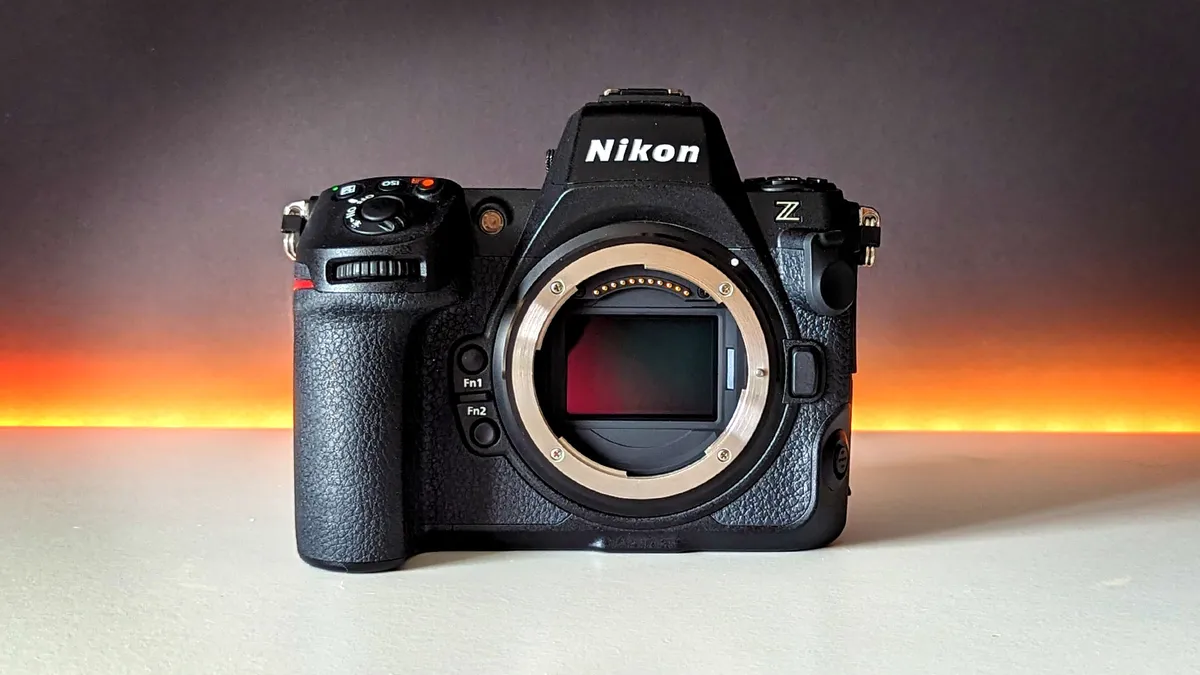
The Nikon Z8 excels in just about every department, and we rate it as the best overall camera out there. It has a 45.7MP full-frame sensor, 8K video capabilities, excellent low-light performance, very high FPS burst rate and more. It’s expensive, but you get a lot for your money. Check out our Nikon Z8 review for a more in-depth look.
Try not to touch any potential meteorites with your bare hands, as the oils on your skin can break down well-preserved samples of primordial matter dating back to the formation of our the solar system billions of years ago. That said, the ancient rocks do not pose a health hazard to humans. “Meteorites can be radioactive, but at levels far below dangerous,” Lunsford continued.
If you think you’ve found a space rock, first compare it to photos of confirmed meteorites online, according to Lunsford. If there is a good match, contact the geology department at your nearest university and send them clear images of your candidate meteorite. You can also take a look at it through a microscope using our home guide to identifying and observing meteorite features!
While the chances of it dropping fragments on Earth are quite low, the next big meteor shower is Lyrids, which is active from 16 – 25 April and reaches a peak on the night of April 21-22, when up to 18 meteors – and the occasional fireball – could be observed every hour. Why not get ready for the natural light show by reading our guide to shooting shooting stars with camera? While you’re at it, be sure to read our roundups of the best lenses and cameras to capture the night sky.
Editor’s Note: If you would like to share your astrophotography with Space.com readers, please send your photos, comments, and name and location to spacephotos@space.com.