Escalating conflict in the Middle East has halted shipping through the key waterway, choking off critical energy flows from the region.
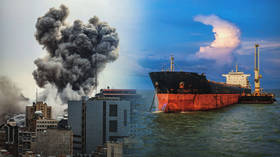
Oil prices hit multi-month highs on Thursday as attacks on tankers and escalating conflict in the Middle East disrupted shipping through the Strait of Hormuz, one of the world’s most critical energy chokepoints.
The US-Israeli war with Iran has entered its sixth day, with attacks on Washington and its ally the Islamic Republic expanding. Tehran has responded with waves of missile and drone attacks on Israeli and American targets, warning that further retaliation could follow.
What is happening to fuel prices?
Brent crude oil extended more than 2% to trade above $82 a barrel on Thursday and its highest level since January 2025. US West Texas Intermediate ended Wednesday at $74.66, the highest for the second straight day since June. Both benchmarks rose more than 10% this week amid fears that prolonged disruptions to Gulf exports could tighten global supplies.
Gas prices rose on Monday after Qatar suspended LNG production following attacks in the Middle East. Benchmark Dutch and British wholesale gas prices jumped about 50%, while Asian LNG prices rose about 39%.
Why is the Strait of Hormuz important?
The strait carries about one-fifth of the world’s oil exports and roughly 20% of its LNG, including shipments from Gulf producers such as Saudi Arabia, Iraq, the UAE, Kuwait and especially Qatar.
Tanker traffic through the Strait of Hormuz down 90% An analysis of vessel activity indicates that tanker traffic is now down 90% from last week. Matt Wright, Principal Cargo Analyst at Kpler, explains: “Unlike many other shipping segments where movements are often… pic.twitter.com/JIhFoAkQKO
— Marine Traffic (@MarineTraffic) March 4, 2026
According to Iranian state media, a senior commander of Iran’s Revolutionary Guard said the strait was closed and it would try to set fire to any ship. Iran technically cannot close the Strait of Hormuz, but the mere threat of retaliation is enough to deter sailing through the waterway.

At least 200 ships, including oil and LNG tankers and cargo ships, were anchored in open waters, according to Reuters estimates based on ship-tracking data from a marine traffic platform.
The conflict widened when the US sank an Iranian warship near Sri Lanka on Wednesday. The strike came as US President Donald Trump pledged measures to protect fuel shipments from the Middle East, including insurance support for tankers carrying oil and gas and possible naval escorts.
The US Navy may begin escorting oil tankers through the Strait of Hormuz, Trump said on Tuesday, adding that he had ordered the US International Development Finance Corporation to provide political risk insurance and financial guarantees for maritime trade in the Gulf.
Russian President Vladimir Putin said the shipping blockades could open up opportunities for Russia to expand energy exports. “In this context, we can find new buyers who have lost supplies that previously moved through the strait.” He said Moscow could redirect oil and gas shipments to alternative markets as Gulf flows stall.
How are marine insurers responding?
The strikes have prompted marine insurers to cancel war-risk coverage for ships in the region, a move expected to sharply increase shipping costs.
Insurers including Guard, Skuld, NorthStandard, London P&I Club and American Club said the cancellations would take effect from March 5, according to notices posted on March 1. Shipping companies operating in the region will now have to acquire new cover, possibly at a higher cost.
War-risk premiums rose to 1% of ship value in the past 48 hours, up from about 0.2% last week, industry sources said. For a $100 million tanker, that raises the cost of coverage for a single voyage from roughly $200,000 to $1 million.
This disruption has caused a rise in tanker freight rates. Spot costs for charter very large crude carriers (VLCCs) rose to about $315,000 a day this week, up 77% from the previous Friday and roughly five times higher than at the end of December, according to shipping data cited by market participants.
What is the overview?
Banks and analysts have warned that if shipping disruptions persist, crude oil could reach $100 per barrel. UBS this week raised its outlook for Brent prices to 2026, citing rising conflict and the risk of further strikes on energy infrastructure.
Analysts say the trajectory of prices will largely depend on whether shipping can safely resume or whether the conflict deepens.