The patient was in Gibraltar. The surgeon was in London. The result was a remarkable triumph for remote robotic surgery that saved the life of a 62-year-old football fan with prostate cancer.
Inside the operating room at St Bernard’s, the only hospital in the British Overseas Territory, a high-tech robot with four arms and equipped with a 3D camera removed the prostate of Briton Paul Buxton, who moved to Gibraltar 40 years ago.
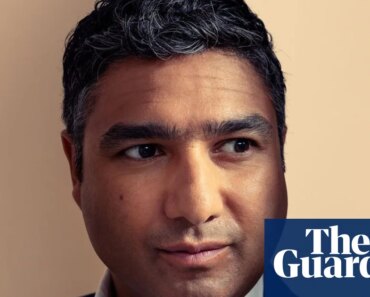
Professor Prokar Dasgupta, a professor of urology who heads the London Clinic’s robotics center of excellence, performed the procedure 2,400 kilometers away, in London’s Harley Street district.
With the help of technology services provider Presidio, Dasgupta used a console in London to guide the Toumai robotic system, made by Microport, through an intricate sequence of steps to successfully perform a prostatectomy, a surgical removal of the prostate, on Buxton.
The procedure went as planned with a delay of just 0.06 seconds between the surgeon in London and the robot in Gibraltar. After his unique experience, Buxton said he felt “fantastic” within a few days.
“I actually had a lot of people say to me, ‘You’re not going to do it, are you?’” Buxton said. “I thought, I’m giving something back here.
“I love football. As far as surgeons are concerned, we have gone from being in the Championship to the Champions League.”
Buxton, originally from Burnham-on-Sea in Somerset, said it was a “no-brainer” to take part and told the Press Association he was happy to be the “guinea pig”.
Following his cancer diagnosis, Buxton hoped to join the NHS waiting list and travel to England due to the complex nature of the operation.
But then he had the opportunity to have surgery remotely and he jumped at the chance.
“If I hadn’t gone for the telesurgery in Gibraltar, I would have had to fly to London, I would have had to be on the NHS waiting list, have the procedure done and I probably would have been in London for three weeks. So I thought, ‘This is a no-brainer,'” Buxton said.
“And it’s a pioneer for Gibraltar, because you don’t have to leave Gibraltar. Normally, for any major surgery, apart from minor things, maybe hernias and things like that, you end up having to go to London or Madrid.”
He added: “It has been a privilege to be part of medical history.”
Dasgupta said the “historic” surgery, which took place earlier this year, “went extremely well.”
“We operated on an NHS patient in Gibraltar from the London Clinic, 2,400 kilometers away, using a robot with a four-armed 3D HD camera.
“The robot is completely controlled from a console, which is like a computer console, using high-speed lines with a time delay of, believe it or not, only 0.06 seconds, that is, 60 milliseconds.”
The London console was connected to the Gibraltar robot via fiber optics, with a backup 5G connection. A team on the ground at St Bernard’s was ready to take control as a precaution in case the connection was interrupted.
Remote surgery is advancing rapidly around the world and recent advances allow more procedures to be performed over long distances and in real time.
Patients in remote areas don’t always have access to the best medical care, Dasgupta said, and remote surgery means they can save “great expense and inconvenience” by traveling for care.
He added: “I think it’s very, very exciting, the humanitarian benefit will be significant.”
Dasgupta is scheduled to repeat the remote procedure with another patient on March 14, this time in front of 20,000 surgeons who will watch via live broadcast from the European Association of Urology congress.