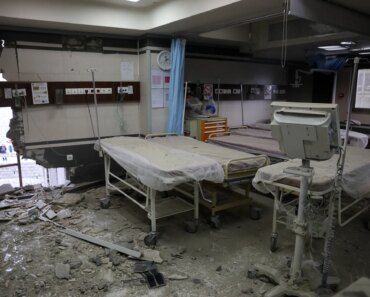
In its retaliatory attacks, Iran has attacked its US-allied neighbors in the region, including the United Arab Emirates, Bahrain, Qatar, Jordan, Oman, Saudi Arabia and Turkey.
The war also drew in European powers after a drone attack Sunday on a British military base in Cyprus, a European Union member state off the coast of Turkey.
After the Sun newspaper published a photograph showing a hole in the side of the plane’s hangar, the British Ministry of Defense said the strike on the RAF Akrotiri base, which is classified as a British overseas territory, “did not cause any casualties and full assessments determined that damage was minimal”.
The Spanish Defense Ministry said on Thursday it would deploy a frigate to defend Cyprus. Italy and France confirmed they would deploy defense forces to the region, while Britain said it planned to deploy a warship next week.
Olivia O’Sullivan, UK director at the world event at Chatham House, a London-based think tank, said the risk of further escalation poses a challenge to America’s historic allies in Europe.
“American presidents have acted unilaterally in the past, so this is not an entirely new dilemma, but President Donald Trump “has really accelerated that trend and it’s forcing European allies to reconsider when and how we support US actions in the world.”
Meanwhile, the Azerbaijani Foreign Ministry said on Thursday that it had lodged an official protest with the Iranian embassy after four people were injured in drone incidents.
Azerbaijan said one of the drones crashed into an airport terminal building, while the other fell near a school in a nearby village in the Nakhchivan enclave.
Iran’s armed forces denied carrying out drone strikes on Azerbaijan, saying in a statement that the Islamic Republic “respects the sovereignty of all countries”.

“The Iranians really only have one shot to throw,” NBC News military analyst and former Pentagon spokesman Col. Steve Warren told “TODAY.”
“They want to bring these other nations into the conflict, and these nations will then pressure the United States to stop our action,” he said.
The conflict threatens to have a major economic impact around the world.
The Strait of Hormuz, a narrow waterway along Iran’s southern coast, passes one-fifth of the world’s oil supply and is an important route for other commodities such as aluminum, sugar and fertilizers.
Normally jammed with oil tankers and cargo ships, it has been almost empty since Iran’s threat to attack the ships, driving up oil and gas prices.
Few places reveal the conflict’s global reach more vividly than Sri Lanka, thousands of miles from the Middle East but deeply connected through shipping lanes, energy markets and migrant labor relations.
“The main concern is financial vulnerability,” Velevitia added. “Disruptions to global shipping routes and energy supplies could have direct consequences for our economy, especially given Sri Lanka’s recent economic challenges.”

Sri Lankan officials have warned that the IRIS Dena rescue may not be an isolated incident after they said a second Iranian ship had entered Sri Lankan territorial waters.
Sri Lanka is not allowing the ship to dock but is providing some humanitarian assistance, Cabinet spokesperson Nalinda Jayatissa said on Wednesday, without specifying whether the ship was a commercial or naval vessel.
“We are doing our best to save lives,” Jayatissa said.
Kasun Jayawardena, a tour guide in Galle, said residents were unsettled to see the aftermath of war on their coast in a country marked by its own conflict for decades.
After nearly 30 years of civil war in Sri Lanka that ended in 2009, Jayawardena told NBC News, the town had little appetite to see a return to violence, even indirectly.
“We all hate war,” he told NBC News.