Beijing — China signaled continuity rather than change for its economy, announcing on Thursday a slightly lower target for growth this year amid an asset slump and other headwinds at home and growing uncertainty abroad.
Premier Li Qiang announced an annual growth target of 4.5% to 5% in his report presented at the opening session of this year’s meeting of the National People’s Congress. That compares to an actual 5% growth last year and a target of around 5% over the previous three years. This is the lowest growth target since 1991.
“While recognizing our achievements, we are also clear about the difficulties and challenges we face,” Li said, reading most of the 35-page report in a more than hour-long speech.
China’s leaders are trying to balance the pursuit of two goals: revitalizing a flagging economy by boosting domestic spending and advancing Supreme Leader Xi Jinping’s ambitions to build China into a global leader in AI, robotics and other advanced technologies. In line with the government’s approach in recent years, the annual report on Thursday indicated that domestic demand would continue to be supported but would not unleash any major new stimulus to boost growth in the short term.
In its draft budget for 2026, the government trimmed the annual increase in China’s defense spending to 7%, down from 7.2% in recent years. The nearly 3,000-member Congress, a largely ceremonial body that approves policies set by Communist Party leaders, will approve an annual report and budget in its closing session next week, as well as policy priorities that set out five-year plans through 2030.
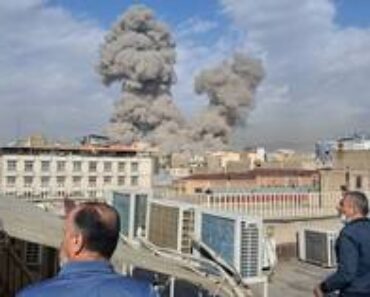
China is grappling with tariff wars and actual wars. Like much of Asia, it is heavily dependent on oil and natural gas from the Middle East, and war in the Middle East has driven up prices and threatened supplies.
The report said free trade is under severe threat given the growing geopolitical risks. At home, it highlighted the “severe” imbalance between strong manufacturing supply and weak demand and the challenge of shifting to new drivers of growth.
“Rarely in many years have we encountered such a grave and complex landscape, where external shocks and challenges are intertwined with so many domestic troubles,” Li said in his report.
While the domestic economy has slowed, China has maintained growth by exporting. Although exports to the US fell after President Donald Trump sharply raised tariffs, its trade surplus rose to a record nearly $1.2 trillion last year. But the surge in exports to other countries has faced pushback from governments worried about their own industries and workers.
Li pledged to improve living standards and boost consumer spending, which has lagged as the Chinese tightened their belts, pinched by a property slump that weighed on house prices that wiped out hundreds of thousands of jobs.
The government will issue 250 billion yuan ($36 billion) in bonds at a discount to customers trading in new cars, appliances and other products, the report said. Li said city-specific policies are used to stabilize the market to control the supply of new housing and reduce unsold properties.
Those are real concerns, said He Meiru, a real estate agent in southern China. His monthly income hovers around 10,000 yuan ($1,400) – less than a third of five years ago and he said he is lucky if he completes one contract every two months. “It’s a tough period for many – it’s hard to find jobs, people don’t have money,” he said.
Apart from a recovery for the property market, social welfare spending and improved job security are needed for households to spend more of their savings, said Ekaterina Bigos of AXA Investment Managers.
“Reviving domestic demand is key to sustained long-term growth, however, reorienting China towards higher levels of domestic consumption will take time,” he said.
The increase in defense spending to 1.9 trillion yuan ($270 billion) comes in the wake of a sweeping purge of military officials accused of corruption.
Analysts believe the layoffs are intended to reform and modernize the military and ensure Communist Party control over the People’s Liberation Army.
Nine military officers were among the 19 delegates dismissed by the National People’s Congress ahead of this year’s meeting.
This year’s report to Congress reiterated the government’s commitment to “full party leadership over the armed forces of the people”. Then it added a new line: “Guided by the principle of ensuring political loyalty in the military, we will continue to improve military political behavior.”
___
Chan reports from Hong Kong. Associated Press writer Huizhong Wu contributed.
(Tags to Translate)International Trade(T)Government Policy(T)Political Approval(T)Military and Defense(T)Politics(T)Recessions and Depressions(T)Business(T)World News(T)General News(T)Article(T)19807745