Precipitous population declines over 3,000 years ago in the waning years of China’s Shang Dynasty were likely the result of a deadly increase in typhoons and related weather events, according to a new study that combined ancient texts, archaeological evidence and paleoclimate modeling.
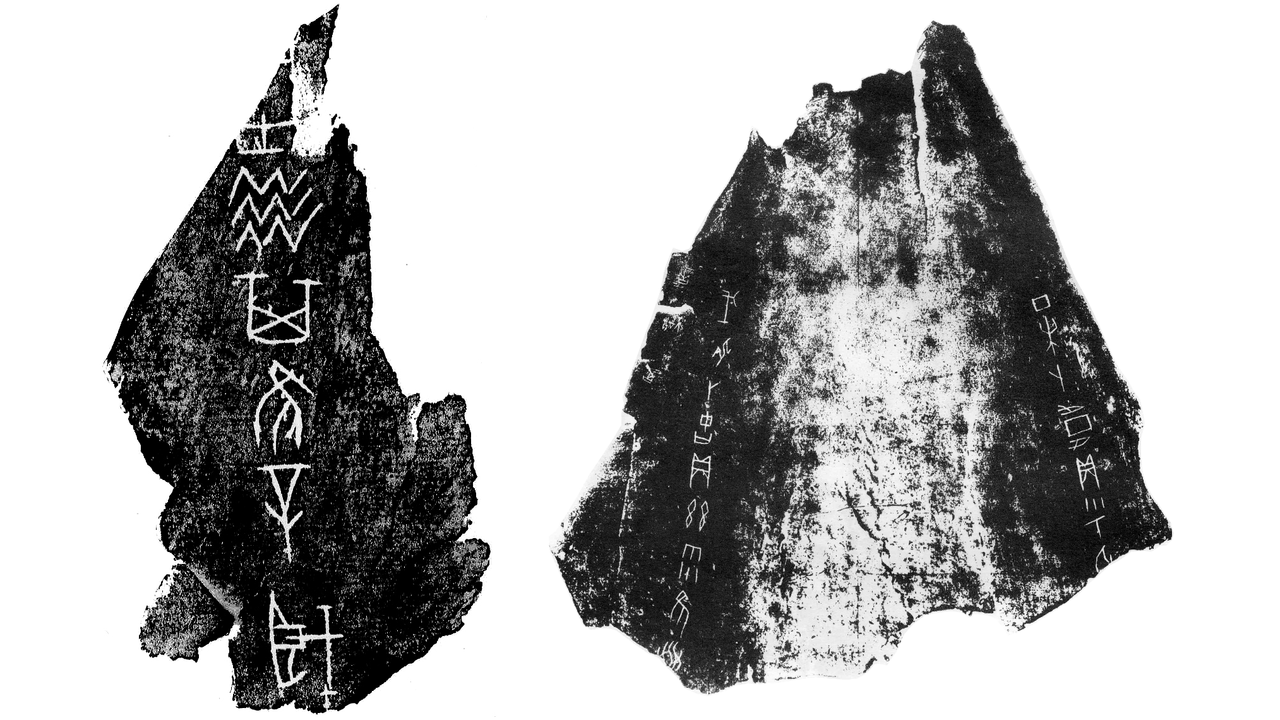
These coastal typhoons likely caused catastrophic climate events, such as massive floods, that hit China‘s Central Plains, sometimes called the “cradle of Chinese civilization.” This area was home to a royal dynasty called the Shang that ruled the Yellow River valley from 1600 to 1046 BC. Shang Dynasty is known to have the earliest evidence of writing, in the form of divinatory texts inscribed “oracle bone” made of tortoise shell and ox shoulder bone. In addition, tens of thousands of bronze, ceramic and jade artifacts have been unearthed in the Shang capital of the modern city of Anyang, revealing the wealth and power of the dynasty before it was overthrown by the Zhou people.
First, the team counted instances of weather-related writing on over 55,000 pieces of oracle bone scripts dated to between 1250 and 1046 BC, the last two centuries of the Shang dynasty. The oracle bones included a greater proportion of predictions related to upcoming heavy rains and water-related disasters in the middle of the time period, suggesting an increase in Shang society’s concern about extreme rainfall events in the Central Plains, the researchers wrote in the study.
The Shang dynasty was not the only society to experience a population decline in what is now central China. The team examined archaeological data for floodplains in the Chengdu Plain southwest of the Central Plains. Chengdu was occupied by the Shu Empire, which existed at the same time as the Shang but lasted until 316 BC. They found evidence of flood-damaged buildings dating to 950 BC. and flood-destroyed dykes from 500 BC. the ground.
The researchers’ paleoclimate modeling showed that northward typhoons and related weather events intensified between 1850 and 1350 BC, affecting Shang in the Central Plains, and that westward typhoon activities intensified between 850 and 500 BC, affecting Shu in the Chengdu Plain.
“What stood out here was intensified typhoon activities,” the researchers wrote, which may have caused extensive inland flooding and resulted in population decline and social changes in the Central Plains and Chengdu Plain. “Intensified typhoon activities exerted unexpected catastrophic impacts on inland China during the Bronze Age,” they wrote.
However, climatic conditions in this area were extremely variable, and the researchers noted that other climate-related hazards may have contributed to cultural instability in Bronze Age China. Especially droughts caused by El Nino-similar conditions could have hit the Central Plains around 1350 BC. and disrupted the culture, as well as how prolonged periods of drought preceded collapse of many cities of the Maya civilization.
Although the researchers are not sure exactly how the ancient climate affected inland Chinese civilizations, they suggest that typhoon-induced extreme weather events were as much of a concern in the past as they are today. But by integrating archaeological evidence, oracle bone scripts and paleoclimate proxies, the researchers wrote, the study is the first to reveal links between coastal typhoon activity, extreme inland rainfall, flooding and social changes around 1050 BC.
Live Science reached out to the study’s authors for comment, but they did not respond by the time of publication.
Ding, K., Li, S., Ding, A., Lu, H., Zhang, J., Xi, D., Huang, X., Lou, S., Tang, X., Qiu, X., He, L., Ma, Y., Lin, H., Zhang, S., Zhou, D., Zhou, X., Tan, Z.-2. Archaeological data with AI and physics-based modeling explain typhoon-induced disasters in inland China around 3000 years BP The progress of science12, eaeb1598. http://dx.doi.org/10.1126/sciadv.aeb1598