Household energy bills could rise by £160 a year from this summer after the war in Iran pushed the UK gas market to a three-year high.
A typical combined household gas and electricity bill could reach £1,800 a year in Britain under the government’s quarterly price cap from July, according to analysis by Cornwall Insight, an energy consultancy.
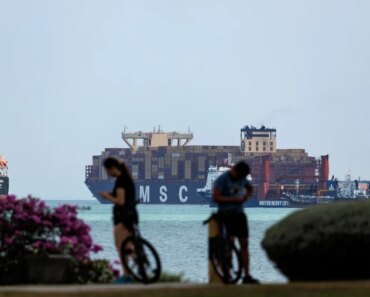
It forecasts a 10% rise in household energy costs after prices in the UK gas market doubled in the days following the US-Israeli attack on Iran. Tehran has retaliated by stopping oil and gas shipments through the Strait of Hormuz.
The unit cost of gas and electricity will remain stable over the coming months after the regulator, Ofgem, last month set household energy costs for the period April to July at £1,641 a year. This represents a £117 cut from the January-March limit for millions of households, but is less than the £150-a-year reduction the chancellor, Rachel Reeves, had promised in last year’s budget.
Ofgem will recalculate the costs energy suppliers will face for the next quarter, taking into account the recent rise in market prices.
Motorists are already facing a 2.5p liter increase at the petrol pumps since Saturday, while diesel prices have risen more than 3p after the global oil benchmark price rose above $81 a barrel.
In the UK, energy markets have seen some of the steepest price increases in the world due to the country’s heavy reliance on gas for electricity generation, combined with limited gas storage capacity.
Jonathan Brearley, chief executive of Ofgem, told MPs on Wednesday it was “really too early to say” how far energy bills could rise because it will depend on how long wholesale prices remain high.
If the Strait of Hormuz – through which around 20% of global oil supplies and around 20% of maritime gas shipments pass – remains closed for an extended period, it would create “significant upward pressure” on energy bills, Brearley said. He added that the UK was in a “significantly stronger position” than before the 2022 Russia-Ukraine crisis due to its diverse range of gas sources.
Ed Miliband, the energy secretary, said the government was continuing to monitor the situation in the oil and gas markets.
He said: “The conflict in the Middle East is another reminder that the only route to energy security and sovereignty for the UK is to move away from dependence on fossil fuel markets, the prices of which we do not control, and towards clean, local energy which we do control.
“Kemi Badenoch argued today that new North Sea licenses could reduce bills. The only problem is that her own shadow energy secretary correctly admitted that would not be the case, because oil and gas are sold on international markets. The North Sea will continue to play an important role in our energy mix for decades to come, but the new licenses will not reduce a penny from bills.”
Reeves met North Sea bosses on Wednesday afternoon to discuss the turmoil in global energy markets.
Before the attack on Iran, many in the industry expected the chancellor to announce changes to the North Sea windfall tax, known as the energy profits tax, in her spring forecast on Tuesday.
After Wednesday’s meeting, a Government source said: “The Chancellor was clear with the industry that she wants the energy profits tax to end. She has made that promise and is keeping it.
“In fact, it was a commitment I wanted to make this week, but the crisis in the Middle East has had real-time consequences on oil and gas prices and it is right that we respond to this.”
Market experts have warned that the UK’s dependence on gas imports for heating and electricity generation, combined with low gas storage capacity, has left it more exposed to market volatility than continental European countries.
Andreas Schroeder, head of gas analysis at ICIS, said: “The big difference between Britain and continental Europe is the availability of gas storage.
“Abundant storage in central Europe helps buffer and cushion price shocks around the world. For the time being, Europe will draw even more on its gas storage sites, which are already poorly filled. Britain has no alternative to the Norwegian pipeline except (liquified natural gas imports).”
Tom Marzec-Manser, director of consultancy Wood Mackenzie, said the closure of Britain’s last coal-fired power stations also meant the UK could not switch from gas to coal generation as some on the continent could.
Craig Lowrey, principal consultant at Cornwall Insight, said: “Events like this strengthen the case for more local renewable generation. Reducing the UK’s dependence on volatile global gas markets is the most durable way to protect households from future price shocks.”