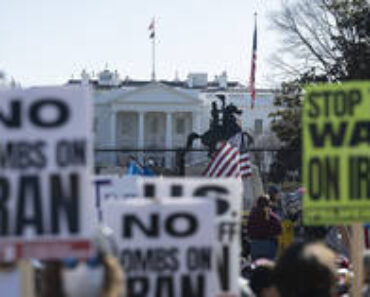
The rapidly escalating war in Iran, sparked by a US-Israeli strike that killed Supreme Leader Ayatollah Ali Khamenei, has led to Iranian retaliatory attacks against Israel and across the Gulf, even drawing in Tehran’s proxy Hezbollah in Lebanon.
Four years after the Russian invasion, the ripple effects of the fighting are still being felt in Ukraine. The Iran war’s disruption of Middle East oil and gas supplies and soaring prices are strengthening Russia’s ability to profit from its energy exports, a pillar of the Kremlin’s budget and key to paying for its own war in Ukraine.
If the regime in Iran collapses, the Kremlin will lose one of its closest regional allies. However, Moscow has much to gain after the drone attacks on Gulf energy sites, with a global trend likely to tilt towards Russia, especially from countries like China and India, which are heavily dependent on Middle Eastern energy.
Here’s what we know:
Peace talks
US President Donald Trump – seeking victory as a mediator in the war in Ukraine – has been urging the two sides to agree to a deal to end the bloodiest war in Europe since World War II.
But the fight with Iran appears to have derailed the latest round of talks aimed at ending Russian aggression.
President Volodymyr Zelensky said this week that a third round of trilateral talks with US and Russian officials has been tentatively scheduled for Thursday and Friday in Abu Dhabi.
But the United Arab Emirates is also among the Gulf countries that have been targeted by Iranian attacks.
No specific date has been set for the next round of talks, a source close to Ukraine’s negotiators told AFP on Wednesday.
Zelensky said he would also support alternative locations such as Turkey or Switzerland – both of which have hosted previous meetings on the war.
There is also the question of what diplomatic resources Ukraine’s allies might expend to deter Russian aggression while the war against Iran continues.
Several U.S. diplomats involved in the Ukraine talks held talks with Iran that broke down last month.
It looks like one of your browser extensions is blocking the video player from loading. To view this content, you may need to disable it on this site.

“The war in Iran will not lead to the conclusion of negotiations to end the war in Ukraine, although for the Americans, Iran will be the main priority in the near future,” said Volodymyr Fesenko, a Ukrainian political analyst.
However, “the scale and consequences of the war in Ukraine are too great to be forgotten,” he added in a social media post.
Iranian drones and air defenses
Zelensky acknowledged that a protracted war in Iran could affect the delivery of ammunition to US air defense systems, which have been given to Ukraine by Western allies for the protection of critical infrastructure facilities, particularly energy sites.
Tehran’s close ally Russia has been using Iranian-designed Shahed drones throughout its four-year occupation, the same missiles Tehran has deployed across the Gulf.
Kyiv has developed a range of cheap and effective drone interceptors – aerial craft designed to strike incoming attack drones in mid-air – which it says are world-leading.
Zelensky offered U.S. allies in the Middle East on Tuesday an exchange of some of their air defense missiles in exchange for those interceptors, which he said would better protect them from Iranian drone attacks.
“Let’s talk about the weapons we have the least: PAC-3 missiles – if they give them to us, we will give them interceptors,” he said.
Analysts say there is little to suggest the Iran war could affect Ukraine’s sprawling front-line fighting.
Oil prices and Russia’s war chest
Ukraine has stepped up its long-range attacks on Russian oil and gas facilities since the start of the war, aimed at sapping the energy revenues that fund the Ukraine invasion.
Western sanctions are aimed at Moscow’s ability to export oil and gas.
Energy revenues have recently fallen to five-year lows and the economy is under increasing pressure.
But the war in Iran — including drone attacks on Gulf energy sites — has rattled markets and significantly boosted oil prices, meaning Moscow could reap big revenues to fund its war chest.
Oil and gas tax revenues account for up to 30% of Russia’s federal budget.
Russian oil export prices rose from less than $40 per barrel to $62 per barrel in December – first due to war fears and then due to the disruption of almost all tanker traffic through the Strait of Hormuz, a route for about 20% of the world’s oil consumption.
Additionally, the shutdown of ship-borne liquefied natural gas, or LNG, production from major supplier Qatar would sharply increase global competition for available commodities — including from Russia.
“The longer the crisis in the Persian Gulf lasts, the more beneficial it will be for Russia and the more money its budget will receive to finance its aggression against Ukraine,” said Vyacheslav Likhachev, a member of the expert council of the Ukrainian non-profit Civil Liberties Center.
(France 24 with AFP, AP and Reuters)
(tags to translate)Middle East