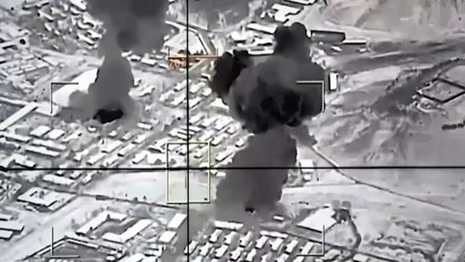
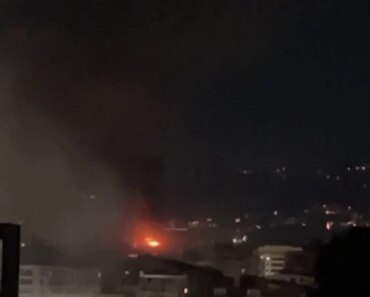
Global energy markets remain on high alert after several Gulf states suspended oil and gas production following escalating tensions in the region.
Since Saturday’s attacks by the United States and Israel, Tehran has attacked several sites in Israel and several Gulf countries.
Recommended stories
list of 4 itemsend of list
Initially, these Iranian attacks focused primarily on US military assets, but Gulf states have reported that Iran has since expanded its reach to attack civilian infrastructure, including hotels, airports, and energy facilities. However, Iranian officials have publicly denied attacking Gulf energy facilities.
The Middle East remains the dominant source of the world’s hydrocarbon reserves and a major driver of crude oil and natural gas production.
How much oil and gas does the Middle East have?
Nearly half of the world’s oil reserves and exports come from the Middle East, which contains five of the world’s seven largest oil reserves.
Once refined, crude oil is used to make various products, including gasoline, diesel, jet fuel, and a wide range of household items, such as cleaning products, plastics, and even lotions.
After Venezuela, which has 303 billion barrels, Saudi Arabia has the second largest proven crude oil reserves in the world, estimated at 267 billion barrels.
The largest oil reserves in the Middle East:
- Saudi Arabia: 267 billion barrels
- Iran: 209 billion barrels
- Iraq: 145 billion barrels
- United Arab Emirates: 113 billion barrels
- Kuwait: 102 billion barrels
Saudi Arabia is also the world’s leading oil exporter, with an estimated $187 billion of crude oil in 2024, according to data from the Observatory of Economic Complexity (OEC).
Major Middle East oil exporters:
- Saudi Arabia: 187 billion dollars
- United Arab Emirates: $114 billion
- Iraq: 98 billion dollars
- Iran: $47 billion, sold largely at a discount due to US sanctions
- Kuwait: 29 billion
Other Middle Eastern countries with significant oil exports are: Oman ($28.9 billion), Kuwait ($28.8 billion) and Qatar ($21 billion).

In addition to crude oil, the Middle East is a global natural gas powerhouse, accounting for nearly 18 percent of global production and approximately 40 percent of the world’s proven reserves.
Natural gas is mainly used for electricity generation, industrial heating and in chemicals and fertilizers.
The heart of Middle East gas is a single, huge underwater deposit called the South Pars/North Dome field. It is the largest gas field in the world and is shared directly by Qatar and Iran.
Gas transportation is carried out through gas pipelines or by tanker trucks. When pipelines are used, the gas is pressurized and transported through steel networks. When gas pipelines are not viable, such as across oceans, liquefied natural gas (LNG) is used.
To create LNG, the gas is cooled to approximately -162°C (-260°F), reducing its volume and allowing it to be safely loaded onto specialized tankers for global transport.
To transport oil and gas, tankers from several Gulf states must navigate the narrow waterway known as the Strait of Hormuz. About a fifth of the world’s oil and gas passes through this strait, mainly destined for major markets in Asia, including China, Japan, South Korea and India, as well as Europe.

What energy facilities have been attacked?
These are the facilities that have reported damage as of Wednesday:
Saudi Arabia – Ras Tanura Oil Refinery
On Monday, one of the world’s largest oil refining complexes, the Saudi Aramco-owned Ras Tanura oil refinery, was forced to halt operations after debris from intercepted Iranian drones sparked a small fire.

Saudi Aramco is one of the largest companies in the world, with a market capitalization of more than $1.7 trillion and revenue of $480 billion. Headquartered in Dhahran in eastern Saudi Arabia, Aramco controls 12 percent of global oil production, with a capacity of more than 12 million barrels per day (bpd).
On Wednesday, Saudi defense officials reported a second drone attempt against the facility, but this was successfully intercepted with no damage or disruption to operations reported.
Qatar – LNG facilities in the industrial city of Ras Laffan
On Monday, Qatar’s Defense Ministry reported that Iranian drones had attacked an energy facility in Ras Laffan belonging to QatarEnergy, the world’s largest LNG producer.
While no casualties were reported, QatarEnergy suspended production of LNG and other products at the affected sites.

QatarEnergy’s 81 million metric tons of LNG exports are primarily destined for Asian markets, including China, Japan, India, South Korea, Pakistan and other countries in the region. The production halt lifted global gas prices to a three-year high this week.
Qatar – Mesaieed Industrial City
Qatar’s Defense Ministry said the country was attacked by a second drone launched from Iran on Monday, targeting a water tank belonging to a power plant in Mesaieed, with no casualties reported.
On Tuesday, QatarEnergy also stopped production of some downstream products such as urea, polymers, methanol, aluminum and others.
United Arab Emirates – Fujairah and Mussafah oil terminals
A fire broke out at the Mussafah fuel terminal in southwest Abu Dhabi on Monday after it was hit by a drone.
On Tuesday, falling debris from a drone interception caused a fire at the Fujairah oil terminal on the east coast of the United Arab Emirates. No injuries were reported.

Oman – ports of Duqm and Salalah
On Tuesday, several Iranian drones attacked fuel tanks and a tanker truck at the port of Duqm, with at least one direct hit on a fuel storage tank, causing an explosion.
On the same day, a drone attack was reported on the port of Salalah, which handles industrial fuel and minerals.
Athe Nova – tanker
On Monday, the Athe Nova, a Honduran-flagged oil tanker located off the coast of Khor Fakkan, United Arab Emirates, was attacked by Iranian drones while transiting the Strait of Hormuz, setting it on fire. Despite the fire, the ship managed to clear the bottleneck into the Gulf of Oman and no casualties were reported.
Iran’s Islamic Revolutionary Guard Corps (IRGC) claimed responsibility for the attack, identifying the Athe Nova as a “US ally.”
On the same day of the attack, Iran declared the Strait of Hormuz closed, warning that any ship attempting to pass would be “set on fire.”
Since then, several more tankers have been hit.

Other regional energy disruptions
Although not directly targeted, the following energy sites suspended operations in response to Iranian retaliatory attacks:
Israeli offshore gas fields – Major gas production fields, such as Leviathan and Tamar, were closed as a precaution following regional drone and missile launches linked to Iran.
Oil fields in semi-autonomous Iraqi Kurdistan – Producers such as DNO, Gulf Keystone and Dana Gas halted production as a safety measure amid the escalation.
Rumaila oil field – Operations at Iraq’s largest oil field – operated by BP – in southern Iraq were suspended on Tuesday as a security measure due to its proximity to the escalation zone.