During a solar eclipse in October of 2022, a team of researchers traveled to the Dolomites, a forested mountain range in Italy, to study spruce trees.
While the rest of the world was worried about buying solar eclipse glasses, timing telescopes to perfectly capture spectacular views of our sun and preparing for something profound, these scientists decided to spend time in the humid, woody and still air.
The team, led by Alessandro Chiolerio of the Italian Institute of Technology, which included Monica Gagliano of Southern Cross University in Australia, then published a paper last year in the journal Royal Society Open Science describing how they built custom sensors to measure electrical activity produced by the spruce trees and explained what they discovered about communication with spruce trees.
However, a new one opinion paper led by Ariel Novoplansky, a researcher and professor at Ben-Gurion University of the Negev in Israel, which was published on February 6 in the journal Trends in Plant Science, may have interrupted the celebration. Novoplansky and co-author Hezi Yizhaq question the original research, saying the team’s conclusion does not necessarily come from the procedures they performed.
In short, did Chiolerio and team really reveal that spruce trees can talk to each other before a solar eclipse—or is there something else at play?
Well, Novoplansky’s team concluded that no, the evidence Chiolerio and his team collected does not suggest that the trees predicted the solar eclipse or communicated this or any other information to other trees.
Space.com covered the original research last yearand in light of the opinion piece spoke with Novoplansky, Chiolerio and Gagliano to learn more about the debate.
We start with Chiolerio’s perspective.
Dolomites research
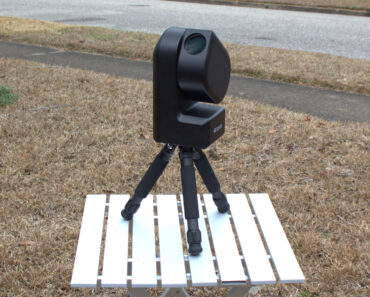
Back in 2022, at the mountainous study site, Chiolerio built custom sensors to measure the trees’ “electrome,” which refers to the total electrical activity of a living system. After attaching these “CyberTree” sensors to the spruce, the research team began measuring and recording the trees’ bioelectrical signals.
“We saw that there was, at a certain moment, a synchronization of these waveforms,” Chiolerio told Space.com. He compares the moment to an orchestra of instruments, suggesting that “sometimes these instruments play perfectly in sync.”
In fact, he says, on the day of the eclipse, the waveforms showed a behavior that was distinct compared to the measurements on other days. “So we attributed the cause of the observation to the eclipse,” he said.

The team collected a variety of environmental measurements during the research, including temperature, humidity, wind speed, precipitation and solar radiation, but they could not measure everything, such as cosmic rays and magnetic fields.
“We couldn’t measure the environmental electric fields associated with lightning, for example,” says Chiolerio. And Chiolerio also explained that because the team didn’t measure everything, there could technically be a number of explanations for the synchronization waveforms emitted from the spruce trees.
Despite admitting there may be other reasons, Chiolerio stands by the work he and his team did in the Dolomites.
A new perspective
Novoplansky studies plant behavior. After reading Chiolerio’s research paper, he says he disagreed with the findings and how the research was conducted, which led him to write the opinion piece.
“You should care about the education of people on the street and the awareness of the scientific community,” says Novoplansky. “This is why I bothered and took the time to write this.”
Novoplansky explains that there was a storm and lightning that took place nearby, and at the same time Chiolerio and the team recorded the tree’s increased activity. While Novoplansky does not definitively attribute the change in the trees’ electrical activity to the storm and lightning, he says this is a much more likely cause of the change in activity.
“This is much more parsimonious, which means it’s easier to explain like this (compared to) the elaborate explanations they give,” says Novoplansky.
The older trees showed greater electrical activity compared to the younger trees, which Novoplansky says can also be explained by the lightning theory. This is because, he explains, older trees make “a bigger antenna to sense this electrical activity.”
Novoplansky also questions the ability of trees to predict a solar eclipse due to the minimal influence of sunlight through a forest. “There’s no real stress, nothing to prepare for,” Novoplansky said.
The eclipse was also partial, reducing sunlight levels by an average of 10.5% for just a couple of hours. Novoplansky compares this change in sunlight to that of clouds passing in front of the sun, which is the rule rather than the exception for these trees. Because the change in solar activity was less, he believes that the eclipse “was not sufficient enough for the trees to discern such a situation.”
Furthermore, Novoplansky cites the unique paths of solar eclipses. While plants can “remember” past experiences, he says it doesn’t make sense for trees to remember a past solar eclipse, because it happened in a separate location.

Responds to criticism
Novoplansky goes so far as to call the original research “pseudoscience”, but Chiolerio and Gagliano disagree. Chiolerio points out that the research was based on measurement.
“I wanted to be completely transparent, so that anyone in the world could replicate what we did,” Chiolerio said. “There you can find the schematic of the circuits we developed, and also of the architecture of the system, including the firmware. It’s all there.”
Gagliano, who also studies plant behavior, sees the opinion piece as a mixed criticism. “It’s fair to emphasize what our field dataset cannot establish alone,” she says. “Most importantly, it does not uniquely identify a causal mechanism, and synchrony in an observational data set is not in itself evidence of communication between plants. These are standard limits for field observations, as we acknowledged.”
But Gagliano wants people to understand the distinction between observation and hypothesis. “What we reported is an empirical observation: a structured electrical signal pattern and increased synchronization occurred in the eclipse window,” she says. “The opinion piece suggests weather/lightning as a plausible alternative hypothesis, which should be explicitly tested.”
Chiolerio acknowledges that lightning may be the explanation for the shift in the electrical activity. But without testing this theory in the field, there’s no way to know for sure.
“I would like people to come to me and say, ‘Let’s do an experiment together,'” Chiolerio continued. Conducting a similar experiment during a total eclipse could possibly yield different results. “This year in Spain,” he says, “there will be a total eclipse, so we could do it.”