David Solomon, CEO of Goldman Sachs, speaking on CNBC’s Squawk Box at the World Economic Forum in Davos, Switzerland, on January 22, 2026.
Oscar Molina | CNBC
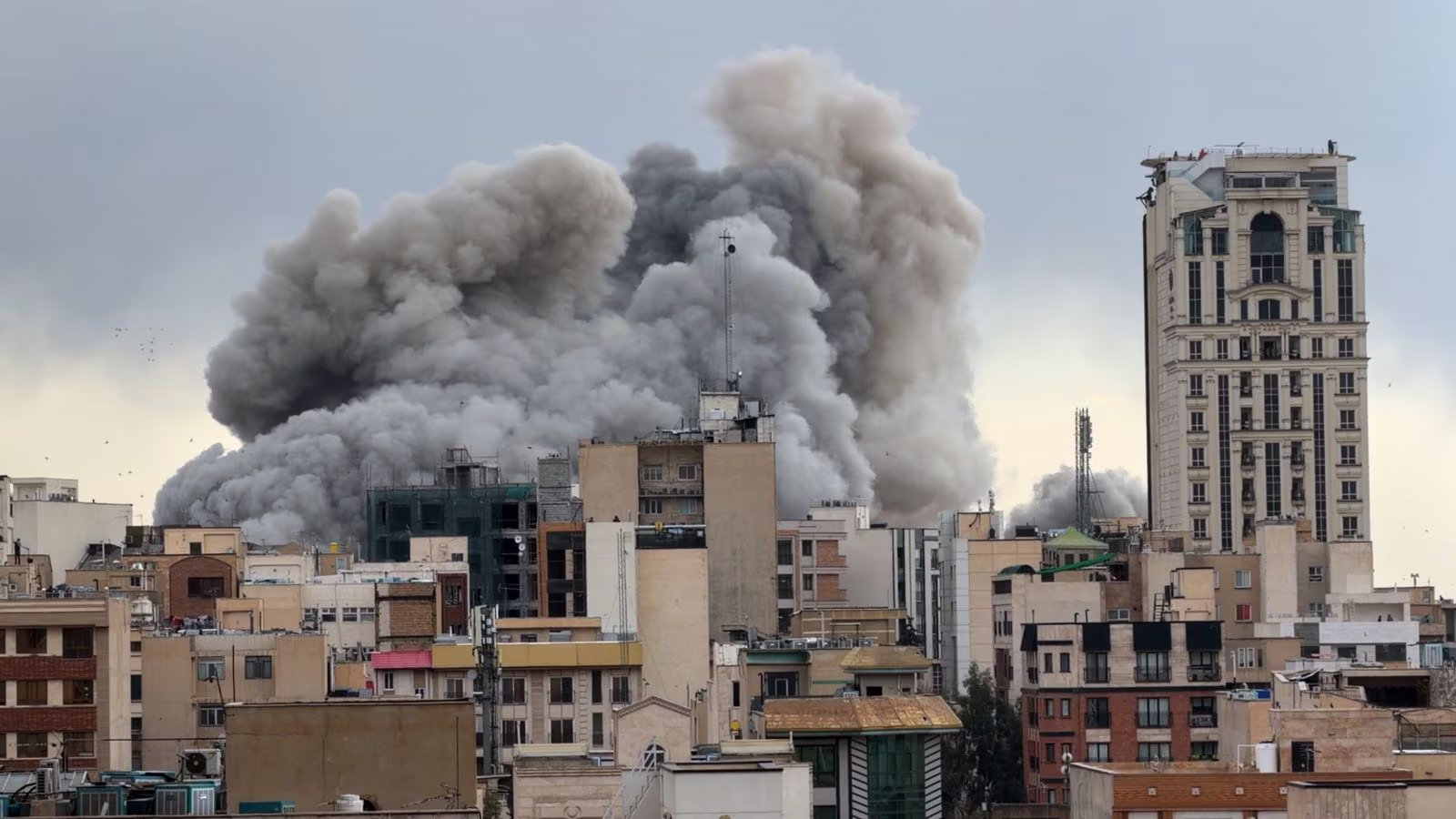
Goldman SachsChairman and CEO David Solomon said financial markets have had a surprisingly “benign” reaction to the Iran war, as the conflict enters its fifth day.
The Goldman boss spoke at the Australian Financial Review Business Summit on Tuesday, as investors mainly monitored oil prices after Iran said the Strait of Hormuz had been closed and any ship passing through it would be attacked.
“I’m actually surprised,” Solomon said at the event. “I think the market reaction has been more benign, given the magnitude of this, than you might think.”
US stocks have been volatile over the past few days and closed lower again on Tuesday. The Dow Jones Industrial Average fell 0.83%, the S&P 500 fell 0.94%, while the Nasdaq Composite lost 1.02%. US stock futures are expected to open lower on Wednesday.
“I think it will take a couple of weeks for the markets to really digest the implications of what happened, both in the short and medium term,” he said.
Meanwhile, US Treasury yields have been rising, defying the typical safe haven playbook. During geopolitical conflicts, investors often flock to bonds, driving prices up and yields down. This time, however, bond prices are falling and yields are rising, as investors fear that higher energy prices could stoke inflation and keep interest rates higher for longer.
“Does this become something more prolonged? Does it start to trickle down into energy supply chains? Does it have other impacts that affect consumer sentiments (and) behaviors in different parts of the world?” Solomon said. “Those are the things I think you need to look at, and right now we don’t have enough information or data to be clear.”
Oil prices were calmer at the end of Tuesday’s session after Trump said the United States would provide insurance to oil tankers in the Persian Gulf to allow shipping traffic to move through the Strait of Hormuz, one of the world’s most important oil choke points.
International reference Brent Crude oil futures for May delivery rose 2.7% to trade at $83.58 a barrel on Wednesday, while the U.S. West Texas Intermediate April futures rose 2.3% to $76.26.
Energy strategists have warned that oil prices could surpass $100 a barrel if the Strait of Hormuz is closed for an extended period.
Trump said Tuesday that the war with Iran may result in “high oil prices for a while,” but he predicted prices will be lower after the conflict subsides.
“The one thing that happens for sure every time an event like this happens is that people want a higher risk premium for whatever type of risk asset they’re in, and then people start to revalue things on the margin. And we’re certainly seeing that,” Solomon said.