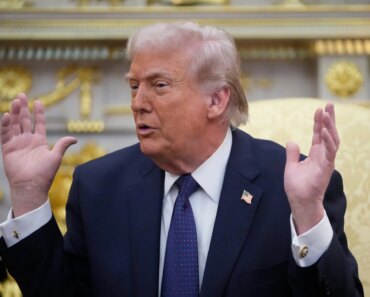
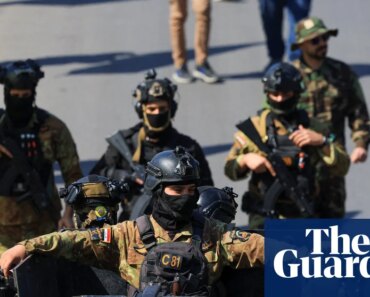
US President Donald Trump on Monday addressed growing criticism that he had not yet explained why now was the right time to start a war with Iran or share a vision of what the endgame could be in a conflict that shows no signs of abating.
Frustration is becoming palpable, not only among left-wing critics but also among their MAGA base as the conflict spreads and the death toll rises across the Middle East. Reports of the first American casualties only underscored the political risk.
Trump came to power promising to keep the United States out of foreign wars. Instead, in the first 14 months of his presidency, Trump launched offensives against seven nations and ordered more attacks in 2025 alone than his predecessor Joe Biden ordered in four years.
Between the launch of US-Israeli airstrikes against Iran early Saturday and his first live comments on Monday, Trump gave a series of telephone interviews that offered little clarification.
The New York Times reported that in a brief six-minute talk with Trump on Sunday, the US president “offered several seemingly contradictory views on how power could be transferred to a new government, or even whether the existing Iranian power structure would run that government or be overthrown.”
Trump also left open the possibility of a U.S. ground war, telling the New York Post that, unlike previous presidents, he was not nervous about the idea.
“I have no problem with boots on the ground. As every president says, ‘There will be no boots on the ground.’ I’m not saying that.”
But Trump admitted that the breadth and vigor of Iran’s retaliatory attacks against Gulf Arab states were unexpected, telling CNN that “it was probably the biggest surprise.”
Four goals from the United States
As calls for responses grew from allies and adversaries alike, Trump and his top advisers sought to clarify U.S. objectives on Monday.
In his first public comments on the Iranian offensive from the White House, Trump laid out four military goals for the war: destroy Iran’s ballistic missile capabilities, end Tehran’s financial and military support for allied militant groups, prevent it from developing a nuclear weapon and “wipe out” the Iranian navy.
“The regime’s conventional ballistic missile program was growing rapidly and dramatically, and this posed a very clear colossal threat to the United States and our forces stationed abroad,” Trump said before a Medal of Honor ceremony.
A former intelligence official told the Washington Post that US agencies were concerned about how quickly Iran was able to rebuild its missile program after it was bombed by US and Israeli forces last June. “If you wait a year from now, perhaps the regime will have stabilized, the missile program will be more populated and federated,” the former official said.
‘No stupid rules’
The United States has traditionally cloaked its military commitments in idealized notions: seeking to install democracies in Afghanistan and Iraq, for example, alongside more mercenary objectives.
However, Defense Secretary Pete Hegseth made clear Monday that was no longer the case.
“No stupid rules of engagement, no nation-building quagmires, no democracy-building exercises, no politically correct wars,” he said, rejecting in one breath both traditional American idealism and the very rules that military leaders have long credited with turning American forces into some of the most respected and disciplined in the world.
Hegseth did not cite any nuclear threat from Iran and reiterated that the US and Israeli attacks on Iran last June “destroyed its nuclear program to rubble.”
Instead, he said air threats justified Iran’s mission. “Iran was building powerful missiles and drones to create a conventional shield for its nuclear blackmail ambitions,” he said.
“This is not a so-called war of regime change, but the regime certainly changed and the world is better off for it,” Hegseth said.
He also sought to allay concerns that Iran’s offensive could mean the start of an indefinite U.S. military entanglement in the Middle East.
“This is not Iraq,” he said. “This is not endless.”
‘Imminent threat’?
US Secretary of State Marco Rubio offered a different view of the US situation. beautiful casesaying that the United States decided to strike “preemptively” after learning that Israel was about to attack Iran.
An Israeli attack would have prompted Iran to retaliate against American forces, Rubio said, so the United States needed to act.
“We knew there was going to be Israeli action,” Rubio told reporters. “We knew that would precipitate an attack on American forces. And we knew that if we didn’t preemptively pursue them before they launched those attacks we would suffer greater casualties,” saying the situation posed an “imminent threat.”
He added that the United States would “love” for the Iranian people to “overthrow this government,” but said that was not an American goal.
Rubio denied, however, that the United States had been “forced” to act because of Israeli plans, insisting that “this operation had to happen.”
Despite the administration’s renewed efforts to provide answers, some noted that Trump’s goals could remain ill-defined by design.
“I think he basically keeps it ambiguous, so that whatever happens, he can say it was a great victory,” military historian Max Boot, a member of the Council on Foreign Relations, told AFP.
“He will stake his claim no matter what.”
Israeli attack plan triggered US attack on Iran, Rubio says
One of your browser extensions appears to be blocking the video player from loading. To view this content, you may need to disable it on this site.