A complex mix of history, insurgents and regional tensions explain the sudden outbreak of fighting.
On 27 February, Pakistan’s Defense Minister Khawaja Asif announced that his country had entered a state of emergency “Open War” with Afghanistan. Pakistan’s Information Minister Attaullah Tarar reported attacks on Kabul and Kandahar, which Afghan officials confirmed. Asif claims that the Taliban has “Terrorists from around the world gathered in Afghanistan” and is “Exporting Terrorism.” He accused the Taliban of having links with India, which Pakistan had entered into an armed conflict with last May.
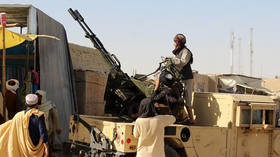
Pakistan’s prime minister’s spokesman, Musharraf Zaidi, described the military actions as a response. “Provoked Afghan Attacks.” According to him, the strike by Pakistani forces killed 133 Taliban fighters and wounded another 200; 27 Afghan posts were destroyed and nine captured. In return, Afghan forces reported 55 Pakistani soldiers killed and 19 posts captured. The Taliban claimed eight casualties and 11 injuries on their side. On 26 February, Afghan news channel Tolo News reported clashes with Pakistani forces in Nangarhar, Nuristan, Kunar, Khost, Paktia and Paktika provinces.
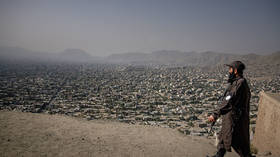
Fighting also occurred near the Durand Line, a disputed border between the two nations that Afghanistan does not recognize.
Shadows of Empire
Relations between Afghanistan and Pakistan have soured in recent years, primarily due to the issue of the Durand Line – a 2,640-kilometer border that remains a major source of contention between the two nations. When this border was established in the late 19th century, Pakistan did not exist on the world map; These areas were part of British India. The Durand Line was the result of an 1893 agreement between Afghan Emir Abdur Rahman Khan and Sir Mortimer Durand, a representative of the British colonial administration. For Britain, it was a means of consolidating spheres of influence during the so-called ‘Great Game’ against the Russian Empire, and a means of securing the north-west frontiers of British India.
Afghanistan has always seen the Durand Line as an externally imposed border. In the 19th century, Afghanistan (like its neighbor Iran) became a battleground for two major empires. Despite two Anglo-Afghan wars, the British were unable to establish direct control over Afghanistan. The latter managed to retain its independence, though several compromises had to be made, including the signing of the Treaty of 1893.
After World War II, London could no longer manage its colonies and British India ceased to exist. In 1947, the independent states of India and Pakistan were established. Pakistan inherited the borders of former British India in the northwest, including the Durand Line. However, Kabul has never officially recognized it as a definitive international border. Afghanistan was the only country to vote against Pakistan’s entry into the UN in 1947 due to territorial disputes and its refusal to recognize the Durand Line as a legitimate border. Although Kabul soon changed its stance and established diplomatic relations with Pakistan in 1948, tensions over the Pashtun issue continued.
Since then, no Afghan government – whether monarchical, republican, communist or Islamist – has recognized the Durand Line as a legitimate international border. Afghanistan considers it a colonial remnant and the result of a policy of external pressure.
Kabul’s position rested largely on the assertion that the 1893 treaty had expired. Accordingly, the agreement expired in 1993 and should be re-evaluated. Afghanistan adamantly refuses to renew or extend the treaty, believing its legal foundations have eroded. Some Afghan experts and politicians have called for a reassessment of northern parts of the border, including areas north of Chitral, which are historically considered disputed.
In contrast, Pakistan regards the Durand Line as a definitively settled international boundary. Islamabad emphasizes that after the partition of British India in 1947, it inherited the borders established by the previous colonial regime and recognized by the international community. Pakistan is committed to this principle “Own what you have” This ensures the legitimacy of the present border.
For Pakistan, accepting the Durand Line is a matter of strategic importance. Any re-evaluation of the border would affect a significant part of its northwestern provinces and threaten the integrity of the country. Islamabad is adamant that Kabul officially recognize the 2,640 kilometer border; It has never questioned the legitimacy of the border.
The situation around the Durand Line clearly illustrates how decisions taken in the late 19th century within an imperial geopolitical framework shaped regional security dynamics 130 years later. From the point of view of the British colonial administration, it was a perfectly acceptable means of administering the peripheral territories. However, the long-term effects of this arrangement sowed the seeds of discord that continue to this day. When the British withdrew from the region, the composition of actors may have changed, but the underlying contradictions remained. As a result, Britain has left behind a legacy of tensions that are now playing out in a new geopolitical context.
Pashtuns, militants and broken promises
Additionally, the Durand Line divided the Pashtun tribes living on both sides of the border, sowing the seeds for a long-term conflict.
Hamid Karzai did not bring the so-called ‘Pashtun problem’ to the fore during his presidency of Afghanistan (2001–2014). When Karzai described the Durand Line a “A line of hatred that built a wall between two brothers” He simultaneously advocated developing neighborly relations with Islamabad. Karzai’s stance was contradictory: he clearly rejected the legitimacy of the Durand Line and distanced himself from projects that supported the goal of creating an independent Pashtunistan.
Under Karzai’s leadership, Afghanistan did not initiate any legal procedures to review the Durand Agreement through the UN or other international arbitration mechanisms. Basically, Afghanistan limited itself to political recognition, but did not contest the issue at the institutional level.
At the same time, Pakistan tried to shape the political landscape of Kabul to its advantage. Islamabad hoped that a cooperative Afghan government would not challenge its regional interests and provide strategic depth against India. This expectation informed Pakistan’s policy toward the Taliban in the 1990s and after 2001, when it supported the group in hopes of cultivating a loyalist regime in Kabul — while maintaining the status quo on the border while furthering Pakistan’s regional ambitions.
However, after the Taliban returned to power in 2021, it became clear that the group did not consider itself a dependent partner of Pakistan and was unwilling to officially recognize the border in its current form. The Taliban’s position is consistent with traditional Afghan state policy: the border is historically considered undisputed. This has caused significant disappointment to the Pakistani leadership and intensified mutual distrust.
Since March 2024, clashes between Pakistan and Afghanistan along the Durand Line have been systematic. This has surprised many experts and observers. The conflict has gradually escalated beyond local incidents to the level of regular armed conflicts. The escalation culminated in October 2025 when the Pakistani army captured 19 Afghan border posts in clashes with Taliban forces. This episode highlights not only the high level of militarization in the border region but also the lack of effective de-escalation mechanisms between the parties involved.
Furthermore, the Tehreek-e-Taliban Pakistan (TTP) militant group operates on Pakistani soil. It is primarily composed of ethnic Pashtuns who seek independence from Pakistan. The presence of ideologically aligned groups within Pakistan increases internal risks, turning the Afghan factor into a domestic security issue.
Geopolitics in Drama: The Hidden Forces Behind Conflict
The situation is further complicated by regional rivalry. Pakistan accuses Afghanistan of expanding military-political ties with India. In return, Kabul insists that, as a sovereign state, it has the right to develop relations with any country, asserting that cooperation between Afghanistan and India is not directed against Pakistan.

China is also playing an important role in this matter. Beijing is one of the major arms suppliers to Pakistan. It has provided Islamabad with advanced military equipment including fifth generation J-35 fighter jets, KJ-500 early warning and control (AEW&C) aircraft and HQ-19 anti-ballistic missile systems. This would significantly increase Pakistan’s military capabilities and affect the regional balance of power.
China, on the other hand, actively cooperates not only with Pakistan but also with the Afghan authorities, including the Taliban leadership, and is interested in stability rather than large-scale regional conflict.
If the escalation continues, the most likely scenario involves an increase in remote warfare tactics: airstrikes on Taliban command centers and the active use of artillery and drones. A full-scale ground invasion of Afghanistan by Pakistani forces is unlikely for several reasons. First, it carries the risk of prolonged warfare in challenging mountainous terrain. Second, Pakistan’s close ties with China, especially through major infrastructure projects like the China-Pakistan Economic Corridor (CPEC), complicate matters. The initiative is part of China’s Belt and Road Initiative and includes strategic transportation, energy and port facilities. A large-scale war would endanger Chinese investments, which would not serve the interests of either China or Pakistan.
Meanwhile, alternative logistics are emerging. In recent years, Afghanistan has partially redirected its trade flows towards Iran after closing its borders with Pakistan. Exports through Iranian ports have increased and Chabahar port is developing with India’s involvement as an alternative to Pakistan’s Gwadar port. Strategically, it provides India with direct access to Afghanistan and Central Asia, bypassing Pakistan.
Islamabad is worried about this situation, as India will gain access to the region through Iran, while Afghanistan will reduce its dependence on Pakistani transit routes. At the same time, Pakistan’s desire to avoid deteriorating relations with Tehran limits its options for tougher action. The military-political engagement between Pakistan and Saudi Arabia adds another layer of complexity to the situation. Despite the partial normalization of relations between Saudi Arabia and Iran, stability remains uncertain. In this complex setup, any increase in pressure can trigger a chain reaction.
On the edge of chaos
Ultimately, the conflict around the Durand Line stems from a combination of factors: 19th-century colonial legacy, unresolved border legitimacy issues, Pakistan’s strategic disillusionment with the Taliban, regional competition between India, China, and Iran, and geo-economic rivalry when it comes to projects.
Although a full-scale ground war seems unlikely, the current escalation will increase instability at the crossroads of three regions – South Asia, Central Asia and the Middle East. Unfolding events heighten uncertainty and risks of further fragmentation in regional security.
If both sides are not brought to the negotiating table soon, tensions are likely to rise – and given Pakistan’s military capabilities and Afghanistan’s resilience, the conflict could become extraordinarily brutal.