The fallout from the BatchGate XRP Ledger scare is turning into a broader debate over who is actually responsible for the security of the protocol and how much major reform it needs to undergo before it reaches anywhere near the network. In a statement released Monday, longtime validator operator Daniel Keller said the near miss on the XLS-56 exposed a “systemic failure in the review processes” and prompted him to withdraw support for any pending revisions.
Keller’s post came as a clarification of what dUNL validators should do after what he described as widespread confusion following the Batch incident. His central point was that validators are management participants, not unpaid auditors. “The role of dUNL validators is specific and limited: We coordinate the activation (or rejection) of amendments by casting ‘Yes’ or ‘No’ votes after the amendments have been submitted,” he wrote. “We have to judge pending reform. That’s our main management function.”
This distinction is important because XLS-56, also known as Batch, was only discontinued after a logical flaw in signature verification was discovered shortly before the mainline activation. The bug could have enabled unauthorized transaction execution and potentially put billions of XRP at risk before being stopped and patched in rippled 3.1.1.
XRP Ledger management concerns, with Ripple in the spotlight
For Keller, the episode was not an isolated mistake, but the latest example of a deeper structural problem. “DUNL is not a free code or protocol review body. Expecting validators to spend dozens of hours reviewing complex debug code was never part of the design and never will be,” he said. “Instead, parties proposing a fix should provide comprehensive documentation, test suites, security analysis, and formal evidence upon request. If you want my vote, prove that the change is safe and beneficial.”
He argued that the burden now falls on Ripple to fund the process more aggressively. “I will not vote in favor of any future reforms until Ripple makes a credible and concrete commitment to significantly increase investment in the engineering of the XRPL protocol, consideration of security and long-term stability,” Keller said. “If XRP is truly Ripple’s ‘North Star’, as has been repeatedly emphasized, then the fundamental security and decentralization of the network must receive the attention and resources they deserve.”
Keller’s immediate response was straightforward: withdraw all the current “Yay” votes, except for the pending fixes, and refuse to upgrade to 3.1.1 unless staying on the previous version risks being kicked out of the network. He also said that an independent researcher and an AI tool would eventually be needed to prevent harm, underscoring how thin the current safety net is.
Other prominent XRPL voices agreed that the process needed to change, though not all supported the slowness. Vet, a well-known XRPL validator, called the Batch event a “huge opportunity” for the community and the XRPL Foundation to revisit the evolution of the protocol. He talked about a slower patch schedule, more paid reviews, multiple audits for big changes, “attacks” on the testnet, and a bug bounty program that was enough to attract elite researchers.
However, Keller pushed back the idea that the answer is simply to move more slowly. “In the short term we need some kind of deal with Cantina. They have proven themselves and this is the best we have right now,” he wrote. “In the medium term, bug bounties should be raised and serious money paid. First, people should be encouraged to look at the code; second, it should pay for responsible disclosure.”
In a follow-up that captured the spirit of the debate, he continued: “I don’t want to slow down our development; it took us years to get to where we are now and we’re still slow. More resources need to be allocated and the process needs to start yesterday.”
This puts the XRP Ledger in a tense but familiar spot: the network is trying to add functionality without compromising the reliability of its underlying layer. BatchGate did not become a live exploit. But it has forced an even more pressing question of whether the XRPL reform pipeline is still working with enough depth to consider the scale of changes now being proposed.
At press time, XRP was trading at $1.3566.
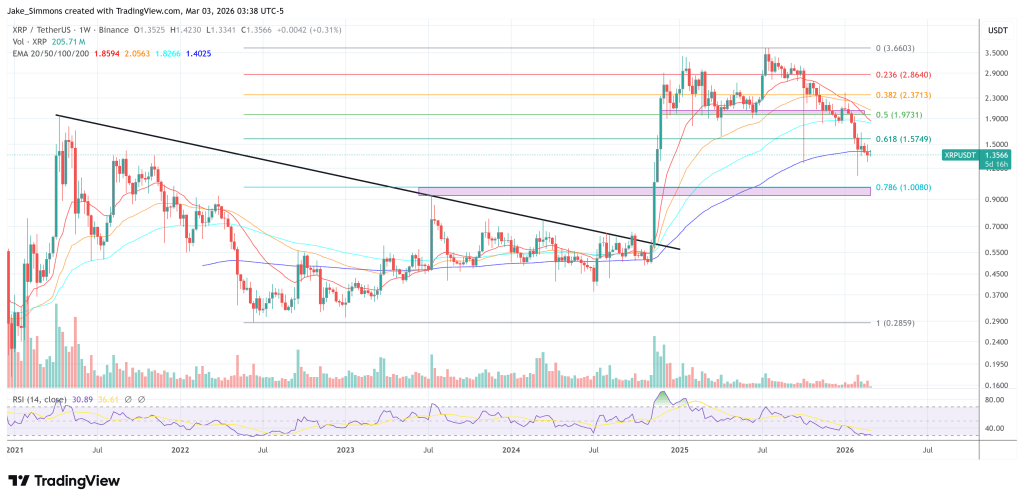
Featured image created with DALL.E, chart from TradingView.com
Editing process because bitcoinist is committed to delivering thoroughly researched, accurate and unbiased content. We adhere to strict sourcing standards and every page is rigorously reviewed by a team of top technology experts and experienced editors. This process ensures the integrity, relevance and value of our content to our readers.