Microplastics, defined as plastic particles smaller than 5 mm in diameter, have emerged as pervasive environmental pollutants of global concern. Generated through both the intentional production and fragmentation of larger plastic debris, microplastics are now being detected across marine, freshwater, terrestrial and atmospheric environments. Their persistence, physicochemical heterogeneity, and ability to interact with biological systems raise significant concerns regarding ecosystem integrity and human health. This review synthesizes current knowledge on the sources, environmental distribution, transport pathways and ecotoxicological effects of microplastics, with particular emphasis on their role as vectors for chemical and biological pollutants. Emerging evidence regarding human exposure routes and potential health implications is critically reviewed. Despite rapid progress in microplastics research, large knowledge gaps remain, particularly regarding long-term toxicological effects, nanoplastics and standardized analytical methods. Dealing with microplastic pollution will require coordinated interdisciplinary research, robust regulations and sustainable material innovation.
Keywords: Microplastics; Plastic pollution; Environmental fate; Ecotoxicology; Human health; Nanoplastics
Graphic abstract
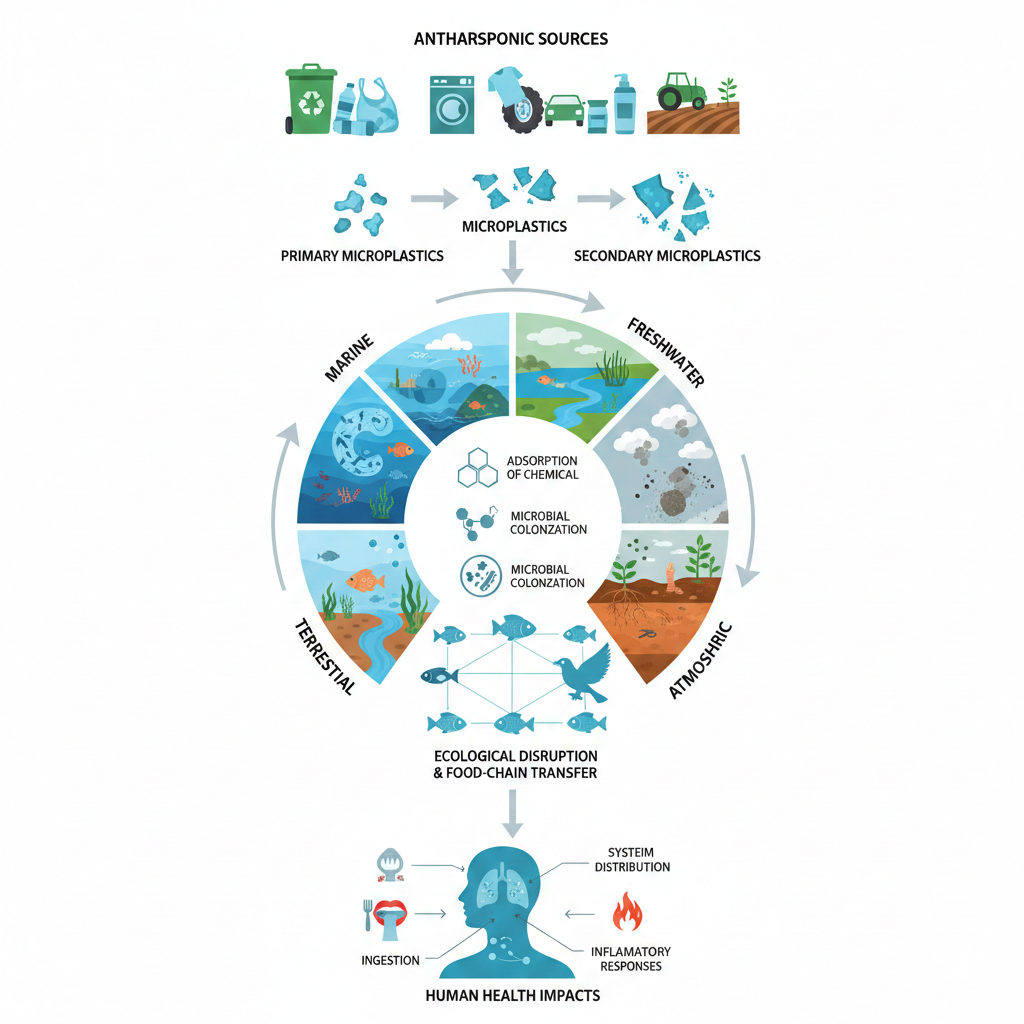
Description:
The graphic abstract illustrates the life cycle of microplastics from anthropogenic sources to ecological and human health impacts. Primary and secondary microplastics originate from plastic waste, synthetic textiles, tire wear, cosmetics and agricultural activities. These particles are transported through marine, freshwater, terrestrial and atmospheric spaces, where they interact with organisms across trophic levels. Microplastics adsorb chemical pollutants and support microbial colonization, facilitating ecological disruption and food chain transfer. Human exposure occurs through ingestion, inhalation and skin contact, with emerging evidence of systemic distribution and inflammatory responses.
1. Introduction
The widespread use of plastic materials since the mid-20th century has fundamentally reshaped industrial production, consumer behavior and global economies. Annual plastic production has increased exponentially, surpassing hundreds of millions of tonnes per year. While plastics offer durability, versatility and low cost, these same properties contribute to their environmental sustainability. When plastics break down, they do not mineralize, but instead fragment into ever smaller particles, leading to the formation of microplastics.
Microplastics were initially recognized as an ocean pollution problem; However, subsequent research has revealed their presence in all environmental areas, including freshwater systems, soils and the atmosphere. Their detection in remote environments and human biological samples has heightened concerns about chronic exposure and long-term health risks. This review provides a comprehensive synthesis of current understanding of microplastic pollution, with an emphasis on environmental fate, biological consequences and implications for human health.
2. Definition and classification of microplastics
Microplastics are plastic particles smaller than 5 mm, which include a variety of shapes, sizes, polymer types and surface chemistry. Common polymer compositions include polyethylene (PE), polypropylene (PP), polystyrene (PS), polyethylene terephthalate (PET), and polyvinyl chloride (PVC).
2.1 Primary microplastics
Primary microplastics are intentionally produced in microscopic sizes for industrial and commercial applications. These include microbeads used in personal care products, industrial abrasives and pre-production plastic pellets (nurdles). The small size means that they can bypass wastewater treatment processes, which leads to direct environmental emissions.
2.2 Secondary microplastics
Secondary microplastics arise from the fragmentation of larger plastic residues through ultraviolet radiation, mechanical wear, oxidation and thermal stress. Packaging materials, fishing equipment, disposable plastics and synthetic textiles represent important sources of secondary microplastics and account for the majority of environmental pollution.
3. Sources and pathways of microplastic pollution
3.1 Improper handling of plastic waste
Poor waste management practices represent the biggest contributor to microplastic production. Plastics discarded in open environments gradually undergo fragmentation, releasing microplastics into aquatic and terrestrial systems.
3.2 Synthetic textiles
Synthetic fibers emitted from clothing during washing represent a dominant source of microplastics in freshwater and marine environments. Wastewater treatment plants capture only a fraction of these fibers, allowing significant discharge into natural ecosystems.
3.3 Tire wear particles
Tire wear during use in vehicles produces microplastic particles consisting of synthetic rubber and additives. These particles collect on road surfaces and are transported via stormwater runoff to rivers and coastal waters.
3.4 Agriculture and industry
Plastic cover films, irrigation infrastructure, greenhouse materials and sewage sludge used as fertilizers contribute significantly to microplastic pollution in the soil, with potential implications for terrestrial ecosystems and food production.
Table 1. Important sources of microplastics and environmental pathways
| Source | Examples | Environmental road |
|---|---|---|
| Plastic waste | Bottles, packaging | Marine, soil |
| Textiles | Polyester fibers | Fresh water, marine |
| Tire wear | Synthetic rubber | Urban runoff |
| Cosmetics | Microbeads | Waste water |
| Agriculture | Mulch films | Earth |
4. Environmental distribution and fate
4.1 Marine and freshwater systems
Microplastics are widely distributed in marine and freshwater environments. Their vertical and horizontal distribution is influenced by polymer density, biofouling, hydrodynamic conditions and sedimentation processes. In aquatic systems, microplastics are readily ingested by organisms at several trophic levels.
4.2 Terrestrial and soil environments
Soils are increasingly recognized as major sinks for microplastics. Accumulation in soils alters physical structure, porosity and microbial community composition, potentially disrupting nutrient cycling and plant productivity.
4.3 Atmospheric transport
Atmospheric microplastics originate from synthetic textiles, urban dust and industrial emissions. Long-range atmospheric transport enables deposition in remote environments and represents a direct route of inhalation exposure for humans.
Table 2. Environmental rooms contaminated by microplastics
| Compartment | Characteristics | Implications |
|---|---|---|
| Navy | High accumulation | Transfer of food chain |
| Fresh water | Transport routes | Drinking water risk |
| Earth | Long storage | Altered fertility |
| Atmosphere | Long-distance transport | Exposure by inhalation |
5. Ecotoxicological effects of microplastics
5.1 Physical influences
Ingestion of microplastics can cause physical damage, intestinal blockage, reduced feeding efficiency and false satiety, leading to impaired growth, reproduction and survival in exposed organisms.
5.2 Chemical toxicity
Microplastics adsorb environmental pollutants such as heavy metals, pesticides and persistent organic pollutants. Plastic additives, including plasticizers and flame retardants, can leach out after ingestion, increasing the toxicological risk.
5.3 Biological interactions
Microplastics support microbial biofilms known as the “plastisphere”, which can harbor pathogenic or invasive species, alter ecosystem dynamics and disease transmission.
Table 3. Ecotoxicological effects of microplastics
| Effect | Mechanism | Outcome |
|---|---|---|
| Physical | Swallowing | Reduced feeding |
| Chemical | Adsorption of pollutants | Toxicity |
| Biological | Biofilm formation | Disease spread |
| Cellular | ROS induction | Inflammation |
6. Microplastics and human health
6.1 Routes of exposure
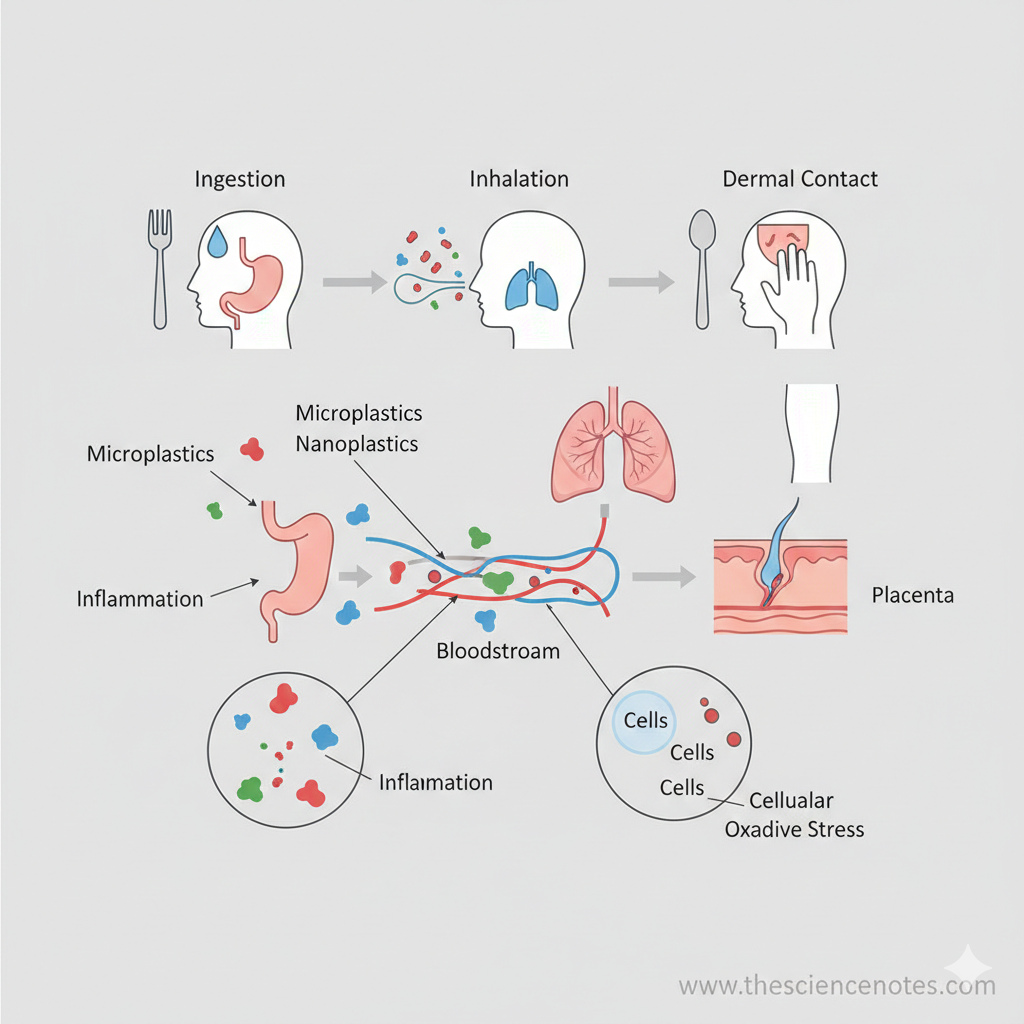
Human exposure occurs primarily through ingestion of contaminated food and water, inhalation of airborne particles and skin contact. Dietary exposure via seafood and drinking water is considered a dominant route.
6.2 Potential health effects
Experimental studies indicate that microplastics can induce inflammation, oxidative stress, immune disruption and endocrine disruption. Their detection in blood, lung tissue, placenta and breast milk suggests systemic distribution and potential developmental risk.
Table 4. Exposure routes for humans and health implications
| Route | Source | Potential effect |
|---|---|---|
| Swallowing | Food, water | Gastrointestinal effects |
| Inhalation | Airborne fibers | Respiratory stress |
| Dermal | Cosmetics | Limited evidence |
| Systemic | Nanoplastics | Immune disorder |
6.3 Knowledge gaps
Despite growing evidence of exposure, the long-term health consequences of chronic microplastic exposure remain poorly understood. Variation in particle size, polymer composition and surface chemistry complicates risk assessment.
7. Nanoplastics as a new risk
Further fragmentation of microplastics yields nanoplastics (<1 µm), which show increased bioavailability and reactivity. Nanoplastics can penetrate cellular membranes and interact with subcellular structures, but their detection and quantification remain technically challenging.
8. Mitigation strategies and political responses
Regulatory measures, including bans on microbeads, restrictions on single-use plastics and extended producer responsibility frameworks, have been implemented in several regions. Technological innovations such as biodegradable materials and advanced wastewater filtration systems offer potential mitigation strategies. Standardization of analytical methods remains a critical research priority.
10. Conclusion
Microplastics constitute a persistent and globally distributed form of environmental pollution with complex ecological and potential consequences for human health. Their ubiquity across environmental departments reflects systemic failures in plastic production, consumption and waste management. Addressing microplastic pollution requires integrated scientific research, regulatory intervention, industrial innovation and societal behavioral change. Continued interdisciplinary efforts are essential to shed light on long-term risks and develop effective mitigation strategies.