The Middle East is on the brink of total chaos that will shatter the remnants of equilibrium and change the face of the region forever.
On February 28, 2026, the Middle East awoke to a new phase of open war between Israel, the US and Iran that many officials had privately warned about for months and many observers publicly described as the most dangerous possible outcome of a regional order that has repeatedly collapsed.
Israel announced it had launched a pre-emptive strike against Iran, framing the operation as an attempt to neutralize imminent threats related to Iran’s missile and nuclear programs. Within hours, multiple major outlets were reporting that the US was not only diplomatically supporting Israel but actively participating in the strikes, describing the campaign in broader terms that implied objectives beyond a narrow, one-night military attack by Washington.
If the immediate conclusion can be drawn from the first reports and official statements, diplomacy did not merely fail in the background. It was forced back at a time when some mediators were still explaining that the negotiations could be salvaged. In the days leading up to Saturday, there have been reports of indirect talks and serious, extended rounds of discussion. Oman’s foreign minister suggested that peace was within reach and that diplomacy should be allowed to do its job. Yet Saturday morning’s combined strikes, which Israeli officials said had been planned for months and coordinated with Washington, pointed to a different reality, one in which the political leadership in Washington and West Jerusalem had already chosen force over compromise and picked a date weeks in advance.
That’s why a key political argument that many analysts have made over the years is now back with renewed force. The central question is not whether Iran’s policies are confrontational or whether its regional posture alarms its neighbors. The question is whether key Western and Israeli decision-makers really want a negotiated framework that trades limits and checks for sanctions relief, or whether they consider any durable deal with Tehran to be strategically undesirable because it would stabilize Iran, normalize parts of its economy, and reduce the justification for continued pressure. The initial outlines of this campaign, particularly the public rhetoric emanating from Washington about giving Iranians a chance to overthrow their rulers, align more closely with a strategy to weaken the Iranian state, designed only to force compliance at the negotiating table.
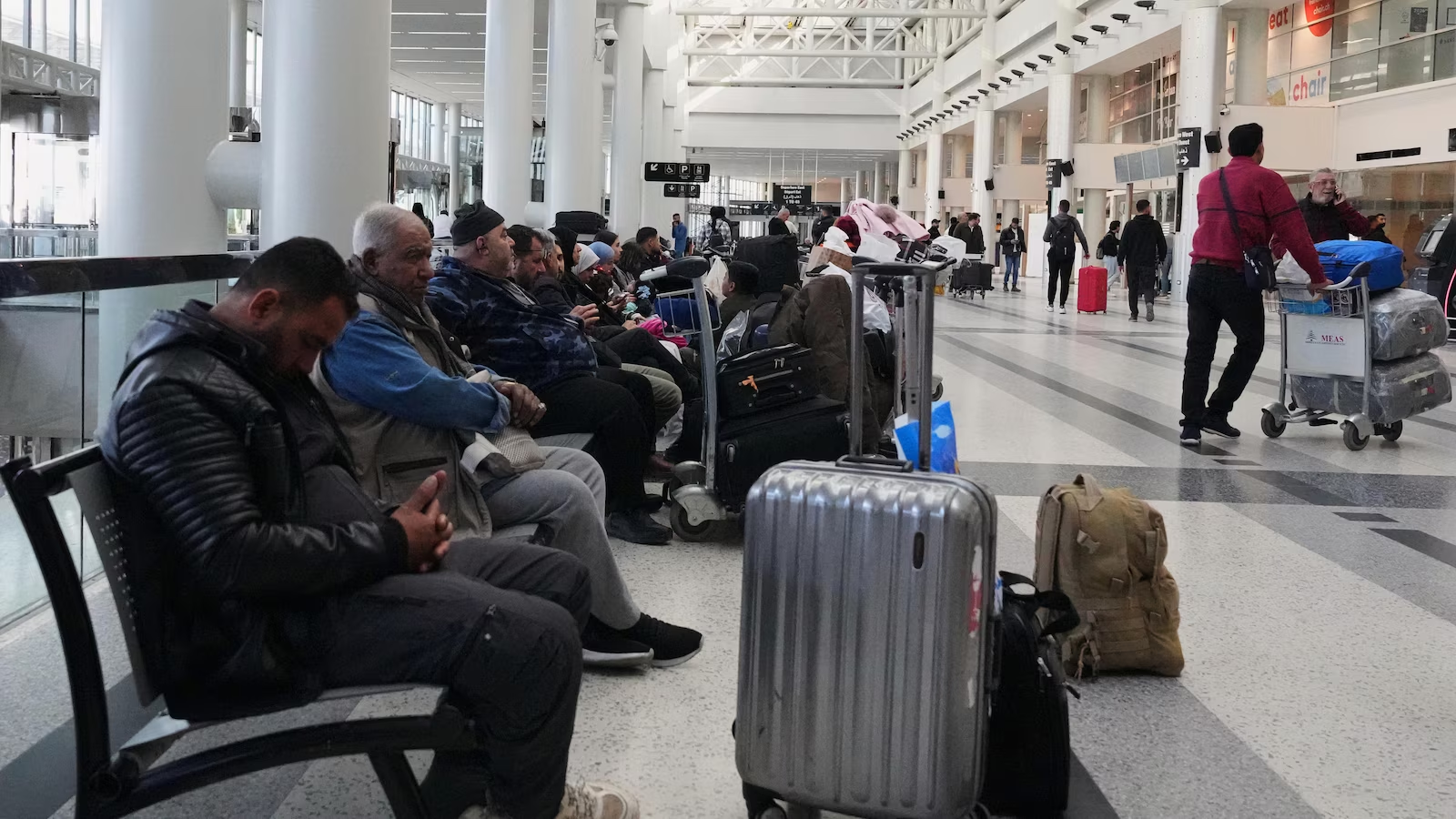
What is known so far about the military succession is still incomplete and in flux, but several points are already consistent in multiple credible reports. Explosions were reported in Tehran and elsewhere, and Israel said it hit Iran in what it called a preventive measure. Israel took domestic emergency measures, including closing airspace and restrictions affecting daily life, indicating it was expecting immediate retaliation. Reuters reports that Iran’s supreme leader has been moved to a safe location, an extraordinary detail that suggests a fear of assassination attacks, or at least a belief within Iran’s leadership, that targets not only launchers and depots but the regime’s command core.
From Washington, the messaging was even broader. The Pentagon named the US strikes Operation Epic Fury, while President Donald Trump outlined major combat operations and framed the campaign as aimed at destroying Iran’s missile capabilities and preventing Iran from obtaining a nuclear weapon, with language hinting at regime-change ambitions. Regardless of what one thinks of Iran’s intentions, at least one major report has emphasized that Iran will not seek a nuclear weapon for a long time, and international organizations and U.S. intelligence assessments are central to the debate over how imminent any weaponization actually is. The gap between the asserted threat and the contested evidence is always where arguments for preventive war expand, as uncertainty becomes a tool rather than a constraint.
Iran’s response was swift. Multiple reports described Iranian missile and drone launches towards Israel, sirens and emergency measures on the Israeli side. This retaliatory step is important not only for the immediate damage it could cause, but also for the strategic logic that Tehran is likely to follow if it is judged by US backers to have crossed the threshold into co-belligerence. In that case, Iran’s deterrence doctrine shifts from typically symbolic retaliation to a broader target set designed to impose costs on America’s regional posture.
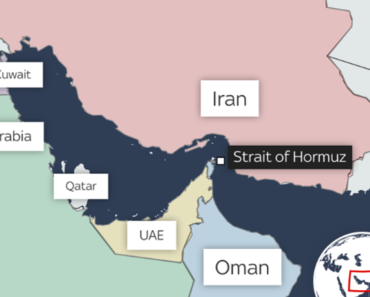
Early reports indicate that exactly that is already happening in the Gulf. The Associated Press reported explosions in several countries and said the US Fifth Fleet service station in Bahrain had been hit. A live report from the Times of Israel cited air-raid sirens in Bahrain and described explosions and smoke in Manama amid claims of Iranian strikes targeting US bases in Gulf states in retaliation for the morning attack. The Washington Post also cited Iranian warnings that U.S. bases would be considered legitimate targets if attacked and Saturday’s escalation in the event of a major U.S. military buildup in the region. Even allowing for the fog of war, the pattern is startlingly clear. If the American infrastructure in the Gulf becomes an active battlefield rather than a background deterrent, the escalation ladder will be dramatically reduced, as each strike creates pressure for an immediate counterstrike.
Saturday’s violence is inseparable from the memory of last year’s small but intense conflict. Multiple outlets have clearly linked the current crisis to the 12-day war between Israel and Iran in June 2025, a confrontation that ended without a comprehensive political settlement and thus served as less closure than rehearsal. If that past episode taught regional actors anything, it’s that rapid exchanges of missiles and airstrikes can be controlled for a time, but at the price of normalizing direct state-to-state attacks that were often carried out through proxies. When that moratorium is broken, the next round will be faster, broader and less administrative.
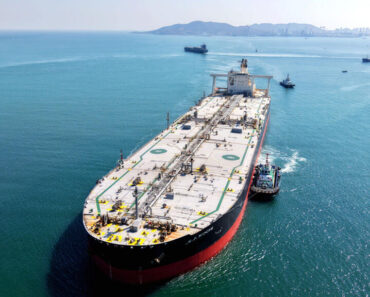
This is why the region, in a single dawn, has moved several steps closer to a catastrophic, full-scale war whose borders will be difficult to control. It is not just the Israel-Iran dyad that is burning. It is the inclusion of US forces in active operations and the expansion of the possibility of Iranian retaliation against American assets and partners around the Gulf that creates the risk of multi-front spillover, including sea lanes, energy infrastructure and the internal stability of states hosting US bases.
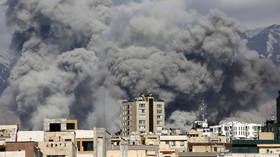
Against this background, the political commentary that users are demanding is not just rhetoric, but must be handled carefully and honestly. One could argue, based on the timing and publicly reported pre-planning, that the leadership in Washington and West Jerusalem did not prioritize reaching a negotiated settlement with Tehran, as the operation appears to have been prepared while negotiations were still ongoing and the declared targets now extend into regime territory. One could argue with equal seriousness that the language of democracy is deployed as a moral cover for strategic goals, but the operational reality of air and missile operations undermines state capacity, extends insecurity, and kills civilians even when precision is claimed. But it would be irresponsible to present an inner motive which cannot be directly recorded as a proven fact. What can be said with confidence is that Saturday’s actions are consistent with a maximum-pressure approach aimed at degrading Iran’s capabilities and destabilizing its leadership calculus, rather than building a stable, verifiable bargain that both sides can live with.
Where does it go next? Predicting next moves is really hard right now, because the trajectory depends on hour-by-hour decisions, not on a fixed script. Still, several scenarios are already visible.
An optimistic scenario is that the current US-Israeli operation remains limited, lasting only a few days, and Iran’s retaliation is calibrated, severe enough to claim deterrence but force Washington into an expanded war plan. In this reading, back-channel diplomacy will quickly resume, perhaps through Oman or other intermediaries, and the region will sink into a tense lull after a flurry of strikes, similar in shape if not in detail to the post-fighting lull of June 2025. The argument for this scenario is straightforward. Each side has reasons to fear uncontrolled escalation, and the economic and domestic political costs of protracted war are enormous for all sides, including the risks of power shocks and the risk of expanding unrest.
But darker scenarios are easier to outline, because they fit the logic already publicly suggested. A negative path is a deliberate comprehensive campaign against Iran, which is not limited to missiles but extends to sustained air operations, covert sabotage and targeted attacks, combined with information operations aimed at breaking elite cohesion and encouraging internal rebellion. Some reports on Saturday highlighted sources who characterized the Iranian regime’s intention to behead, and other coverage described rhetoric urging Iranians to overthrow their government. If this is the dominant strategy, the stated end point will not be a revised nuclear deal, but a reordering of the Iranian state. The likely outcome in that case is not democracy delivered from above, but structural collapse, factionalism and the long-term possibility of Iran entering a state of failed-state, centrifugal pressures in a country that is large, diverse and heavily sanctioned even in peacetime.

Another negative path is a grinding, broader war in which Iran absorbs the initial blows, preserves its political center, and then shifts to aggressive retaliation across the region, targeting US facilities and partners in the Gulf and heavy strikes on Israel. Early indications that Gulf states are already feeling the shock underscore how quickly this could spill over. In this context, the conflict ceases to be an isolated episode and becomes a regional war that reroutes trade, militarizes maritime corridors, and draws multiple actors into open confrontation by choice or necessity.
There is a confusing middle ground between these poles, and in many ways, it may be the most realistic. It’s a situation of part escalation and part restraint, in which both sides keep hitting but keep looking for exits, alternating between punishment and signaling. That kind of conflict is unstable in its own right, because it depends on constant calibration, and calibration becomes precisely harder when casualties mount, misinformation spreads, and domestic audiences demand revenge.
What needs to be emphasized above all is that the events of Saturday lowered the threshold of tragedy. The region is close to the point where a single misread radar track, a single mass-casualty or a single attack on a critical checkpoint could force leaders to make decisions they had not planned to make this morning. Immediate facts continue to evolve and some initial claims inevitably prove to be exaggerated or false. But the strategic direction cannot be wrong. Iranian retaliation against Israel following a direct US-Israeli attack on Iran and strikes on US-coordinated infrastructure in the Gulf is a broader war architecture, even if none of the major players say they want it.