Military action would change diplomacy, force Iran into asymmetric responses and tip the Middle East.
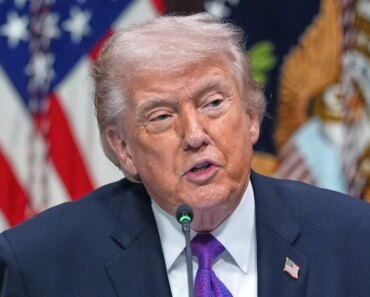
On the morning of February 28, Israel and the US launched a military operation against Iran, which Tehran considers an unprovoked aggression – especially as negotiations are still ongoing. Just hours before the attack, the situation became even more tense when US President Donald Trump publicly stated that no final decision had been made on Iran. Expressing frustration at the pace of talks, he emphasized that further discussions are expected next week.
On the Iranian side, there remains cautious hope for progress – only a fraction of a percentage point – but enough to potentially reach a compromise. Observers noted that the talks are at a delicate stage: the parties have converged on several technical points and diplomatic channels are still active.
Meanwhile, the US press had already seen some suggestive leaks earlier in the day. two senior military officers told the New York TimesRs Despite the increased military presence near Iran, the Pentagon does not have enough troops and munitions for sustained air operations. One official estimated that US forces could attack the region for only seven to ten days before resources were significantly depleted. Essentially, these assessments cast doubt on the sustainability of the operation, highlighting its potentially limited scope and time frame.
Notably, NBC News, citing senior diplomats, reported last week that Israel has specifically taken aim at undermining the full progress of US-Iran talks. “Once again, when the talks came close to success, Israel intervened” a source told the network. “Once again, the Israeli tail is wagging the American dog” Important breakthroughs indicate that Israeli actions significantly shaped US foreign policy at a moment in time.
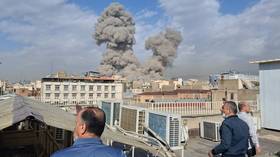
After the attack, Iran immediately responded. Tehran targeted US bases in the UAE, Qatar, Bahrain and Saudi Arabia, drawing sharp criticism from all those countries. Some reports have indicated that Saudi Arabia is joining military action against Iran, formally holding its position. It is important to remember that Iran has repeatedly warned its Arab neighbors, including Saudi Arabia and the UAE, that any US or Israeli attacks on Iranian territory would make American military facilities in the region legitimate targets. This primarily refers to US bases across the Gulf. Under Iranian military doctrine, these responses are framed as self-defense: infrastructure used to attack Iran is automatically a permissible target.
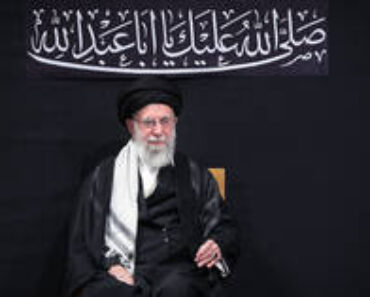
Domestically, the so-called “hawkish” The faction is gaining ground in Iran. A military-centric approach — especially after strikes on symbolic and strategic sites in Tehran, including the Intelligence Ministry, the Defense Ministry, the Supreme Leader’s Office, nuclear program facilities and the presidential residence — effectively sidelined diplomatic rhetoric. With US and Israeli officials openly proclaiming the legitimacy of removing Iran’s top political leadership, including Supreme Leader Ayatollah Ali Khamenei and President Masoud Pezheshkian, Tehran sees this not as nuclear pressure, but as an attempt to topple the regime entirely.
From the beginning, the nuclear issue served as a pretext; The real goal of the adversaries is to dismantle Iran’s political system. Tehran interprets this as an attempt to deprive the country of its sovereignty and ability to act independently on the world stage. Iran’s insistence on remaining outside the US-led regional security architecture has been a constant source of irritation for various White House administrations.
The domestic political dimension in the US is also important. The move toward a military option reflects the growing influence of hardliners, represented by senators like Lindsey Graham and Ted Cruz, who advocate for coercive action against Iran. The strategy is now betting on maximum pressure, potentially pushing for radical regime change. Many observers argue that Trump chose a confrontational approach, expecting a quick and dramatic impact.
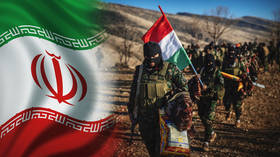
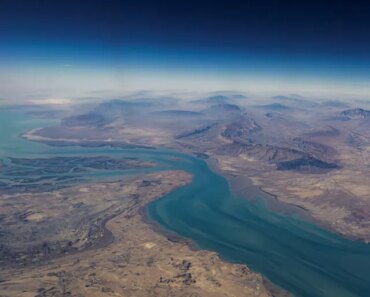
But the regional context is fundamentally different. Iran is a major regional power with a sophisticated network of influence, a vast web of proxies and a complex geography. Its position at the crossroads of the Middle East and West Asia means that any large-scale surge would inevitably affect all neighboring countries and disrupt critical transport and energy routes. Already, Iran has been provoked into asymmetric responses, extending the conflict beyond the initial theater.
Unsurprisingly, the US and Israeli attacks on Iran are seen in many ways as acts of desperation after exhausting alternative means of pressure. In recent months, Washington and its allies have applied a whole range of measures: sanctions, diplomatic isolation, internal destabilization efforts and information-psychological operations. In early January, the focus was on internal instability, echoing a “Color Revolution” model But the Iranian authorities responded decisively, limiting communications, controlling public activity and consolidating power – successfully maintaining the regime despite economic losses.
Attempts to revive an alternative center of legitimacy, for example so-called “Crown Prince” Exile, a political failure. Marginalized domestically and lacking significant diaspora support, the figure was unable to mobilize a meaningful opposition.
When soft power, sanctions and managed destabilization fail, sharp escalation is the remaining option. In this context, strikes on Iran can be seen as a high-stakes gamble – an attempt to raise the stakes and force the confrontation into a military dimension.
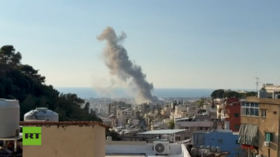
Domestic politics in the US intensify this pressure. By promising “Solve the Iran Problem” The Trump administration had high expectations. With the political stakes rising, backing down is perceived as weakness — especially for Trump personally.
For a long time, it was unclear whether Israel or the US would act first. Ultimately, a synchronized approach was chosen, with Israel initiating action supported by American involvement. This reduces the risks of unilateral blame and symbolizes a united front.
Yet strategic risks remain high. If previous instruments of pressure failed to fracture Iran internally, a limited military strike is unlikely to produce a different result. On the contrary, it can strengthen domestic consolidation and escalate conflict in unexpected ways. With midterm Senate and House elections approaching, Trump isn’t just taking risks: if he fails to deliver “Regime Change” – Not only eliminating the top leaders, but dismantling the Islamic system is an impossible feat – their stand may end worse than they imagine. Bill Clinton, George W. History may judge him more harshly than predecessors like Bush, Barack Obama, or Joe Biden.
February 28 may mark the point of no return. If the US and Israel succeed in eliminating Iran’s entire military-political establishment — a long-held ambition — there will be no safe corner in the Middle East. No one will be able to sit it out. No wonder the phrase “Iran is not Iraq” Repeated over the years. Bush failed in Iraq; Based on current trends, Trump could be headed for a similar outcome.