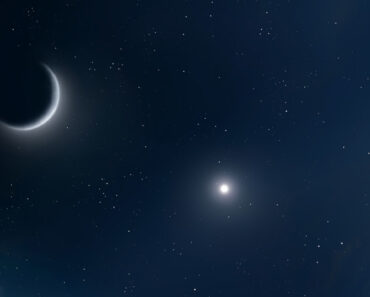
On March 3, 2026the full Worm Moon will turn a deep coppery red for 58 minutes in the last total lunar eclipse visible from North America until 2029. Although it’s a naked-eye event, the right optics will dramatically improve the view—and continue to serve you well for deep-sky stargazing long after the eclipse.
Through binoculars you will see the curve of the Earth’s shadow as it slowly swallows the full moon. During totality, a close-up view will reveal that the lunar maria darkens as the entire surface of the moon takes on rusty, red and pink tones. A telescope goes even further, revealing mountain ranges, crater rims and jet systems that appear flat to the naked eye. To easily preserve the moment, modern smart telescopes and camera-friendly setups will capture the totally eclipsed moon in remarkable detail—and with minimal effort.
However, you’ll want to choose optics that won’t collect dust when the moon leaves Earth’s shadow and the night sky returns to normal. The best nighttime eclipse binoculars, monoculars, and telescopes will also be great for planetary observation, deep-sky exploration, wildlife viewing, and travel. Invest wisely, and March 3 could be just the beginning—not the pinnacle—of years of rewarding stargazing.
Binoculars for total lunar eclipse and beyond

Ideal for travel and dark sky tours, binoculars are the best first upgrade for beginner stargazers. They’ll dramatically enhance the total lunar eclipse, but also some planets, star clusters and more, all year long — and they come without the learning curve of a telescope.
Monoculars for total lunar eclipse and beyond

Even more compact than binoculars, pocket-sized monoculars are ideal for eclipse watchers who want to travel light or head out quickly before dawn. They provide a meaningful boost in magnification over the naked eye while remaining simple, portable and versatile for daytime and night sky use.
Telescopes for the total lunar eclipse and beyond

If you want to make the total lunar eclipse a truly astronomical experience, a telescope will deliver details that hand-held optics will not match. Beyond eclipse night, these instruments will immerse you in the night sky in close-up if you get planets, double stars and deep sky objects in your crosshairs.
Smart telescopes for total lunar eclipse and beyond

If you want to capture the “blood moon” with minimal setup and zero guesswork, a smart telescope does the hard work for you. These fully automatic systems, controlled from your phone or tablet, find, track and image targets. Long after the eclipse, they’ll continue to deliver stacked images of galaxies, nebulae and solar vistas at the touch of a screen – and they work so well in light-polluted cities and suburbs.