US-Israeli attacks on Iran and Tehran’s retaliation have triggered the shutdown of major transportation hubs, grounding flights across the region.
Millions of travelers have been stranded across the Middle East following airspace closures triggered by unprovoked US-Israeli strikes on Iran, according to aviation analytics firms.
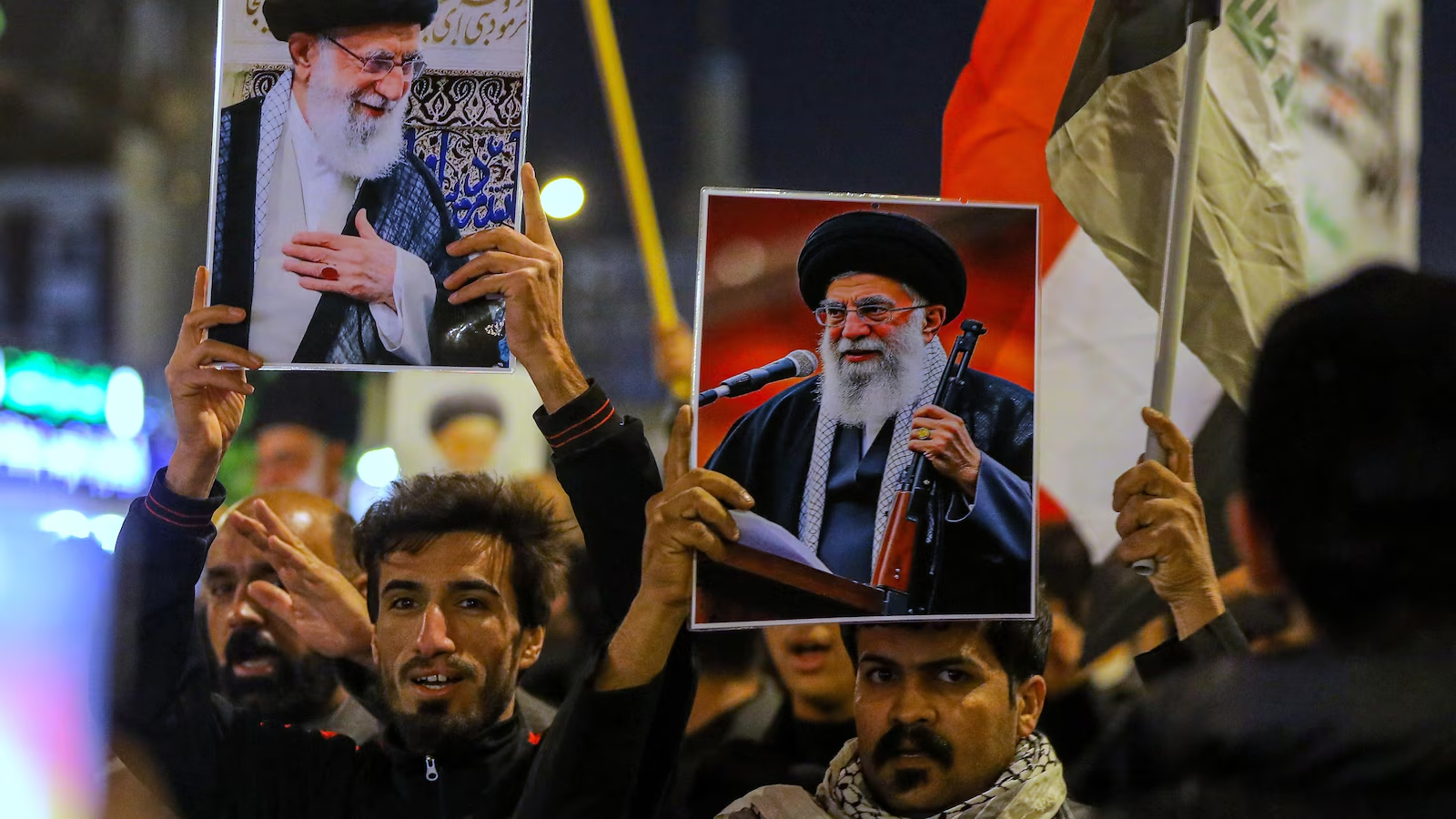
Massive strikes against Tehran began on Saturday, killing Iran’s Supreme Leader Ayatollah Ali Khamenei, top officials and hundreds of civilians. Tehran responded with hundreds of missile and drone strikes targeting US and Israeli bases across the Middle East.
Iran has targeted several major regional aviation hubs, including the UAE’s Dubai International Airport – the world’s busiest – where damage and casualties have been reported, as well as sites near international airports in Bahrain, Kuwait and Iraq.
Following the escalation, Bahrain, Iran, Iraq, Israel, Jordan, Kuwait, Qatar and the UAE announced partial or total airspace closures, forcing flight suspensions, cancellations and diversions.
Kuwait’s Public Authority for Civil Aviation says a drone targeted Kuwait International Airport, causing injuries and damage to one of the terminals. Officials immediately implemented emergency procedures, spokesman Abdullah Al-Razi told Kuna,… pic.twitter.com/a7vVkp7iMX
— Breaking Aviation News and Videos (@aviationbrk) February 28, 2026
More than 3,400 flights were canceled at seven major Middle Eastern airports on Sunday, affecting hundreds of thousands of passengers, according to flight tracker FlightRadar24.
Emirates, Etihad and Qatar Airways – the three major Gulf carriers that typically handle around 90,000 passengers a day – canceled a third of their flights, according to aviation analytics firm Cerium.
Dubai airport has turned into a huge waiting room difference between any other airport and dubai is that atleast 40-50% of people in the airport are for transit (ie dubai is not a final destination) hopefully things will improve soon pic.twitter.com/9Risa5yFLh
— Vineet K (@DealsDhamaka) March 1, 2026
Several international airlines canceled Gulf routes over the weekend as civil aviation authorities designated much of the Middle East as a high-security risk zone.
Ye Video Dubai Airport pic.twitter.com/8BmDEpg4tY
— Tanveer (@mdtanveer87) March 1, 2026
Air France, Lufthansa, KLM, Air India, and others have suspended regional operations from at least March 3-7. FlightAware reported more than 19,000 global flight delays as of 2:30 am GMT Sunday due to the Middle East crisis.

Russian carriers, including Aeroflot, canceled or rerouted flights and suspended services to Tehran, Dubai and Abu Dhabi. According to the Association of Tour Operators of Russia (ATOR), about 8,000 Russian tourists are stranded abroad while returning from vacation after losing Middle Eastern connections. Rosaviatsia is coordinating alternative routes to avoid Israel and Iran.
Analysts warn that the disruption is causing huge financial losses for airlines and hotels as well as passengers. Several airlines have offered waivers and pledged to cover accommodation, meals and rebooking for stranded passengers. However, many travelers have posted footage of crowded airports across the region on social media.
Read more:
War with Iran urges Americans to leave Middle East as death toll rises: Live updates (videos, photos)
The crisis disrupted shipping and cruise operations. MSC Cruises, TUI and Celestial have canceled or suspended departures amid missile and drone activity. Container traffic through the Strait of Hormuz was halted or rerouted after Iran’s Revolutionary Guard warned that no ships would be allowed to pass, although Tehran has not officially declared a blockade. About 170 containerships are currently in the strait and face restrictions to exit, according to shipping analytics firm Lineartica.