Bitcoin rose 6% on Monday to break above the $70,000 level, leading a market rally that lifted Ethereum, BNB and XRP.
The gains came despite heightened tensions between the US and Iran.
In an interview with CNN this morning, Trump suggested that Washington had not yet begun its full campaign against Iranian targets.
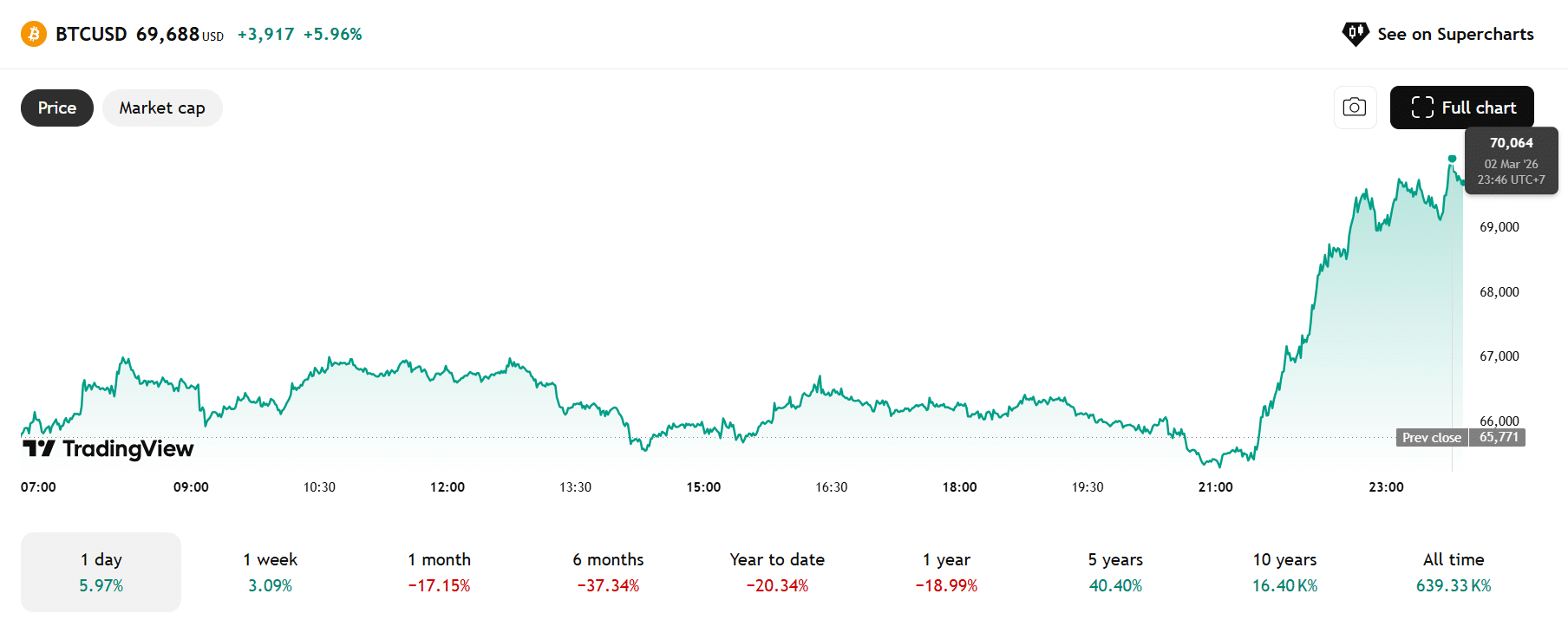
Bitcoin price briefly fell to $63,000 on Saturday following reports of US and Israeli military action against Iran. By Sunday, sentiment had shifted after confirmation of Iran’s supreme leader’s death, with bitcoin surging above $67,000.
The crypto asset was trading at $69,200 at press time, up 3.5% in the last 24 hours, per TradingView.
During the same period, Ether rose 2% to $2,000, BNB rose nearly 3% to $649, and XRP rose 1.5% to $1.4. Among the top 100 crypto assets, NEAR and MORPHO led the way, each gaining double-digit percentage gains.
The total investment of the crypto market increased by 4% and reached 2.4 trillion dollars.
Discussing the geopolitical backdrop, BitMEX founder Arthur Hayes suggested that a prolonged US military involvement could increase the likelihood of Fed tapering, which he believes will support Bitcoin’s rise.
“The longer Trump engages in extremely expensive Iranian national-building activities, the more likely the Fed will lower rates and increase the money supply,” Hayes wrote in a blog post Monday.
The veteran trader pointed to historical precedent, noting that the central bank eased monetary conditions after major US military operations in the Middle East since the 1990 Gulf War.
However, Hayes cautioned that the smart strategy is to “wait and see” and advised investors to deploy capital only after the Fed cuts rates or expands liquidity to support war-related financial pressures.
The Fed’s response will ultimately depend on the dynamics of inflation, oil prices and overall financial stability. If oil prices rise and inflation picks up again, policymakers may face constraints on easing policy despite geopolitical turmoil.