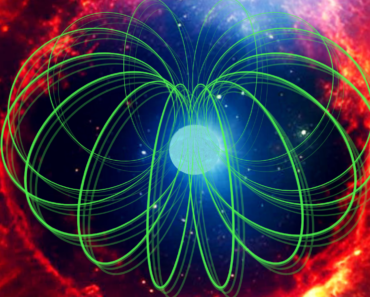
A world, cold and alone, drifting through the inky black between star systems. Sounds pretty desolate, doesn’t it? We’re talking about free-floating planets, the cosmic wanderers who don’t care about orbiting a sun, just cruising solo through the void.
Astronomers reckon there could be a whole bunch of these vagabonds rogue planets out there, maybe as many as 21 for every star this spring Milky way galaxy. It is a truly staggering number, a cosmic fleet sailing in eternal night. For a long time, we thought these lonely giants were just that: lonely. Definitely not the kind of place you want to pack a bathing suit. But what if they’re not so lonely after all?
The article continues below
When a planet is booted from its star system, its exomoons can get a little… weird. Their orbits get stretched and squeezed, and all that gravitational tug of war generates something we call tidal heating. It’s like kneading dough, but with whole celestial bodies warming them from the inside out. So even if there is no sun, there is a built-in oven.
But figuring out how to keep these exomoons cozy and warm was a real head-scratcher. Early models, bless their hearts, tried to create scenarios in which thick, carbon dioxide-rich atmospheres could trap enough heat from that tidal bend to keep the water sloshing around, according to a new paper appears in the preprint journal arXiv.
The idea was that CO2 should act as a large, insulating blanket. The problem? Carbon dioxide is a bit picky. Under the enormous pressure needed to trap enough heat, it tends to condense, turning from a gas into a liquid or even a solid, leading to what we call atmospheric collapse. Not exactly conducive to a long-term floating water party. It was a clever idea, but it just didn’t hold water. Literally.
Here’s the delightful twist: It turns out that hydrogen, the most abundant and unassuming element, may be the unsung hero. Instead of relying on temperamental CO2, a new type of model shows that exomoons with thick, hydrogen-dominated atmospheres can be surprisingly good at retaining heat.
It’s all thanks to a process called collision-induced absorption, or CIA. Essentially, when hydrogen molecules are squeezed together in a dense atmosphere, they briefly band together to absorb infrared radiation, effectively trapping heat. This ingenious mechanism can keep the surface temperature just right for liquid water, potentially for truly astonishing periods of time – we’re talking up to 4.3 billion years.

So how did astronomers create this new recipe for habitability? They didn’t just pull it out of a hat. They used some seriously sophisticated tools, combining a radiative transfer code called HELIOS to model how heat moves through the atmosphere with an equilibrium condensation chemistry code called GGchem to find out the exact chemical composition of these bizarre worlds. It’s a big challenge tackled with clever computational solutions, painting a picture of these extreme exomoons where tidal heating and the thick, hydrogen-rich atmospheres conspire to create billions of years of potentially habitable surface conditions.
Now, before you pack your bags for a hydrogen moon vacation, it’s important to remember that science is a journey, not a destination. Although this self-consistent atmospheric model is brilliant, it is still built on a few approximations and assumptions. For example, the HELIOS code, while powerful, assumes a constant gravitational force, which can get a little mean for super-thick atmospheres on low-gravity moons.
And the models currently only look at “dry” atmospheres, and don’t take into account how water vapor itself can affect the temperature profile, or how condensation can affect things. Also, GGchem calculates chemistry for each atmospheric layer in isolation, without considering how atoms and molecules can move between these layers.
And hey, just because a world might have liquid water doesn’t automatically mean it’s teeming with life. We are still learning intricate dance of habitability.
But here’s the exciting thing: this is just the beginning of understanding these rogue worlds. Future research will undoubtedly delve deeper, explore other atmospheric compositions beyond just hydrogen, and push the models further by adding more complex atmospheric physics, such as clouds and more nuanced ways of dealing with water vapor.
This new understanding of exomoons around free-floating planets opens up a massive, unexpected cosmic real estate market for life. Who knew the loneliest places in the universe could it actually be one of the coziest things, just waiting for us to find out their secrets?