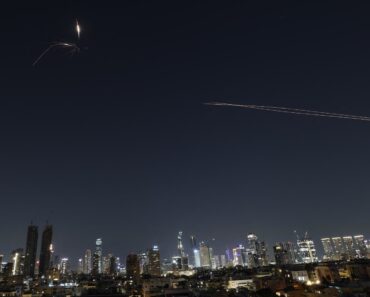
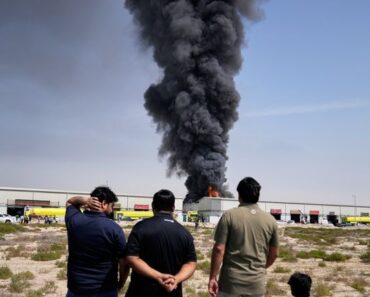
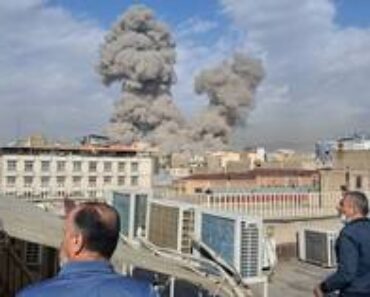
Since February 28, Israel and the United States have hit Iran with targeted airstrikes, taking out one powerful Iranian official after another.
The death toll among senior administration officials has been confirmed at nine so far, but Israel claims it has reached 11.
Both the United States and Israel brand the list of dead Iranian elites as evidence of their military success.
On Tuesday, after the Israeli military announced that it had “eliminated” Iran’s security chief Ali Larijani, Israel’s Foreign Minister Gideon Saar declared that his country had “already won” the war against the Islamic Republic.
Read moreWho is Iran’s security chief Ali Larijani who was killed in an Israeli airstrike?
But behind the tough-talking rhetoric, even US President Donald Trump has hinted that Israeli and American bombs will not be enough to topple the regime — no matter how many heads roll.
Instead, he appealed to the Iranian public to get the job done, saying, “When we’re done, take over your government. You’ll take over.”
FRANCE 24 spoke to Filippo Dionigi, a Middle East expert who teaches international relations at the University of Bristol, to understand why regime change is now unlikely.
France 24: Most of Iran’s leadership killed, why doesn’t that translate into regime change?
Filippo Dionigi: The Iranian regime has historically developed a resilience that resists and withstands pressure from outside.
In 1979 (Islamic Revolution) the regime was in place. We are talking about a formal government that ruled for about 50 years and went through several processes and internal changes: (Ruhollah) Khamenei was replaced by Khamenei and governments came one after the other, etc.
It is therefore a regime that is already aware of change, which means that – even in this process – it has the possibility to change its leadership when necessary. It has a mechanism.
Read moreKhamenei instead of Khamenei: Iran defies Trump, signals continuity
It is not a one-man regime like Bashar al-Assad’s Syria, Saddam Hussein’s Iraq or Nicolas Maduro’s Venezuela. It is a highly complex organizational architecture designed to withstand stress.
So what can really bring about regime change?
Organized mobilization of the Iranian public.
Any change in Iran must come from within, not from external forces. Iranians cannot accept change imposed on them from outside without legitimacy.
How will the Iranian public do that, considering the recent crackdown?
That is the question. There is pressure, there is disagreement, the legitimacy of the administration is in question.
Social movements and political mobilization, when organized and overwhelming for the institutions they challenge, can lead to change – sometimes unexpectedly. Think of the Arab uprisings of 2011. They caused change because the mobilizations created enormous pressure.
But in Iran, the authorities have been more effective at suppressing opposition and more violent in doing so. This will be more difficult for the Iranian public to achieve. The level of mobilization they muster makes the difference. They should be well organized and have a clear political plan. Otherwise it will be easy to split them. That division is a strong asset for the regime and its ability to repress them.
Is there a viable alternative to regime change within Iran?
Another factor to consider is what happens when other regimes are separated. The army and armed forces sometimes support a public uprising and depose the leader. This is not really happening with the IRGC (Islamic Revolutionary Guard Corps), which is very close to the regime and is becoming increasingly powerful politically within the country.
Transitions are never peaceful or straightforward. Iran is a country of 80-90 million people with many opinions about its future. The idea that the removal of a regime automatically leads to a new government has no historical credibility.
It looks like one of your browser extensions is blocking the video player from loading. To view this content, you may need to disable it on this site.

It is difficult to imagine a clear alternative. It could be a process of gradual reform through elections and opening up governance to alternative governments. So far, we haven’t seen that happen. The administration is focused on fighting for its survival.
What are the results of popular uprising now?
The regime is particularly aggressive against any kind of mobilization because it feels threatened from outside and wants to deter internal threats. It takes a lot of courage for the opposition to mobilize.
At the same time, the external threat reinforces the regime’s narrative, allowing it to present itself as defending national interests against foreign enemies. This strengthens its legitimacy rather than weakening it and making internal opposition more difficult.
What does it take for a coup to succeed?
The regime needs to be weakened in its ability to curb mobilization. The opposition needs to unite and reach a critical mass that can undermine the stability of the regime and produce an alternative. Think of the Arab uprisings: change happened when millions took to the streets and the military refused to act against them.
(tags to translate)Middle East