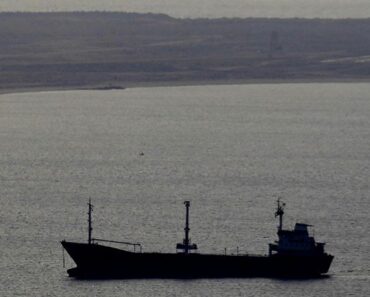
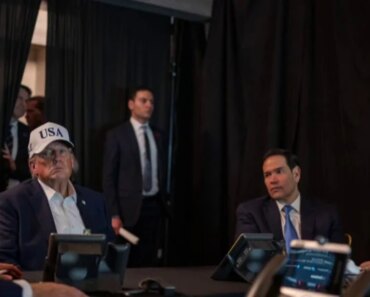
United States President Donald Trump has waived a more than century-old maritime shipping law in an effort to curb rising fuel costs amid the ongoing US-Israeli war against Iran.
On Wednesday, the White House granted a 60-day waiver to lift the Jones Act, which allows foreign-flagged ships to carry cargo to US ports.
Recommended stories
List of 4 itemsEnd of list
Generally, under the Jones Act, goods transported between US ports must be carried on US-built, US-flagged and mostly US-owned vessels. The requirement severely limits the number of tankers available for domestic shipping but is supported by maritime industry unions.
Those industry groups questioned whether Wednesday’s waiver would be effective in reducing fuel costs.
“Abandoning the Jones Act will do nothing to lower gasoline prices. In fact, the primary driver of gasoline prices is the cost of crude oil, not domestic shipping costs,” leaders of the maritime labor union American Maritime Officers said in a letter to President Trump earlier this month.
“Jones Act waivers instead create opportunities for foreign-flag operators to avoid paying U.S. taxes, rely heavily on low-wage labor, and operate under regulatory regimes that avoid international labor and shipping safety standards.”
But the Trump administration has defended the waiver as a temporary measure that will reduce shipping costs and speed up delivery.
“This action allows vital resources such as oil, natural gas, fertilizer and coal to flow freely to US ports for sixty days, and the administration is committed to continuing to strengthen our critical supply chains,” White House press secretary Carolyn Leavitt told Al Jazeera in a statement.
The move comes less than three weeks into the US- and Israeli-led war against Iran.
As part of its counteroffensive, Iran has largely blocked shipping through the Strait of Hormuz, a narrow waterway that connects the Gulf to the Indian Ocean.
Roughly one-fifth of the world’s oil and liquefied natural gas supplies pass through that trade route.
But since the war began on February 28, the number of tankers in the strait has dwindled. Since the start of the war only about 90 ships have passed through and 20 ships have raided the area.
More than 400 ships are still stuck near the route, according to Kpler, a global market intelligence platform. That restriction has caused fuel prices to rise worldwide.
To keep prices down domestically, Trump has already signaled the release of 172 million barrels of oil from the US government’s Strategic Petroleum Reserve, a reserve for emergencies.
Rachel Zimba, a senior fellow at the think tank Center for a New American Security, said the Jones Act waiver was designed to support that move — but it would have limited impact on global price fluctuations.
“A waiver of the Jones Act will help make the release of the Strategic Petroleum Reserve more efficient and lower the cost of getting fuel from the Gulf Coast to other parts of the US,” Zimba said.
“It doesn’t add to its own supplies, though — it eases some of the friction in getting supplies to the Northeast and, to a lesser extent, the Pacific coasts and US territories.”
Costs jump
Shipping costs have also increased since the start of the war. Marine insurance costs across the board have risen by more than 1,000 percent in some cases, according to a Reuters analysis.
That comes in addition to rising fuel prices as global oil supplies are strained. According to the American Automobile Association (AAA), the average price of a gallon of gasoline in the US is $3.84, up from $2.92 ($0.77 to $1.01 per liter) last month.
But according to experts, the changes at the petrol pump as a result of the Jones Act waiver may be minimal.
“The waiver simplifies logistics, which makes it a little cheaper and easier to flow products from the Gulf, mainly to the US Northeast,” said Patrick de Haan, head of petroleum analysis at GasBuddy, an app that tracks fuel costs.
But de Haan cautioned not to expect a steep price drop from the waiver.
“It doesn’t have the ‘visible’ effect of lowering prices at the pump now; it just offsets rising retail prices. I estimate it could offset 3 to 10 cents per gallon ($0.007 to $0.02 per liter) of the price increase,” he said.
That assessment is echoed by a 2022 analysis that found a Jones Act waiver would only save drivers about 10 cents per gallon on the US East Coast.
Others believe that consumers are unaffected.
David St Amand, chairman of maritime consultancy Navigistics Consulting, explained the cost breakdown in a statement to Al Jazeera.
“Jones Act waivers are unlikely to lower the price of gasoline at the pump, and any claims of substance — eg, $0.05 — would not benefit US consumers. Any benefit would certainly flow to new market entrants — eg, commodity traders,” St. Amand said.
US markets are down after the news of the Jones Act waiver. The Nasdaq and S&P 500 were both down 0.5 percent, while the Dow Jones Industrial Average was down 0.8 percent in afternoon trading.
Meanwhile, shipping giants are seeing a surge in their shares on the heels of the news.
Shares in logistics company Maersk, which previously suspended shipments through the Strait of Hormuz after the strikes, rose 2.5 percent. Hapag-Lloyd AG, a container company that suspended shipments, rose 2.6 percent.
(tags to translate)Economy