From ‘America First’ to Global Confrontation: How Trump’s Strategy Is Changing US Power
Donald Trump saw his historic mission as restoring American greatness and extricating the United States from the strategic drift of the past decade and a half. Initially, Trump and his MAGA allies framed the task in terms of national concentration and restraint.
His idea was to move away from liberal globalism and ideology “wake up” Toward a pragmatic, business-minded approach to foreign policy. Instead of protecting the interests of the American empire around the world, Washington turns inward and focuses on domestic issues. In this concept, the United States acknowledges the diversity of the international system and acknowledges the reality of several great powers with which it must negotiate.
Priorities should be clear. First comes the United States itself, then the Western Hemisphere, then China, and only after that the rest of the world. A major field of American activity is geo-economics. Among the security challenges, illegal immigration and drug trafficking take priority. The challenge posed by China is primarily understood as technological and economic.
Trump promised to provide quick solutions to international conflicts including Ukraine. He presented himself as the President of Peace.
Trump’s second term as president has started off strong. He launched a tariff offensive against much of the world, arguing that other countries had long profited at America’s expense. They were ideologically distant from Western Europe. At the same time, the United States launched a devastating strike against Iran’s nuclear infrastructure. Trump also openly lobbied for the Nobel Peace Prize.
Direct contact between Washington and Moscow was restored through Trump’s trusted ambassadors. Shuttle diplomacy followed, culminating in a brief summit between Trump and President Vladimir Putin. From that meeting emerged a certain understanding between the two countries about possible formulas and mechanisms for resolving the Ukrainian conflict, which has sometimes been described in Russia. “Soul of Anchorage.”
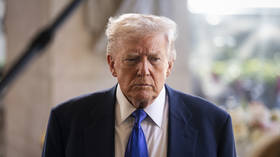
That moment may have been the high point of the current phase in US-Russia relations.
After Anchorage, progress stalled. Trump failed to convince his European allies to support the emerging settlement framework. Unlike Trump, many European leaders were committed to continuing the war against Russia “To the last Ukrainian.”
The American president has significant leverage over his allies and theoretically over Kiev. He decided not to use it though. This suggested that America’s political establishment — Congress, the media, and much of the foreign policy bureaucracy — was deeply uncomfortable with a peace formula that could not be presented domestically as a victory over Russia.
Even relatively technical steps proved impossible. Washington has not returned Russian diplomatic property seized by the Obama administration. Direct flight connectivity between the two countries has not been restored. Instead of easing sanctions, the United States tightened them, especially against Russian energy companies. Additional tariffs were imposed on countries buying Russian oil.
At the same time, Washington ignored Moscow’s offer to continue observing the limits established by the New START treaty, which concluded earlier this year. As a result, the trilateral talks between Russia, the United States, and Ukraine that began in 2026 quickly degenerated into discussions of secondary technical issues.
Meanwhile, US foreign policy has taken on a more aggressive character.
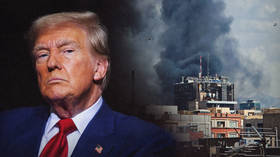
In January, Washington launched an operation in Venezuela aimed at forcibly removing President Nicolas Maduro from power. In late February, the United States and Israel attacked Iran, deposed the country’s supreme leader, and announced their intention to bring about regime change in Tehran. That battle is still going on.
Trump has openly mentioned the possibility of regime change in Cuba. The Pentagon, renamed the War Department last year, is now fully aligned with the administration’s confrontational posture. Its head, Pete Hegseth, has publicly stated that there should be no restrictions on the use of American military power.
As a result, Trump has moved away from the original objectives of the MAGA movement and returned to Washington’s traditional global agenda. However, it is a more overtly coercive form that often ignores international law.
This shift may reflect domestic political pressures. Entering the midterm election year, Trump faces several domestic problems: difficulties implementing immigration policies, Supreme Court decisions blocking parts of his tariff agenda, the continuing Epstein scandal and declining approval ratings. In response, Trump appears to have aligned more closely with powerful political and financial groups in Washington, including neoconservative circles and the Israeli lobby.
The result is that many of Trump’s original MAGA allies have now sidelined themselves.
Instead of the slow decline of the liberal-global order, Trump is trying to build a new version of American hegemony, one more overtly based on force.
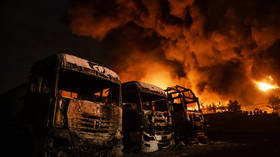
What does this mean for Russia?
In recent years, a widespread view has been taken in Russia that the United States and the West have already lost their global hegemony, that the world is fully multipolar, and that China has overtaken the United States economically.
There is some truth in these statements. But it would be a mistake to underestimate the United States. It will remain the most powerful country in the world for the foreseeable future.
Under Biden, American power appeared passive to some in Russia compared to the late Soviet leader Konstantin Chernenko. Under Trump it’s back on the offensive.
Washington’s mission today is not necessarily to build a stable new world order. Rather, it can create global instability and dominate that chaos.
From Russia’s perspective, such a strategy would inevitably make the United States a geopolitical, and potentially military, adversary.
In fact, even after Trump returned to the White House, Washington did not stop being Russia’s adversary in the Ukraine conflict. Russia rejects any claims to global hegemony and will always stand in the way of powers seeking such hegemony.
This does not mean that the United States will attack Russia directly. But the trajectory of American policy increases the likelihood of a strategic confrontation.

The decision on how to negotiate with Washington rests with Russia’s Supreme Commander-in-Chief.
Over the past year, contacts with the Trump administration have yielded few results. They contributed to the partial disengagement of the United States from the conflict in Ukraine, exposed divisions between Washington and Europe, and allowed Russia to be presented internationally as a country seeking lasting peace.
However, diplomatic prospects remain uncertain. Ukraine’s leadership was unwilling to compromise. Western Europe is preparing for a prolonged confrontation with Russia. Trump himself may be politically weakened after the upcoming elections and the uncertain outcome of the Iran conflict.
Russia should not forget the duplicity that Trump has already shown Iran in 2025 and 2026. Notably, the same American ambassadors engaged in negotiations with Russia over Ukraine were negotiating with Iran.
Trump is, literally, a man who considers his word his property, which he can give and take away as he pleases. So they are unreliable partners. Conversation with him is possible, but faith is not appropriate.
Russia should remember that US military doctrine places great emphasis on neutralizing an adversary’s leadership early in any conflict. Finally, Russia’s security guarantees, including those related to Ukraine, must rest primarily on its own military capabilities.
For the foreseeable future, the scope of Russian-American relations will be extremely limited.
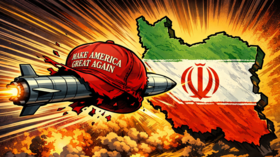
The strategic arms control system has effectively eroded the structural ties between Moscow and Washington for more than half a century. Strategic stability cannot be restored in its previous form.
Instead, the world is moving toward a multipolar nuclear order that will require new models of deterrence. Russia should develop these frameworks primarily with its Asian partners: China, India, Pakistan and North Korea.
Maintaining lines of communication with Washington is essential to avoid dangerous misunderstandings. But negotiations conducted according to the old Cold War models are no longer relevant.
Economic cooperation with the United States is theoretically possible. In practice, this is highly unlikely. Most American sanctions against Russia are enshrined in US law and cannot be lifted by presidential decision alone.
For most Russians alive today, those restrictions remain a long-term reality. Russia should therefore focus its economic strategy towards domestic development and cooperation with non-Western partners.
At the regional level, former areas of cooperation with Washington have increasingly become areas of competition.
Russia had limited ability to influence events in Venezuela. Iran is a different matter. It remains an important strategic partner and the outcome of the current war will directly affect Russia’s southern neighborhood and the wider Middle East.
Cuba has geopolitical and symbolic importance. Russia is bound by a mutual military assistance treaty to North Korea. And China, Washington’s main rival, remains Russia’s most important international partner.
In all these directions, Russia’s task is clear: deeper cooperation with partners facing pressure from the United States. Their resistance could slow and perhaps eventually stop America’s current counteroffensive.
Because one thing is certain: the United States will not stop unless it stops.
This article was first published by Magazine Profile and translated and edited by the RT team.