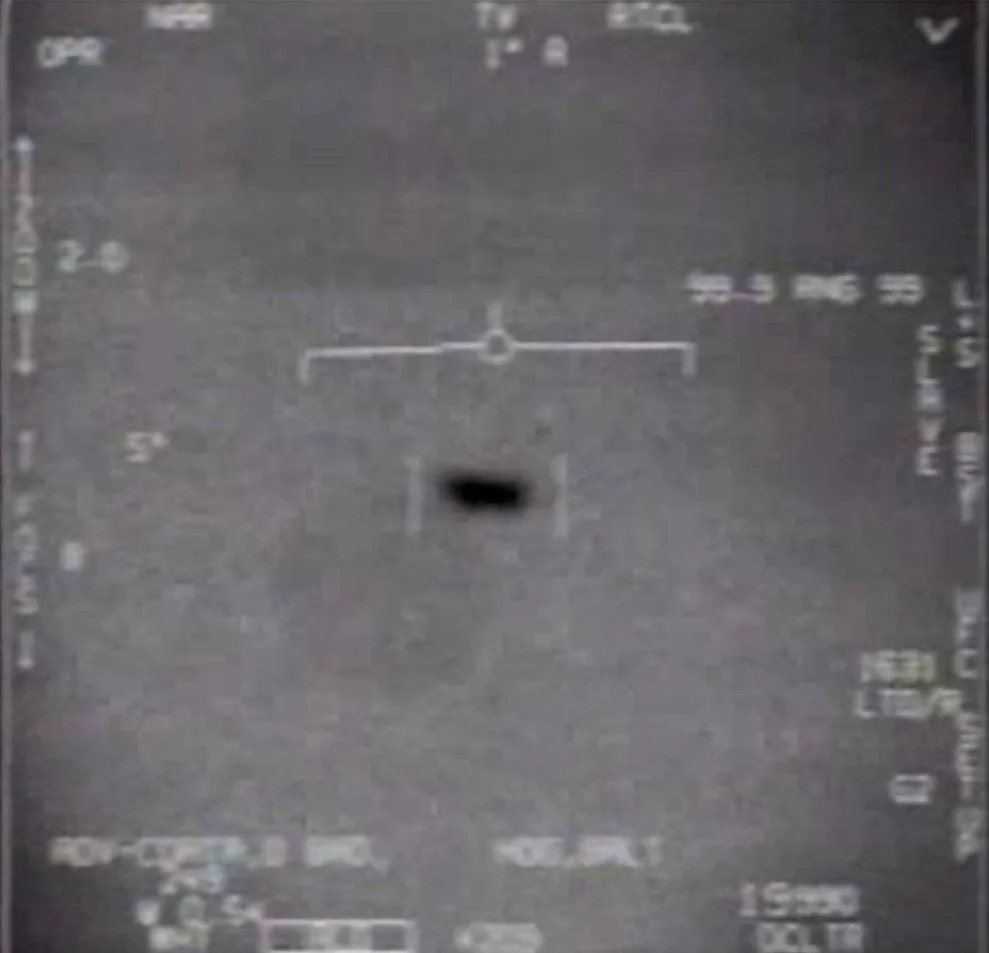
President Donald Trump directed the Pentagon and other federal agencies to start releasing government files related to UFOs and Unidentified Anomalous Phenomena – called UAP – in February 2026, after years of pressure from Congress, military whistleblowers and the audience.
Congress formally mandated UAP investigations through National Defense Authorization Act in December 2022. The Pentagon’s official UAP investigative body, the All-domain Anomaly Resolution Office, AARO, now has a caseload over 2000 reports dating back to 1945. Defense Minister Pete Hegseth confirmed this figure earlier this year.
The article continues below
Yet modern research universities remain almost entirely absent from this conversation. No major university has established a dedicated UAP research centre. No federal science agency offers competitive grants for UAP inquiry. No doctoral programs train researchers in UAP methodology. The gap between what governments openly acknowledge and what universities are willing to study is at this point difficult to explain on purely intellectual grounds.
I have navigated through this gap while conducting my own UAP investigation. My work developing the Temporal Spacecraft Correlation Tool, a standardized framework for correlating civilian UAP observation reports with documented rocket launch activity from Cape Canaveral, is currently under peer review at Limina: Journal of UAP Studies.
Designing that framework meant making methodological decisions without community standards, without institutional funding, and without the professional infrastructure many researchers in established fields take for granted. What’s missing isn’t interest or data—it’s the shared scaffolding that turns isolated curiosity into cumulative science.
Stigma is measurable
The most rigorous evidence of the gap between faculty interest in UAP and faculty willingness to study it comes from peer-reviewed studies by Marissa Yingling, Charlton Yingling and Bethany Bell, published in the scientific journal Humanities and Social Sciences Communications.
Across 14 disciplines at 144 major US research universities, 1,460 faculty responded to their 2023 national survey. Most respondents believed UAP research was important. Curiosity outweighed skepticism in all disciplines that were part of the study. Almost a fifth had personally observed something from the air that they could not identify. Yet fewer than 1% had ever conducted UAP-related research.
The gap was not explained by intellectual resignation, but it was partly explained by fear. Scholars were not primarily deterred by intellectual skepticism because they doubted the subject’s merits. Instead, they feared they might lose funding, face ridicule from colleagues, or find their careers quietly derailed. Faculty reported that they were told to “be careful.”
A follow-up study from 2024 found that approximately 28% said they might vote against a colleague’s hiring case to conduct UAP research, even when they personally believed the topic warranted study.
Historian and philosopher of science Thomas Kuhn claimed it scientific communities suppress irregular questions not because these questions are unanswerable, but because they fall outside the boundaries that the community has jointly decided are worth investigating.
Sociologist Thomas Gieryn called this repression “frontier work“, referring to the active process by which scientists control what counts as legitimate science.
For UAP researchers, the data and tools exist to study the phenomenon. What may not exist is social permission to use them without professional consequence.
To create an academic discipline
Academic disciplines do not emerge spontaneously. They demand dedicated journals, agreed methods, graduate programs and professional associations.
The history of cognitive neuroscience shows how disciplines arise. Before the 1980s, researchers at the intersection of neuroscience and cognitive psychology faced resistance from both parenting disciplines.
These fields achieved mainstream acceptance only after targeted funding from the Alfred P. Sloan Foundation, new brain imaging tools, and the gradual formation of academic programs that created career paths for researchers. Researchers at the nexus of these fields did not wait for central questions to be resolved. They built infrastructure, and the infrastructure made progress possible.
UAP studies as a discipline develop some of these elements, but largely outside universities. The Society for UAP Studiesa non-profit organization of scientists and researchers, runs Limina as a double-blind, peer-reviewed journal and has convened international symposia that draw researchers from physics, philosophy of science and social science. But a nonprofit scientific society without permanent faculties does not constitute a discipline.
To make UAP studies a recognized academic field will require three things.
First, funding. The Yingling studies found that competitive research grants would do more to unlock faculty participation than any other single factor. Without subsidyresearchers cannot hire students to assist them, maintain instruments, or maintain multi-year projects that produce meaningful results.
Secondly, shared methodological standards – these will involve agreed procedures for the collection, registration and evaluation of UAP reports – will mean findings from one research group can be compared and built upon by others.
Third, institutions can publicly affirm that they will evaluate appropriately rigorous UAP scholarship on its scholarly merits during tenure reviews. Several universities have already done this for ga research on violence and psychedelic assisted therapy studies.
These are not isolated examples. Research on near-death experiences and unwanted childhood experiences followed similar trajectories, moving from being a professional responsibility to mainstream legitimacy after the removal of institutional barriers.
The international comparison
This gap in UAP scholarship is unique to the United States. France’s GEIPANa dedicated investigative unit within its national space agency, has operated since 1977. It has publicly archived approximately 5,300 French UAP cases, of which approximately 2% to 3% remain unexplained after thorough analysis.
In 2020, Japan formalized UAP reporting protocols for its Self-Defense Forces, the branch of the Japanese military responsible for national defense. By June 2024, more than 80 legislators had formed a parliamentary UAP inquiry group which by May 2025 had formally proposed a dedicated UAP research office to the Minister of Defence. Canada launched its own multi-agency UAP survey survey in 2023.
None of these actions have produced a corresponding response from American research universities. Universities provide independent, peer-reviewed analysis that government programs structurally cannot.
University of Würzburg in Germany became the first Western university to officially recognize UAP as a legitimate object of academic research in 2022, when it formally added UAP research to its research canon. Scientists know Stockholm University and the Nordic Institute for Theoretical Physics in Sweden has actively published peer-reviewed UAP research since 2017, most recently in Scientific reports in October 2025.
Congress has passed legislation, the Pentagon is reporting on its investigations, and the president has ordered federal agencies to begin releasing records. So the question is no longer whether governments take UAP seriously – it’s whether universities will follow suit, and which ones will get there first.
This edited article has been republished from The conversation under a Creative Commons license. Read original article.