US President Donald Trump urged other nations to help secure a vital sea route blocked by the war with Iran that showed no signs of slowing Saturday as attacks hit the US embassy in Baghdad and a major Emirati energy facility.
Two weeks after the United States and Israel attacked Iran, the entire Gulf region remained in the grip of a conflict that has sent shockwaves through the global economy.
The war has also spread to Lebanon, where the Health Ministry says Israeli strikes have killed hundreds of people, as Israel once again fought Tehran-backed Hezbollah.
Oil prices have risen 40 percent as Iran has choked off the vital Strait of Hormuz and attacked Gulf energy facilities.
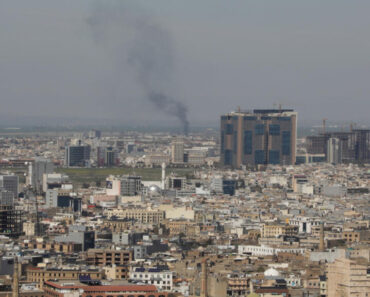
Clouds of black smoke rose on Saturday over Fujairah, home to a major Emirati oil storage and export terminal, AFP journalists found, shortly after the Iranian military warned UAE civilians to avoid port areas.
Washington’s embassy in Iraq was attacked by a drone, security sources told AFP, the second time it has been targeted in the war, and the Emirates consulate in Iraqi Kurdistan was also attacked for the second time in a week.

Having previously promised that the US Navy would “very soon” begin escorting oil tankers through the Strait of Hormuz, Trump appeared to call for reinforcements on Saturday.
“Many countries… will send warships, along with the United States of America, to keep the Strait open and safe,” he wrote in Truth Social, saying China, France, Japan, South Korea and the United Kingdom would “hopefully” be among them.
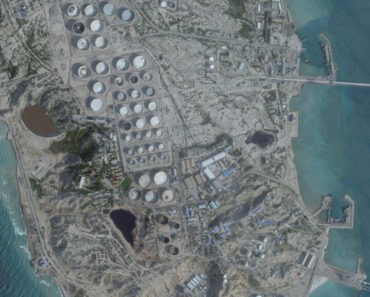
US forces attacked Kharg Island on Friday, from which almost all of Iran’s oil is exported, and Trump said they had “destroyed all MILITARY targets”, while sparing its energy facilities.
Iran had threatened that US-linked oil and energy companies would “turn into a pile of ashes” if they were attacked.
The attack on Kharg could be a turning point as both sides escalate the conflict in an attempt to force a surrender, Johns Hopkins University analyst Vali Nasr said on social media.
“The end will probably not be Iran backing down but rather inflaming the Gulf.”
‘As long as it takes’

Israeli Defense Minister Israel Katz said the attacks showed the war was entering a “decisive phase”, although he warned it would “continue as long as necessary”.
However, despite facing superior firepower from the United States and Israel, Iran seemed determined to keep fighting.
AFP journalists heard explosions in Jerusalem after the army detected missiles launched from Iran on Saturday.
Qatar evacuated the city center and intercepted two missiles, the explosions of which were heard by AFP journalists.
The Palestinian Islamist movement Hamas urged Iran to refrain from attacking its Gulf neighbors, many of whom have supported its cause. It was a rare break between the allies, although Hamas asserted Tehran’s right to defend itself.
Iran continued to face intense shelling and local media reported attacks in several provinces as of Saturday.
Meanwhile, the Israeli military warned the population of an industrial area in Tabriz, northern Iran, to evacuate, signaling an imminent attack.
Iran’s Health Ministry says more than 1,200 people have been killed by US and Israeli attacks, figures that could not be independently verified, while up to 3.2 million people have been displaced, according to the UN refugee agency.
Trump described Iran as “totally defeated” and seeking a deal he was unwilling to consider.
More than 15,000 targets in Iran have been struck by the United States and Israel, the Pentagon said. A report this week said the first six days alone cost the US $11.3 billion, while 13 service members have died in the war.
Transition

US media raised the possibility of US troops in Iran, with the New York Times and the Wall Street Journal reporting that the Pentagon had sent the Japan-based amphibious assault ship USS Tripoli to the region along with about 2,500 Marines.
In Iran, the country’s rulers seemed determined to show that they would survive the war and maintain control, even though their supreme leader Ali Khamenei was assassinated on the opening day.
Khamenei’s son, Mojtaba Khamenei, was named the new supreme leader, but has been absent from public view and is reportedly injured.
Reza Pahlavi, the U.S.-based son of Iran’s last shah, said on social media Saturday that he was ready to lead a transition “as soon as the Islamic Republic falls.”
But Iran’s Revolutionary Guard has threatened a strong crackdown on any anti-government protests. Thousands of people died during mass demonstrations in January and a near-total internet blackout has been imposed since the war began.
‘existential battle’
The war has also sparked another devastating round of fighting between Israel and Hezbollah in Lebanon.

The Tehran-backed militant group attacked Israel after Khamenei’s death and its leader, Naim Qassem, has called the current conflict an “existential battle.”
Israel has responded with air and ground attacks, killing at least 826 people according to Lebanese authorities.
It has also issued evacuation orders covering hundreds of square kilometers of Lebanon, displacing hundreds of thousands and prompting warnings of a humanitarian disaster.
An overnight attack in southern Lebanon killed more than a dozen health workers at a clinic, health authorities said, putting the total number of paramedics killed this month by Israel at 31.
On a visit to Beirut, UN chief Antonio Guterres said “diplomatic avenues are available” to end hostilities.