Donald Trump has said Iran will be hit “very hard” in the coming days, and described the regime’s leaders as “deranged bastards” who it was a “great honor” to kill, as residents of Tehran reported that relentless bombing and violence continued to spiral across the Middle East.
The US president’s comments, which signaled an intensification of the US-Israeli campaign, came as Israeli and US warplanes launched successive waves of strikes on the Iranian capital and elsewhere on Friday. One attack reportedly hit near a square near Tehran University, where crowds were gathering in support of Iran’s regime. The area is home to many government buildings.
A video posted by the semi-official Tasnim news agency showed a plume of gray smoke rising as protesters chanted “Death to Israel!” and “Death to America!”
Across the region there was more chaos, bloodshed and destruction, with new Israeli attacks in Lebanon, where 800,000 people have been displaced; new missile and drone attacks by Hezbollah and Iran against targets in Israel; and new Iranian attacks against civilian infrastructure in the Gulf states.
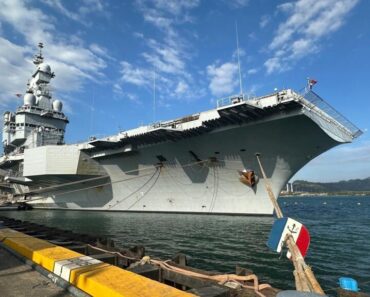
The United States said six service members were killed in a crash involving a tanker plane used for mid-air refueling, which crashed in Iraq. Also in Iraq, a French soldier was killed in a drone attack by a pro-Iran militia.
In a social media post, Trump wrote: “Look what’s happening to these deranged bastards today… They’ve been killing innocent people around the world for 47 years, and now I, as the 47th president of the United States of America, am killing them. What a great honor it is to do so!”
Pete Hegseth, US Secretary of Defense, said at a news conference in Washington on Friday that Iranian leaders were “desperate and in hiding, they have gone underground.”
Hegseth said Iran’s new supreme leader, Mojtaba Khamenei, who issued a defiant statement on Thursday vowing to continue fighting, had been “wounded and probably disfigured.”
“Yesterday he issued a statement, a weak one actually, but there was no voice or video. It was a written statement. He called for unity…apparently killing tens of thousands of protesters is his kind of unity,” Hegseth said.
Iranian media published videos showing some of the country’s regime members at the rally in Tehran, including Ali Larijani, who heads the Supreme National Security Council, and Gholamhossein Mohseni-Ejei, the hardline cleric who heads the country’s judiciary. Foreign Minister Abbas Araghchi was seen walking through the streets of the city.
Tehran residents said there had not been a “day without explosions” since the war began with an Israeli strike that killed Ayatollah Ali Khamenei, Iran’s ruler for 37 years.
“Buildings are shaking… There is debris everywhere and people are still risking their lives to go to work,” said a 66-year-old retired teacher. “Please stop this. I beg the world to act now before the entire city is destroyed. I can’t leave the city and I have sick family members. Even those who want to flee can’t. They are not giving us enough gas to even drive enough. We are trapped.”
A shopkeeper in central Tehran said she had counted six explosions in the last hour.
“We have covered the windows with newspapers. I hardly sleep. They have bombed all night. I am afraid to go out. They are powerful bombs because I can’t even hear the drones anymore. That’s how continuous the explosions have been today. It’s cold and the electricity comes and goes. I’m afraid that soon we won’t have electricity,” said the 42-year-old man.
Israel had earlier announced another wave of attacks in Iran targeting infrastructure and said its air force had attacked more than 200 targets in the past 24 hours, including missile launchers, defense systems and weapons production sites.
Hegseth said that more than 15,000 “enemy targets” had been attacked, or more than 1,000 a day since the war began.
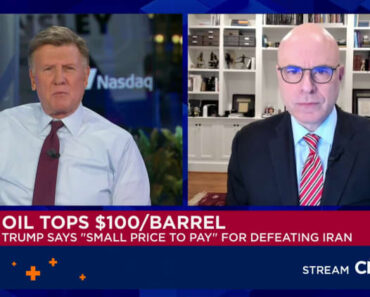
After sharp declines on Thursday, stock markets recovered as oil prices fell slightly. About a fifth of the world’s oil and gas supplies travel through the Strait of Hormuz, which Iran has now blocked by attacking shipping there.
The United States is “dealing” with Iran’s attacks in the Strait of Hormuz, Hegseth said, claiming that Iran had not yet mined the crucial waterway.
The Financial Times reported that European countries, including France, have begun talks with Tehran seeking to negotiate a deal to ensure the safe passage of its ships through the strait, although Italy denied the report.
Iran has responded with daily attacks on oil and other infrastructure in the Gulf region, and on Friday Saudi Arabia said it had shot down nearly 50 drones sent in multiple waves.
In Oman, two people were killed when two drones crashed in an industrial area in the Sohar region, the Oman News Agency reported.
A building at the Dubai International Financial Center was damaged when it was hit by debris from what authorities described as a “successful interception.” DIFC is an economic free zone for banks, equity traders and wealth managers, home to exclusive restaurants and nightclubs.
Iran said earlier this week that it would attack banks and financial institutions after an airstrike hit a bank in Tehran, and the Revolutionary Guard announced on Friday that it had launched new barrages of missiles and drones against Israel in coordination with Hezbollah, which has had a close relationship with Tehran for decades.
The guards said in a statement that the operation was part of their annual Al-Quds Day, which aims to show support for the Palestinian cause.
In Lebanon, at least eight people were killed in an Israeli attack on the southern coastal city of Sidon, Lebanon’s Health Ministry said. Nine other people were injured, the ministry added.
The Israeli military also attacked the Zrarieh Bridge, which spans the Litani River in Lebanon, early on Friday, claiming it was being used by Hezbollah militants to move between north and south Lebanon. The military did not provide evidence for the claim.
Israel Katz, the Israeli defense minister, said the attacks so far were “just the beginning” and that Lebanon’s government would “pay an increasing price for damage to Lebanese national infrastructure used by Hezbollah.”
More than 600 people have been killed in Lebanon since the latest fighting between Israel and Hezbollah militants began, the Health Ministry said.
Iranian authorities say more than 1,300 people have been killed in Iran and Israel has reported 12 deaths. The United States has lost at least 13 service members, while eight others have suffered serious injuries.
In northern Israel, nearly 60 people were wounded after Hezbollah said it had fired several volleys of rockets into the area and at Israeli troops in southern Lebanon. Almost all injuries were described as minor.