The closure of vital shipping routes for oil and natural gas in the Persian Gulf is shaking the global economy. But there is an even more vital resource that is threatened by the Iran war: water, drop by drop.
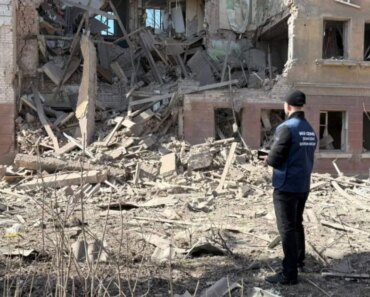
Almost two weeks into the war, damage to precious sources of drinking water has not been extensive. Still, all parties in this conflict are showing a willingness to attack these sources.
And the use of water as a weapon is not entirely new.
Why do we write this?
The Persian Gulf region is a vital source of oil and gas for the global economy. But the war in Iran is also endangering scarce water resources for that country’s parched populations.
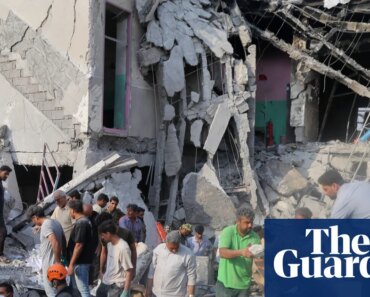
In recent years, the Houthis in Yemen have attacked Saudi desalination facilities, while Israel has cut off water supplies to the Gaza Strip and damaged much of the water infrastructure in the Palestinian territory. During the Gulf War, Iraq destroyed most of Kuwait’s water processing infrastructure.
Since the United States and Israel began bombing Iran in late February, missiles and drones have hit water supplies in the Arab Gulf states and inside Iran, putting entire populations at greater risk of drying up.
“We have seen minor damage to desalination plants. Some appeared to be targeted, and there is a lot of indirect damage that could be caused,” says Natasha Hall, an associate fellow at Chatham House, a London-based think tank. He adds that the Gulf States “know very well how vulnerable they are.”
Water as a goal
This week, Iranian drones attacked a water desalination plant in Bahrain, while Iran said the United States attacked a desalination plant on the Iranian island of Qeshm. And in Kuwait, debris from an Iranian missile intercept damaged another desalination facility.
These incidents have highlighted the parched Gulf’s dependence on desalination, a process that involves pressing, filtering or heating seawater to make it fit for consumption.
There are 400 desalination plants along the coasts of the Gulf countries, supplying a total of 100 million cubic meters of water (26.4 billion gallons) per day. Many of these facilities are only tens of kilometers from Iranian territory.
Desalination accounts for almost all of Qatar’s drinking water supply.
Statistics released by the Gulf Research Center, based in Saudi Arabia, estimate that 95% of drinking water in Bahrain, 90% in Kuwait, 86% in Oman, 79% in Saudi Arabia and around 40% in the United Arab Emirates comes from desalinated seawater.
“Without desalination, we wouldn’t have today’s Doha, Dubai or the large developed cities in Saudi Arabia,” says Raha Hakimdavar, a hydrologist and senior adviser at Georgetown University in Qatar. He adds that desalination has effectively fueled the “rise of the Gulf over the past 20 years and is critical to concerted efforts to diversify their economies.”
“Unfortunately, desalination is fragile,” says Mohamed Abdel Hamyd Dawoud, a senior water resources adviser to the Abu Dhabi government who is helping to lead the UAE’s emergency response.
“But the Gulf Cooperation Council (group of Gulf states) is an arid region. We have no surface water bodies, we have no lakes or rivers, and renewable water sources are very scarce. There are not many alternatives,” he says.
Another important challenge is the interdependence of water and energy generation. Desalination is an energy-intensive process, while access to freshwater resources is critical for oil and gas production.
Iranian attacks that forced Bahrain and Qatar to suspend oil and gas production now risk depriving the Gulf’s mega desalination plants of the fuel needed to keep them running. The same goes for the transportation of food imports, on which Gulf countries depend, and the ability to irrigate agricultural areas.
The fragile balance between food, water and energy in the Gulf region is “almost like being on the International Space Station,” says Dr. Hakimdavar.
The current conflict sheds light on a problem that the Gulf countries have seen coming for a long time.
Precipitation is projected to decrease by 10% to 30% in the Middle East and North Africa over the next century. And the region’s overall population living with extreme water scarcity is expected to increase from 83% today to 100% in 2050.
According to the World Resources Institute, four of the world’s six most water-scarce countries are located in the Gulf region. These are Bahrain, Kuwait, Oman and Qatar.
Iran, which relies on a combination of desalination, rainwater-fed dams and rapidly depleting groundwater, is grappling with its sixth consecutive year of drought.
President Masoud Pezeshkian warned the public in a speech last November that the drought could force the evacuation of the capital, Tehran, which has about 10 million people.
Emergency plans implemented
The Gulf Arab states have spent the last five years preparing for a moment like this. And now, under the threat of missiles and drones, they are enacting emergency measures, managing 21st century water security in real time during an escalating conflict.
In Kuwait, Qatar, Saudi Arabia and the United Arab Emirates, authorities are preparing to bring into operation a series of small desalination plants, with the capacity to process between 5,000 and 10,000 cubic meters per day. These plants can be powered by diesel generators and provide local emergency water supplies.
Many of these plants are located far from the coast or in underground facilities, designed to withstand a natural disaster. They are also out of range of Iran’s missiles and drones.
Water supplies already in large pipelines connecting coastal desalination plants to urban centers are also being considered strategic reserves. In some cases, such as the Saudi oil pipeline that runs from the eastern coast to Riyadh, these sources could provide enough water for several days.
Gulf states are poised to tap underground aquifers. They are also reviewing rationing plans to potentially reduce the current water allocation of 350 to 550 liters (about 92 to 132 gallons) per capita per day – which is similar to average daily use in the United States, Australia and Canada – to an emergency level of 180 liters per person.
“Countries have built up strategic water reserves for a few days to a few weeks, and limited groundwater resources can provide an emergency reserve,” says Doha-based Dr. Hakimdavar.
“But they’re just giving you some time. They’re not going to provide you with a long-term solution.”
Diversify, defend, reduce risks
Gulf experts have called on their governments to better manage wastewater. Around 40% is discharged, most of it into the sea. This water source could be treated for use in industry and agriculture.
In the long term, the current crisis points to the need to develop alternative energy sources, such as solar and nuclear, to power desalination plants in the future.
Another key solution, water experts say, is aquifer recharge. This process involves injecting desalinated fresh water into underground aquifers to replenish them as strategic water storage. Unlike above-ground concrete, steel, or fiberglass storage facilities, these natural aquifers are not bodies of standing water. The water they contain can be stored for long periods of time and is not susceptible to being hit by a missile or drone.
“This is a more viable solution,” says Dr. Dawoud, referring to aquifer recharge. “You just need to build a well,” he says, noting that Abu Dhabi and Saudi Arabia have begun working on projects of this type.
However, due to decades of excessive pumping of groundwater, the vast majority of aquifers in the Gulf states are unsuitable for recharging and storing water, experts say, as levels of salinity and other minerals have risen to make the stored water unfit for consumption.
Aquifer regeneration projects also take time, between five and seven years.
Shared challenge, shared threat
Meanwhile, specialists working on water resources management meet in local, national and regional emergency meetings, coordinating their water security policies.
“We have good contingency and emergency plans, we have alternative water reserves, but we need to do more to improve resilience,” says Dr Dawoud.
Experts talk about the current Middle East conflict as a possible roadmap for maintaining water security in times of war.
“Water is a critical shortage in this region, even more than energy; it is a shared challenge,” says Dr. Hakimdavar. “It’s part of our shared history and culture.”
“My real hope is that this war does not reach a point where water infrastructure is periodically attacked, because the consequences for societies will be profound and long-lasting.”