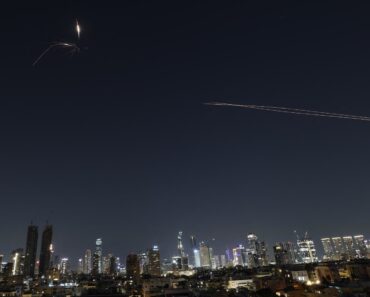
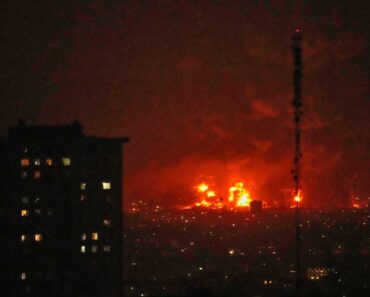
The Callisto tanker anchors at Port Sultan Qaboos as traffic slows in the Strait of Hormuz amid the US-Israeli conflict with Iran, March 12, 2026 in Muscat, Oman.
Benoit Tessier | Reuters
Brent crude, the global benchmark, was above $100 on Friday morning as the US-Iran war entered its third week.
As of 5:40 am ET, Brent Futures It traded 0.7% higher at $101.15 a barrel, pulling back from earlier gains. US West Texas Intermediate crude futures It rose 0.1% to $95.87 per barrel, paring the previous gain.

Crude oil prices
Oil prices posted another week of gains, with Brent futures up more than 9%. This follows last week’s 27.9% rise, which marked the biggest weekly gain in oil prices since the Covid-19 pandemic in 2020. WTI futures, which had its best week since 1983 last week, will end the week 5.8% higher.
Traders continued to monitor developments in the Middle East, where the US and Israel’s war with Iran will soon extend into a third week. Overnight, President Donald Trump hinted that an end to the conflict was not imminent.
“We have unmatched firepower, unlimited ammunition and plenty of time,” he said on Friday before calling on his followers to “watch what happens” to the Iranian regime.
On Friday morning, Axios reported that Trump claimed Iran was “about to capitulate” in a call with G7 leaders earlier this week. A day later, Iran’s new Supreme Leader Mojtaba Khamenei vowed to continue the fight in a message on state television.
A number of foreign ships were hit by ammunition this week in or near the Strait of Hormuz, a critical oil shipping route that has seen blockades amid the escalating conflict. The attacks have led to fears that a prolonged war could translate into a global economic shock.
“Be ready for $200 a barrel oil, because oil prices depend on regional security, which you have destabilized,” Ibrahim Zolfakari, a spokesman for Iran’s military command, said on Wednesday, according to Reuters.
Oil prices continued to rise even after the International Energy Agency agreed to release a record 400 million barrels of oil from its emergency reserves and the White House offered to temporarily waive some restrictions on Russian exports.
In a note on Friday morning, Barclays’ Emmanuel Kau said investors were increasingly confused after initially pricing in a short-term conflict.
“Investors still believe in Trump put, so global stocks are not down in past oil shocks,” he said. “But anxiety is growing by the day and the longer the Strait of Hormuz remains closed, the more stable markets will turn. Watch for central banks amid a hawkish hike in rates next week.”
Speaking to CNBC’s “Squawk Box Europe” on Friday, Amjad Bseisu, CEO of British petroleum production company EnQuest, said the oil market had “never seen anything of this magnitude before.”
“Every day we see delays, another 20 million barrels (killed from the market), and it’s going to have an impact and an impact,” he said.
“I think it’s probably going to be longer and tougher than the crisis before, and maybe we should look at the downsides rather than the upsides.”
Bsiesu noted that the Arab embargo of the 1970s was the last time a similar cut in global oil supply was made.
“Then we’ve seen prices quadruple, and I think we’ve seen prices go up 50% here, but I think it’s going to be a fairly long period of time,” he told CNBC.
(tags to translate)Dubai