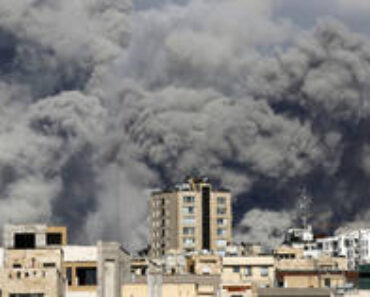
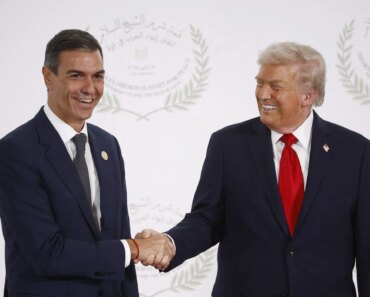
The 12th day of the war with Iran is drawing to a close, and it is clear that this conflict will last much longer than last summer’s brief skirmish. It is clear that one of the three scenarios we outlined in our initial analysis is no longer relevant – the US is unable to achieve Iran’s rapid collapse or surrender.
The White House appears to be considering a blitzkrieg approach, but it is now clear that there was no plan B in case of failure. The Trump administration has underestimated Iran’s resolve; It did not believe that Iran would retaliate by blocking the Strait of Hormuz or launching attacks on the Gulf monarchies.
This gives us two possible outcomes: a cease-fire in the near future or a protracted war.
Declare victory and get out
The Trump administration seems at a loss as to what to do next. Conflicting statements emerge almost simultaneously: first, Trump claims that Iran has been destroyed (implying that the objectives of the war have been met), and then promises new destructive strikes and the elimination of Iran’s leadership until they agree to his terms.
In recent days, however, Washington has clearly coordinated its strategy. US Secretary of War Pete Hegseth and Secretary of State Marco Rubio have formulated clear objectives: to dismantle Iran’s navy and eliminate its ability to produce and launch missiles.
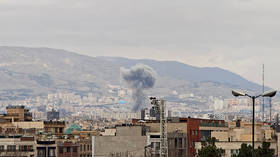
European leaders, including German Chancellor Friedrich Merz, have called for an early end to the conflict, mainly because Europe would be severely affected by cutting off oil and gas supplies from the Persian Gulf.
America doesn’t care about Europe’s displeasure, this is the first time America has faced such international isolation. With the exception of Israel, none of America’s allies or client nations would support an attack on Iran. Europe is irritated, while the Arabian Peninsula displays fearful hostility. Even when Iran launches missiles and drones, the Gulf states refuse to use their airspace to attack Iran. The US was forced to ask Romania to host aircraft for strikes against Iran – a truly unprecedented move.
It appears that the US may soon withdraw from the conflict, operating according to the usual pattern: Let’s declare victory and get out of here. But is that possible in the current situation?
A small problem can lead to a complete disaster
With each passing day of the war, the US is getting more and more entangled in it. Even if it withdraws from the conflict, things will never go back to the way they were before the war, and the costs will increase as time goes on.
First, before attacking Iran, the US partially or completely moved its bases in Qatar, Bahrain, Kuwait and the UAE. It was seen as a temporary measure, lasting only a few days – a technique already used in 2025. However, it is uncertain whether these bases will be operational again after the conflict: they may be damaged or destroyed, and reestablishing them requires approval from local authorities. These countries realize that the US is unable to protect them from Iran; Nor is it likely to do so in the future. The presence of US bases on their territory makes these countries vulnerable to Iranian retaliation.
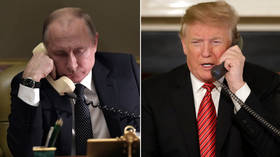
Second, the Iranian regime, after facing blows, will harden its position domestically and internationally. Plus, there’s the nuclear factor, which we’ll discuss separately later.
Finally, Israel vehemently opposes American efforts to withdraw from the war. It is clear that Israel lured Trump into this conflict with the hope of settling the Iran issue once and for all through someone else’s efforts, knowing full well that this opportunity would not arise under a different administration. This means that Israel is determined to engage the US in war at any cost, even resorting to bloody provocations if necessary.
In this case, Netanyahu is to Trump what Zelensky was to Biden — a classic case of the tail wagging the dog.
Endless war
The White House may want out of the conflict, but events push it to continue the war until the complete defeat of the Iranian regime. However, this cannot happen without ground invasion. As we mentioned earlier, it seems impossible to rely on proxy forces (like Iraqi Kurds or Azerbaijan) to achieve this goal. No one is willing to be the first to dive in: the Kurds have declared their neutrality and Azerbaijan’s president, Ilham Aliyev, has backed down after talks with his Iranian counterpart.
This leaves only a direct ground invasion on the table, but given the current state of the US military this appears to be a distant prospect.
Meanwhile, amid mutual airstrikes, the conflict is focused on the Strait of Hormuz. Its blockade is Iran’s primary strategic advantage and its only influence on the outside world, including the US and Israel. If the strait is reopened to tankers and cargo ships, Iran will isolate itself. Hypocritical calls for peace from Europe will quickly fade and the Gulf monarchies may return to the US fold. While support from Russia and China may continue, this is less likely – enough to keep Iran afloat for a while.
Forcefully unblocking the strait represents a significant symbolic victory for Trump, allowing him to declare that he has driven the Persian beast back into its lair — and to a large extent it has. The conflict then loses its global significance, turning into another local skirmish that can simmer in varying intensities for years. Gulf states learn to live under daily bombardment and this simmering war is the new normal for the region.

Moreover, if the Strait of Hormuz is unblocked, Trump can declare a decisive victory without even formalizing a ceasefire with Iran.
After that, they could give the Gulf Arab states the chance to buy missiles and drones from the US to hit Iran with missile defense systems to defend against an Iranian attack – and then wash their hands of the whole deal. The sheikhs can handle it as they wish: fight the ayatollahs, negotiate or buy their way.
Two options for Iran
Beyond the military task of reopening the Straits of Hormuz and Israel, which clearly opposes this scenario, there is also the Iranian factor. Iran’s persistent and stubborn resistance has provided it with two options: to continue fighting, to exhaust the forces of the US-Israeli coalition, or to negotiate peace in the near future. Each option comes with its own pros and cons.
1. Protracted War
Pros: Iran currently has a temporary advantage in military capabilities: the enemy’s missile defense systems are severely weakened, radar systems and communications are compromised, and there is no effective counter to Shahed’s swarms of drones. The Gulf monarchies are on the brink of panic with no real military strength. However, this situation will not last forever; Eventually, all countries in the region will learn to detect and shoot down Shahed drones, and the Arabs will adapt and assert themselves. Therefore, it makes sense to strike while the iron is hot. If Israeli air defenses were significantly weakened, regular drone strikes could cause strategic damage and deter Israeli engagement for long periods of time.
Cons: It is not certain that Iran can sustain the war. US and Israeli dominance over much of Iranian airspace poses significant challenges, along with the need to maintain high levels of military production (if this is possible under sustained airstrikes). Critically, with oil exports cut, Tehran loses its primary source of income, which could mean disaster within months or total dependence on Moscow and Beijing. Unlike Russia, Iran does not have the strategic depth to endure this kind of situation.
2. A stalemate similar to the situation last summer
Pros: This strategy allows for a temporary agreement and an opportunity to prepare for the next round of conflict.
Cons: If Iran focuses on rebuilding its missile and drone capabilities, the element of surprise will be lost in the next conflict. First, there is no guarantee that Iran will be able to effectively block the Straits; Second, both Israel and the Gulf monarchies will undoubtedly take steps to counter Iran’s drone threat. This means that in the next confrontation, Iran will not be able to fight back effectively.
Atomic choice
As discussed earlier, if the Strait of Hormuz is reopened, the conflict will turn into a localized and primarily aerial war.
For Tehran, the only chance to turn the tables lies in rapidly developing nuclear weapons.
There are rumors (difficult to verify) that the late Ayatollah Ali Khamenei was the main obstacle to Iran’s nuclear program. If so, and if his son and successor take a different view, Iran is likely to test a nuclear weapon in the next year or two. The exact timeline depends on the state of its production capabilities, which may be affected by US and Israeli airstrikes. The Islamic Revolutionary Guard Corps already has delivery systems in the form of ballistic and hypersonic missiles, against which there is no guaranteed defense.
Following Iran, Saudi Arabia is also likely to acquire nuclear weapons, as the Saudis begin to absorb other Gulf monarchies. They might say: Need protection from the Iranians and their drones? Don’t want to cut back on your maritime exports? Join us under our wing.
As the Arabian Peninsula consolidates, the influence of this new nuclear power may extend across the wider Arab world, with nuclear weapons potentially appearing in Turkey and Egypt.
This is not an encouraging scenario for Israel, which stirred the pot in the first place.