“When that goes away, I have to jump on to something else so that at any given time, I’m in the studio doing four or five paintings at a time.”
Although painting became an important part of Bruce Lee’s life, he did not give up his acting career. Most recently, he appeared in the movie “Searching” and the Korean drama “The Miracle We Met.” He says his two careers complement each other.
“When it comes to acting, that humility comes from being able to work with others and knowing that you’re just a small piece of the puzzle,” he said.
“From an artist’s perspective, it’s pure narcissism, pure selfishness. I’m the dictator of my own time. I feel like I need those two human elements to balance my whole being. I’ll go away and shoot a movie or a TV series for weeks, months, and once I get back, I’ll crave being alone, hibernating, locking myself away, and just painting. That’s how I manage my time.”
In addition, his training as an actor also informed his painting. “I think the closest resource I have is acting,” he said. “When you study acting, you’re actually studying a person’s face. You’re studying their emotions, trying to uncover the layers of people’s individual behaviors, so for me, when I want to draw, it’s the closest reference I have.”
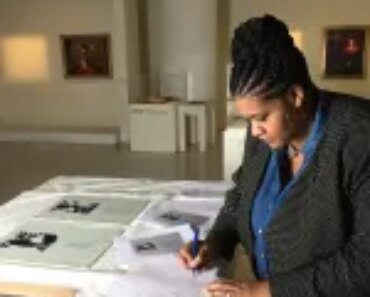
Lee said his studio in Los Angeles’ Fashion District is filled with references, from magazine clips to photos he’s taken. He notes the specific details that stand out to him and then begins painting without sketching beforehand. He said it can take six months to a year to complete a painting, and he would work on multiple pieces at the same time. “If I have a thought like that, I worry that I’m going to lose it, so I have to work through it until it goes away,” he said. “When that goes away, I have to jump on to something else so that at any given time, I’m in the studio doing four or five paintings at a time.”
Lee calls his process “organized chaos.” He describes a typical day in the studio: “Just staring lazily at a blank canvas for a few hours, jumping up and down because I got a stroke that I liked, or yelling at the canvas because I couldn’t seem to get that stroke that I wanted.” Lee’s portraits often use abstraction to obscure parts of the face. He uses broad strokes and bold colors to hide and reveal fragments of his subjects. That wasn’t intentional, he said. Early on, he left less room for imagination. There are abstract brushstrokes, but there are also distinctive features. Some portraits depict recognizable people, such as celebrities and political figures. “There was definitely more realism in it,” Lee said of his earlier work, “but that was just because I wanted to learn technique. I wanted to get better.”
More recent works allow thick strokes of paint to cover more of the face. Sometimes, the eyes, nose, or mouth are still visible. Other times, it’s nothing more than a head of hair.
In the “Chorus” series, Lee retained a common item found in portraits: a black turtleneck. “I wanted to represent that consistency visually. Most importantly, you have individual brushstrokes, each with different nuance and complexity,” he said.
“For me, this defines what a choir is. We are all members of this choir. Society trains us to sing the same song,
On the same note, however, when you look at us individually, we all look different and we all have different things to bring to the table. “
Reflecting on his aesthetic choices, he said it may have something to do with his desire to understand “motivation and behavior.”
“I think that’s why I started doing this, to shoot this really fragmented style of portraiture to try to break down this outside, this socially constructed outside that we all have,” he said. His thoughts on moving from Indiana to Los Angeles may also have played a role. “Everyone wears a mask, myself included, and it’s based on insecurity. It’s based on anxiety and fear. It’s hard to connect with people,” he said. “This is new to me because I’m from Indiana where you can talk to people naturally, which is nice.” He added:
“It’s been tough, just meeting people and making friends.”
Overall, Lee says his paintings are instinctive. “I feel like my painting style is really an extension of my personality and the emotion of that moment,” he says, “and my brushes and palette are just a conduit.”*
This article originally appeared in High Fructose Issue 53, which is now sold out. Support what we do! Get our latest issue of High Fructose and subscribe today.