François Picard of FRANCE 24 is pleased to welcome Dr. Rouzbeh Parsi, Associate Professor at Lund University in Sweden. According to Dr. Parsi, the current political situation in Iran must be approached with caution, as too much attention is paid to the possible rise of Mojtaba Khamenei. However, the Islamic Republic is not a system built around a single person, especially in times of war. Decision-making power rests with institutions such as the Revolutionary Guard and the security establishment in general.
These institutional dynamics also complicate efforts to understand Khamenei himself, Dr. Parsi explains. It remains difficult to assess whether he intends to maintain continuity with the political baseline established by his late father or ultimately chart his own course. For now, the Islamic Republic is fundamentally focused on survival, and that fight will likely shape both domestic and foreign policy.
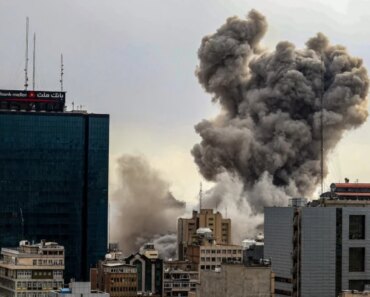
On the military side, there is also a tendency among outside observers to misinterpret Iranian behavior. A reduction in missile launches, for example, should not automatically be interpreted as a lack of capability. It may simply reflect a deliberate strategic approach aimed at first weakening defensive systems, thereby increasing the effectiveness of subsequent attacks. Ultimately, Iran’s goal appears to be both political and military: to demonstrate that attacking Iran carries costs and to ensure that any eventual negotiations with the United States occur on more serious terms than previously attempted. And that’s why, Dr. Parsi maintains, “the Iranians are going to play this game their way.”
At the same time, the American approach to the conflict appears to lack strategic coherence. Shifting objectives and unclear ultimate policy goals risk turning conflict into a cycle of escalating crises rather than a path to resolution. Even limited Iranian capabilities, particularly around the Strait of Hormuz, could impose significant costs on the global economy simply because of the threat they pose.
Dr. Parsi warns that the war has also complicated internal dynamics within Iran itself. While some Iranians initially hoped that external pressure could weaken the regime, many are now faced with the reality that air warfare primarily destroys infrastructure and social institutions. The resulting human and economic costs may not guarantee political change, leaving open the possibility that the country emerges from the conflict with a weakened state and an unchanged political system.