Charles Hoskinson says the Cardano budget debate for 2026 is no longer about whether the ecosystem should finance itself, but how. In a March 10 video, Cardano’s founder argued that the network has overburdened infrastructure while underinvesting in the apps, user experience, and narrative needed to translate technical capabilities into adoption.
Hoskinson describes the ecosystem as having three layers: infrastructure, utilities, and experience. The infrastructure covers the main rails: nodes, languages, and scaling components like Hydra, while the utility is the actual DApp and DeFi stack, and the experience is a layer of wallets, onboarding, content, and branding. His argument was that Cardano has historically lived very hard in the first category.
“Historically, Catalyst and the Cardano Fund were represented here and under represented here,” he said, referring to infrastructure versus utilities and experience. “Not enough money for experience, not enough money for services (…) not a lot of money for content creators. Not a lot of money for people who actually build interfaces on Cardano’s utilities.”
That disparity, Hoskinson says, is now colliding with a harsher reality: Many programs aren’t doing enough to sustain themselves. He pointed to monthly active users, total value blocked, daily transactions and revenue as relevant scorecards, and then gave a clear assessment of the current state of the ecosystem.
“All these things in Cardano, they’re not doing well. If you say they are, you’re lying,” he said. “There are a lot of DApps and DeFi in the Cardano ecosystem that are losing money. They don’t have a lot of users. They don’t have a lot of TVL.”
Cardano should review the 2026 funding
His proposed solution is not grants in the traditional sense, but a Treasury-backed investment structure. Instead of giving away what he called “free money,” Hoskinson proposed that Cardano create a weighted index of selected ecosystem tokens, with the Treasury taking its stake in the funded projects. In turn, these projects receive oversight, reduced operating costs, strategic alignment, and partial revenue distribution to the treasury through ADA purchases.
“There’s no free money. Sorry, that’s bad behavior,” he said. “It’s a strategic investment. You give something, you get something.” He added that the Treasury’s aim would be to recoup initial costs over time through improved use and valuation, saying the investment would likely “pay for itself in one to three years”.
This model also involves a more politically difficult step: unification. Hoskinson argued that Cardano cannot support a large number of similar products at the current adoption level, especially across DeFi. “We cannot afford to have 25 DEXs at our current level of adoption. This is not sustainable,” he said. “There’s got to be a consensus by category one through three. And that’s what you have when you’re picking winners and losers.”
Along with the service, Hoskinson spent a lot of time on what he described as Cardano’s neglected experience layer. He said the ecosystem failed to compensate ambassadors, influencers and content creators, exposing Cardano to a hostile public narrative. “Cardano is considered an unusual chain,” he said. “Ghost chain. Nobody uses Cardano. Cardano is a dead project (…) Why are you hearing it? You’re hearing it because there’s nobody on the other side of the argument.”
He attributed these brand challenges directly to user growth, stating that better wallets, simpler uploads, stronger aggregator channels, and better marketing are the most important prerequisites for turning infrastructure into real network activity. He also said that Cardano should focus its strategic identity on areas where it can differentiate itself, particularly Bitcoin DeFi and privacy, rather than trying to beat bigger rivals on cost, liquidity or raw user numbers.
The broader message was that the governance system now faces a practical test. Hoskinson said the ecosystem needs to stop treating every Treasury request as a fragmented bidding war and act with a coordinated intent. “This is no longer an infrastructure game,” he said at the end of the broadcast. “It’s a rewarding game and experience.”
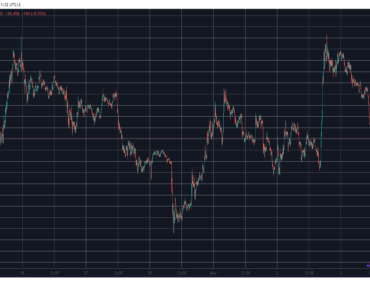
At press time, ADA was trading at $0.2590.

Featured image created with DALL.E, chart from TradingView.com
Editing process because bitcoinist is committed to delivering thoroughly researched, accurate and unbiased content. We adhere to strict sourcing standards and every page is rigorously reviewed by a team of top technology experts and experienced editors. This process ensures the integrity, relevance and value of our content to our readers.