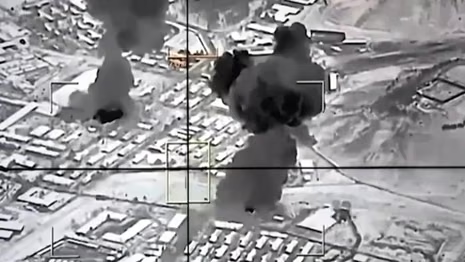
The Iranian Red Crescent says almost 20,000 civilian buildings were affected, along with 77 health centres.
Iranian authorities say several hospitals have been temporarily out of service and thousands of civilians have been affected by the ongoing war with the United States and Israel, as Tehran also steps up attacks across the region.
Speaking on state television midday Wednesday in Tehran, a spokesman for the Iranian Red Crescent said nearly 20,000 civilian buildings, including at least 16,000 residential units, have been affected after more than 11 days of war. Mojtaba Khaledi said 77 health centers were affected, but did not say how many were hospitals or whether any were directly affected.
Recommended stories
list of 3 itemsend of list
“Some of them are out of service, so we cannot admit patients to them, and in some, patients were in the surgery room or undergoing other medical operations” while they were attacked, he said, adding that 16 Red Crescent centers were affected, and staff were moved to other locations to continue rescue operations.
Khaledi was speaking in front of what the Red Crescent described as “an administrative building linked to a bank” that was attacked last night in the capital. He noted that several residential buildings in the immediate area had their windows broken or suffered additional damage.
He said 65 schools and educational facilities have also been affected across the country since the start of the war, some of them severely, but gave no further details.
The most horrific incident so far in the war is at the Minab primary school in southern Iran, where 167 people, mostly students, died on the first day of the conflict.
Iran’s military, including the Islamic Revolutionary Guard Corps (IRGC), signaled Wednesday that it now considers U.S. and Israeli banks and economic interests across the region, as well as technology companies offering military applications, as legitimate targets.
As both sides emphasize that they are prepared for weeks, if not months, of war, the Iranian government has sought to ensure it has strong reserves of essential goods, including food and medicine, as well as contingency plans in place to import essential items.
Iranian officials have also repeatedly emphasized the civilian cost of the conflict, with Deputy Health Minister Ali Jafarian telling Al Jazeera on Tuesday that more than 12,000 people have been injured and most of the 1,250 confirmed dead so far have been civilians, including 200 children and 200 women.
The Israeli military said Monday that it has killed more than 1,900 soldiers and commanders and wounded thousands during its continued airstrikes. He has not commented on reports of civilian casualties.
Jafarian of the Health Ministry said 11 health workers were killed and 55 injured, including doctors, nurses and emergency workers. He said 29 clinical facilities were damaged, 10 are now idle and patients will be evacuated from seven other facilities across the country.
The director of the Bushehr University of Medical Sciences, Allahkaram Akhlaghi, announced on Tuesday that the Persian Gulf Martyrs Hospital in the southwestern city, where a key IRGC naval base is located, is out of service for now after shock waves from explosions caused by the US strikes “damaged parts of the facility.”
The patients were taken to a nearby hospital, he added. According to an update from the Ministry of Health published on Tuesday afternoon, at least 18 ambulances and 21 emergency medical centers have been damaged across the country.
He said at least 670 surgeries have been performed to save the injured. Iranian authorities have demanded action from international organizations, including the International Committee of the Red Cross, to prevent further harm to civilians.