Bitcoin bounced back above nearly $70,000 after a weekend dump into the mid-60,000s following the US-Israeli attacks on Iran and increased pressure on the energy market.
What Bitcoin data says
The recovery comes after President Donald Trump helped restore risk sentiment when he hinted that the Iran conflict could be resolved “very soon,” boosting stocks and softening oil prices along with Bitcoin prices. Brent crude fell more than 7% to around $91 a barrel, retreating sharply from Monday’s peak of $119.50.
Richard Galvin, co-founder of hedge fund DACM, told Bloomberg: “Trump’s recent comments continue to indicate that the Iran conflict is ending sooner than the market expected.” He added:
The risks are that the market will misread Trump’s remarks, or that Israel, the US or Iran will move to escalate military operations further, taking the de-escalation option off the table.
The data on the chain and derivatives show that the worst pressure of the war is decreasing, rather than starting a new phase of the bear. Glassnode describes the recovery as showing “preliminary signs of improvement” with futures open interest and perp buying picking up again as prices stabilize in the $60,000 to $70,000 range.
Related reading
What analysts say
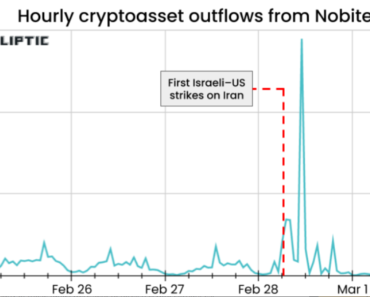
Analysts following the trend believe that the Iran episode is more like a sharp shock to positioning and liquidity than a structural change in the macro regime. CryptoQuant data cited by NewsBTC showed a surge of coins to exchanges and a jump in volatility around the February 28 shocks, followed by a rapid stabilization of BTC in early March, returning to its previous trajectory.
ETF flows remain a key pillar. U.S. spot products saw strong net inflows on days when Bitcoin rose to $70,000, indicating that institutions were buying weakness instead of dumping effects. At the same time, funding and short-term liquidation show that bears have been squeezed of late as prices have recovered key psychological levels, reinforcing the idea that traders have used the war headlines to overcome fear rather than the asset class.
Related reading
“Digital gold” and the behavior of risk assets
This is not the first time that war headlines have rocked Bitcoin, but the recent behavior is different from surrounding panics such as the start of the Russia-Ukraine war. In previous shocks linked to Iran, BTC saw more percentage declines and a steady increase in volatility; this time, the coin briefly dropped into the low 60,000s before bouncing back above $70,000 within days.
Some macro and chain analysts say the pattern supports a slowly maturing “digital gold,” noting that Bitcoin fared better than some stocks and even some traditional hedges during the recent energy shock. Others point out that crypto in general trades as a high-beta risk asset, pointing to synchronous movements with stocks when war jitters first hit, and sharp turns to classic safe havens like gold in fear of a peak.
Whatever the situation is for overall crypto sentiment, one thing remains true: the market still moves at the pace people fear around geopolitical turmoil, not the other way around.

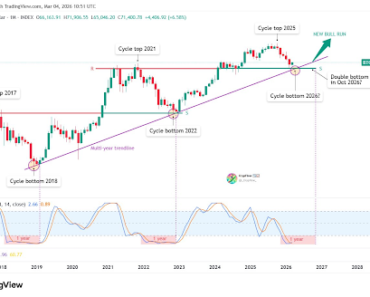
BTC's price trends to the upside on the daily chart. Source: BTCUSD on Tradingview
Cover image from Perplexity, BTCUSD chart from Tradingview