Google’s Gemini AI is deployed across the US military, strengthening the defense of AI as a structural policy and bringing Bitcoin closer to large-scale macro-tech businesses and liquidity.
Conclusion
- Google’s Gemini agents are automating the workflows of nearly 3 million Pentagon employees through the new GenAI.mil platform.
- The deal marks Google’s return to military artificial intelligence under tighter guard, alongside parallel deals with the Pentagon with OpenAI, Anthropic and xAI.
- Bitcoin and Ethereum trade as high-beta expressions of an AI-tech liquidity complex, not as separate “crypto” stories.
According to a new report in Bloomberg, Google wants to plug its AI directly into the everyday vehicles of the US military, and markets should see it as structural, not cosmetic. Alphabet’s Google is rolling out Gemini-based “AI agents” across the Pentagon’s nearly three million civilian and military personnel, automating routine work on unclassified systems, in what Defense Secretary Pete Hegseth calls the start of an “artificial culture shift” on the digital battlefield.
These agents are not chatbots attached to email; they are the executors of the task. Bloomberg reports that Gemini agents “can operate independently on behalf of a user who assigns them tasks,” with Emil Michael, the Pentagon’s undersecretary of defense for research and engineering, saying that deployment on unclassified networks will begin before the classification level expands. In a separate blog post, Google vice president Jim Kelly said the system “allows Department of Defense civilian and military personnel to build AI agents using natural language” and integrate them into workflows that include logistics, document processing and data triage. The new platform, branded GenAI.mil, is the culmination of a $200 million contract that Google Cloud won last year to provide AI capabilities to the Department of Defense; Rival companies OpenAI, Elon Musk’s xAI and Anthropic have secured similar deals.
The partnership is based on two pillars: scope and doctrine. The scale is clear – three million potential users, military and civilian, with Hegseth arguing that “the future of war in America is upon us and it’s driven by AI,” as the software helps the military “rapidly analyze video and imagery.” The doctrine is softer, but more consequential: with the persistence of GenAI.mil as a system of record, the Pentagon shows that AI is no longer an experiment, but a basic assumption for planning, targeting, procurement and administration. This comes after years of controversy. In 2018, thousands of Google employees protested its work on Project Maven, a Pentagon program that used AI to analyze drone footage, forcing the company to cancel the contract; The new deal shows that management is now ready to go on the defensive under tighter guards and clearer messaging.
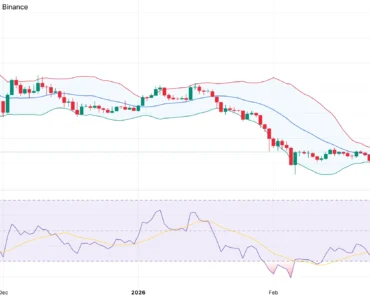
For crypto markets, partnerships are important as a macro signal and market structure, not because blockchains sit inside the deal. Bitcoin is around $70,400 in the last 24 hours, up about 3.5%, while Ethereum is hovering around $2,059 for a daily gain of about 2.9%, moving in tandem with the big-cap technology as investors return to long-term growth stories tied to AI. As defense spending, AI, and big tech merge into a single policy complex, BTC increasingly trades as a high-beta expression of the same liquidity expectations and discount rate, rather than a distinct “crypto” statement.