The head of the International Energy Agency says the talks are aimed at assessing conditions as the US-Israel war against Iran fuels global uncertainty.

Posted on March 10, 2026
The International Energy Agency (IEA) will hold an emergency meeting to assess the situation in the Middle East as the US-Israel war against Iran continues to roil global energy markets.
Fatih Birol, the agency’s executive director, said representatives of IEA member states would meet on Tuesday to assess “the current security of supply and market conditions” amid the conflict.
Recommended stories
list of 3 itemsend of list
“I have called an extraordinary meeting of IEA member governments, which will take place later today to assess current security of supply and market conditions to inform a subsequent decision on whether to make emergency stocks of IEA countries available to the market,” Birol said.
This week, oil prices hit their highest levels since mid-2022 amid concerns about prolonged war-related shipping disruptions and a reduction in output from some key producers in countries that have been targeted by Iranian retaliatory attacks.
While the market reversed late on Monday, with benchmarks falling below $90 a barrel, uncertainty remains over how long the war between the United States and Israel will drag on.
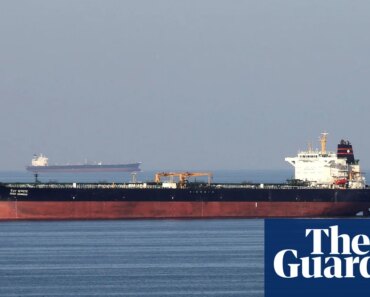
The Strait of Hormuz, a critical Gulf waterway through which about a fifth of the world’s oil supplies pass, has been effectively closed as a result of the war.
“If this drags on, it won’t just be energy prices” that will be affected, explained Al Jazeera’s Osama Bin Javaid. “It’s going to have an impact on global economies.”
Bin Javaid noted that the extraordinary IEA meeting comes after Group of Seven (G7) countries met to discuss possible actions to help stabilize global energy markets.
European governments have been nervous about the prospect of a repeat of the energy crisis they faced in 2022, when prices hit record peaks after Russia’s large-scale invasion of Ukraine.
“The IEA will present an in-depth analysis of the pros and cons of releasing reserves now,” European Union Energy Commissioner Dan Jorgensen said ahead of the agency’s meeting.
Earlier on Tuesday, G7 energy ministers stopped short of deciding on releasing strategic oil reserves in a call, instead asking the IEA to assess the situation before acting.
“Everyone is ready to take measures to stabilize the market, including the United States,” French Finance Minister Roland Lescure told reporters after the latest talks.
“We have asked the IEA to develop scenarios for a possible release of oil reserves; we must be prepared to act at any time,” he added.
EU leaders will also discuss competitiveness, including energy prices, in a call later in the day with German Chancellor Friedrich Merz, Italian Prime Minister Giorgia Meloni, Belgian Prime Minister Bart De Wever and others.