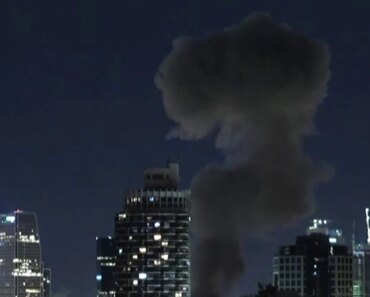
Beirut, Lebanon – After holding fire for more than a year, Hezbollah last week launched a volley of missiles and drones at an Israeli military site in the northern city of Haifa.
The Lebanese group said the attack was in response to the February 28 assassination of Iran’s supreme leader, Ayatollah Ali Khamenei, on the first day of the United States-Israeli war on Iran. Iran is Hezbollah’s main benefactor.
Recommended stories
List of 3 itemsEnd of list
Since then, Israel has carried out intense air operations in Lebanon, killing nearly 500 people, including 83 children, and forcing half a million people from their homes. It launched a new ground offensive in the south of the country, ordering troops to “take control of additional strategic positions,” opening a new front in a regional war prompted by attacks on Iran.
But as regional tensions rise, military experts and analysts say the Israeli escalation and the resumption of fighting by Hezbollah are complicating the Lebanese government’s efforts to disarm Hezbollah.
After more than a year of fighting under the terms of a 2024 ceasefire agreement between Hezbollah and Israel, Israeli forces were to withdraw from southern Lebanon and the group’s fighters were to move north of the Litani River, which runs through the south of the country.
Both sides would cease attacks and the south would be handed over to the Lebanese Armed Forces (LAF) – despite Israel violating the ceasefire more than 10,000 times, according to United Nations peacekeepers, targeting Hezbollah targets across the country and killing more than 100 civilians.
Analysts say the more controversial issue of Hezbollah’s role in Lebanon cannot come before the end of the war in the country, due to active fighting and its potential impact within LAF ranks. Such a solution is considered highly correlated with US and Israel’s war on Iran.
“If there is an Israeli occupation, the army cannot arrest anyone who opposes the Israelis on their own land,” Hassan Jouni, a retired Brigadier General of the LAF, told Al Jazeera.
Israeli soldiers on Lebanese soil
Hezbollah’s decision to enter the fray reportedly took much of the Lebanese political establishment by surprise.
The government, which approved the LAF disarmament plan in August 2025, immediately declared the group’s military activities “illegal”, while Prime Minister Nawaf Salam called Hezbollah’s move a “strategic mistake” in an interview with the Lebanese newspaper L’Orient-Le Jour.
Reuters news agency reported that Parliament Speaker Nabih Berri, a longtime ally of Hezbollah, was surprised by the move after receiving “assurances” from Hezbollah that Israel would not retaliate against an attack on Iran.
A week after the resumption of fighting, the conflict shows no signs of slowing down.
A Lebanese military source told Al Jazeera that Israeli ground forces are in several locations, mostly in unpopulated land a few kilometers (miles) from Lebanese territory. Information gathered by conflict monitor ACLED showed Israeli forces engaged in clashes with Hezbollah fighters in villages in the central and eastern sectors of southern Lebanon.
Multiple analysts told Al Jazeera that the Israeli army’s presence in southern Lebanon would make the army’s job of disarming Hezbollah impossible, mainly because any occupation would lead to new forms of resistance – be it from Hezbollah or another group.
“No one can implement the government’s decision (to enforce the illegality of Hezbollah’s military actions),” said Qassem Kassir, a Lebanese analyst close to Hezbollah. “And today there is an Israeli occupation. Everyone becomes part of the resistance.”
For years, Hezbollah was considered Lebanon’s most capable fighting force. Formed in the early 1980s with considerable support from Iran’s Islamic Revolutionary Guard Corps (IGRC), it grew into a regional actor, with members deployed in countries such as Syria and Yemen.
Meanwhile, the LAF has faced severe financial struggles that have led to defections and soldiers working second jobs. Still, according to the 2024 Arab Barometer report, 85 percent of Lebanese citizens say they have a high level of trust in the army.
The LAF has proven that it can be an effective fighting force when called upon. Joseph Aoun, now Lebanon’s president, led the LAF in operations against ISIL (ISIS) and other armed groups along the Lebanon-Syrian border in 2017.
“It is a solid organization, and it has considerable combat capabilities, especially with regard to special forces,” Jouni said.
Still, multiple sources told Al Jazeera that the army could not directly confront Hezbollah because there was no political consensus in the country and any such confrontation could lead to internal strife.
During the Lebanese Civil War from 1975 to 1990, the Lebanese Army split along sectarian lines. Various sources told Al Jazeera that such a scenario could repeat itself if the LAF confronts Hezbollah, with Shiite members defecting rather than fighting with relatives.
“You cannot rely on them in a confrontation with Hezbollah,” Jouni said. “First, this confrontation will inevitably lead us to a very violent civil war.”
Army sources said that public demand on LAF currently falls into two groups.
“The first team wants the army to confront Hezbollah,” the source said. “And that could split the army, which has a considerable Shia contingent,” the source added.
“The army on the other hand wants to fight Israel, and that is suicide.”
Like the Israeli army, the LAF is primarily funded and equipped by the US. But the US provides billions of dollars to Israel’s military and better equipment to the LAF, creating a disparity between the two national armies.
Attacks and checkpoints on the encounter
While the division over Hezbollah’s weapons may not be relevant, the question of the army’s strength remains.
Hezbollah is well trained in street warfare and insurgency warfare tactics. He also has experience fighting on behalf of former President Bashar al-Assad’s forces in Syria and against Israel in southern Lebanon.
On the other hand, the LAF is better suited for special operations, Zuni said. “It’s not geared towards chasing down Hezbollah members on the streets of Lebanon,” he said. “That weakens the army.”
Instead, the LAF focused on stopping people with approved weapons at checkpoints, various sources told Al Jazeera. That includes members of Hezbollah.
Seth Krumrich, a retired US Army colonel who worked with the LAF during his time as former head of Special Operations Command Central, told Al Jazeera that the Lebanese army was unlikely to confront Hezbollah battalions directly.
“At best, we can expect arrest warrants and raids,” Krumrich said. “But foot soldiers don’t fight head to head.”
However, with the current security situation, it is impossible to disarm Hezbollah, experts said. First, Hezbollah fighters, particularly its elite Radwan Force, have engaged Israeli forces on Lebanese territory. And secondly, even if the LAf is focused on areas where there are no conflicts, it will be a logistical nightmare.
A military source said most of Hezbollah’s weapons are too dangerous to penetrate in the deep valleys north of the Litani River. It was here that Hezbollah was to be disarmed in the second phase of the LAF disarmament project – between the Litani and Avali rivers.
Sources said the risk is even higher as Israel continues to attack those areas and soldiers have been killed by Israeli attacks during the ceasefire.
For now, disarmament will have to take a back seat until the fighting subsides, with the people of the country watching closely to see how the conflict and wider regional war plays out.
(tags to translate) Features