As oil prices rose amid the escalating war with Iran, Donald Trump said Monday that the conflict could end “very soon” and threatened even more aggressive action if Tehran took steps to cut off global energy supplies.
During back-to-back appearances in Florida, Trump said the United States had taken a “little excursion” to the Middle East “to get rid of some evil,” but suggested the war, now in its second week, was ahead of schedule and nearly over.
However, as the economic cost of the joint US-Israeli operation deepened, Trump suggested the US could take the extraordinary step of lifting oil sanctions against “some countries” to lower prices. The US Treasury has already issued a 30-day waiver allowing India to buy Russian oil from tankers stranded at sea.
Speaking to reporters, Trump said the United States would not allow Iran to “hold the world hostage” for oil.
“We will hit them so hard that it will not be possible for them, or anyone who helps them, to take back that section of the world if they do anything,” the US president said.
Trump was also asked whether the United States would accept responsibility for an attack that hit an Iranian elementary school, killing dozens of people, many of them children, after video evidence showed a U.S. Tomahawk hit the adjacent naval base.
In response, the president suggested, without evidence, that the bombing had been carried out by Iran or “someone else.”
“It’s something I’m told is under investigation, but others use Tomahawks,” Trump said. “As you know, many other nations have Tomahawks. They buy them from us.”
A video published by the Iranian news agency Mehr and geolocated at the site by the research collective Bellingcat, combined with other evidence from the site, indicates that the primary school in Minab was hit during a series of attacks by the United States, while targeting an adjacent Islamic Revolutionary Guard Corps (IRGC) naval complex. Munitions experts have told The Guardian that the missile shown in the video is clearly a Tomahawk, which is only used by the United States in the current conflict.
When asked by a reporter why he had suggested that Iran was responsible (a claim no one else in his administration had made), Trump responded: “Because I just don’t know enough about it.”
The attack demolished about half of the school and killed dozens of girls between the ages of seven and 12 who were attending morning classes.
Trump said Monday that he was “willing to live” with “whatever” the investigation concludes.
During his appearances on Monday, Trump boasted about the success of Operation Epic Fury, which the United States launched on February 28 alongside Israel.
“We’ve already won in many ways, but not enough,” he said in remarks to House Republicans holding their annual legislative retreat at the president’s golf course in Miami.
“We press forward, more determined than ever to achieve the definitive victory that ends this long-standing danger once and for all.”
Trump dismissed criticism from some Democratic officials that his administration lacked grounds for US-Israeli military action against Iran.
“I’ll give you the best reason of all,” he said. “In a week they would have attacked us 100%. They were ready.”
However, the president did not offer any new evidence to support the claim that the United States acted preemptively to prevent an imminent attack, but said that Iran had “all these missiles, many more than anyone thought.”
Trump later told reporters that he believed Iran was going to attack the United States, based on information he had received from his Secretary of Defense, Pete Hegseth, his Secretary of State, Marco Rubio, and special envoys Steve Witkoff and Jared Kushner. Kushner is Trump’s son-in-law.
“I thought if we didn’t do this when we did, I think they had it in mind to attack us,” Trump said.
The Trump administration has struggled to define the reasons for the war, providing varied and sometimes contradictory explanations to the American public and Congress, ranging from the nuclear threat to regime change.
Trump declined to directly answer whether Mojtaba Khamenei, the country’s newly appointed supreme leader, had a “target on his back.” He again expressed his disappointment with the selection of Khamenei, the son of Ayatollah Ali Khamenei, who was killed in the US and Israeli attacks on Tehran last week.
Trump had previously dismissed the younger Khamenei as a “lightweight” and recently called the selection a mistake.
“I don’t know if it’s going to last,” he told NBC News.
At the beginning of the war, Trump urged Iranians to “seize this moment, to be brave, to be bold, to be heroic, and to take back your country.” Israel has said it will attack Iran’s new supreme leader.
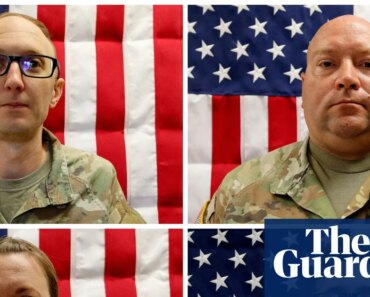
In his remarks Monday, the president briefly recounted his exchange with families of soldiers killed during the war with Iran while attending a dignified transfer ceremony at Dover Air Force Base this weekend.
“They all told me one thing,” Trump said the families had told him: “‘Make sure you win, sir. Make sure you win.'”