Europe “can no longer be the guardian of the old world order” and needs “a more realistic and interest-based foreign policy”, the head of the European Commission has said.
Speaking to an audience of EU ambassadors on Monday, Ursula von der Leyen said the union would “always defend and maintain the rules-based system” but could no longer rely on it to defend European interests and protect the continent from threats.
He added: “We urgently need to reflect on whether our doctrine, our institutions and our decision-making – all designed in a post-war world of stability and multilateralism – have kept pace with the speed of change around us. Whether the system we built – with all its well-intentioned attempts at consensus and compromise – is more of a help or a hindrance to our credibility as a geopolitical actor.”
Von der Leyen, a former German defense minister who pledged to lead a “geopolitical” commission when she took office in 2019, has faced criticism in recent days for her handling of the Iran war.
A prominent MEP and former French minister, Nathalie Loiseau, last week rebuked von der Leyen for her telephone diplomacy with Gulf leaders after the US and Israeli attacks on Iran, accusing the commission president of usurping the role of EU foreign policy chief Kaja Kallas.
In particular, in the early days of the war, von der Leyen said that “a credible transition in Iran” that went beyond Kallas was urgently needed.
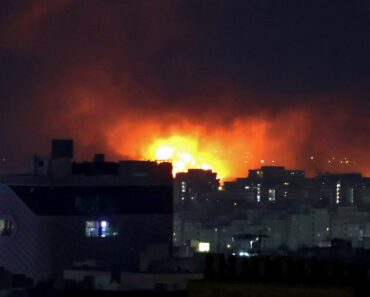
On Monday, von der Leyen avoided criticism of the United States and Israel for starting the war, saying the debate over whether the conflict was “a war of choice or a war of necessity” was one that “somewhat misses the point.” He said no one would shed tears for a regime that had “massacred 17,000 young people,” a reference to the most recent crackdown that some independent experts believe killed many more. He also said Iran had caused devastation and destabilization across the region.
He also noted that a regional conflict was developing with “unintended consequences,” with indirect effects affecting energy, finance, trade, transportation and causing mass displacement of people.
In a separate announcement, von der Leyen pledged EU humanitarian aid for 130,000 people in Lebanon and expressed concern about the impact of the conflict on Israel’s northern neighbor, where half a million people have been left homeless in recent days following Israeli bombings and evacuation orders.
Von der Leyen and European Council President António Costa held talks Monday via video conference with leaders and senior ministers from Armenia, Bahrain, Egypt, Iraq, Jordan, Kuwait, Lebanon, Oman, Qatar, Saudi Arabia, Syria, Turkey and the United Arab Emirates in what Brussels called a show of solidarity.
In an EU statement after those talks, von der Leyen and Costa “expressed openness” to enhancing defensive maritime operations Aspides and Atalanta, which aim to protect waterways and prevent disruption to supply chains in and around the Red Sea.
Aspides was created in 2024 after Houthi rebel attacks on international shipping. Atalanta was created in 2008 to counter Somali pirates in the Horn of Africa, but its mandate has expanded.