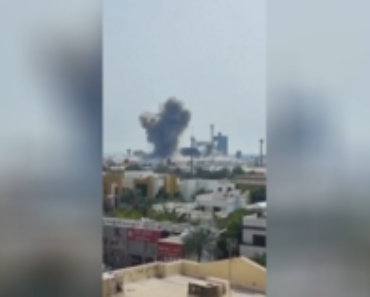
Israel hit oil facilities in Tehran overnight, triggering massive explosions, as Iran targeted infrastructure in Bahrain and Kuwait as the Middle East conflict entered its ninth day.
Adrian MA, Host:
Today is the ninth day of the war. The US military says another service member has died, bringing the death toll to seven Americans. And Iranian state television says its religious leaders have chosen a new supreme leader, Mojtaba Khamenei, son of the late ayatollah. Meanwhile, Israel’s military told NPR that it will take another three weeks to achieve its military goals in Iran. To unpack all this, we now have NPR’s Daniel Estrin on the line from Tel Aviv. And Daniel, could you start by telling me what this Israeli military officer told you about Israel’s plans for Iran?
DANIEL ESTRIN, BYLINE: This is a senior Israeli defense official at the Directorate of Military Operations, so he’s at the headquarters that plans Israeli military strategy in this war, speaking on condition of anonymity to discuss military plans. The goal, he said, was to destroy Iran’s military forces, so the army, navy and military industries. And Israel believes it needs three more weeks to achieve that goal, the official said, which is to destabilize the Iranian regime so that it collapses.
Now, about three weeks – that’s Israel’s timeline. We don’t know what President Trump’s timeline is. And this officer told me that Israel is fighting every day as if it could be the last day of war. As they say, you never know when President Trump wakes up tomorrow and it’s mission accomplished. Let’s build it. Prime Minister Benjamin Netanyahu spoke this weekend and said Israel still has many goals and surprises. And this weekend we saw one of those surprises. Israel targeted Iran’s oil facilities for the first time in the war.
MA: Wow. So it really seems like Israel is moving forward with or without the US and targeting oil facilities really seems like a kind of new chapter in the war. Can you explain why that is important?
Estrin: Yes. Well, Israel has so far, targeted Iranian military officials, military facilities, missile launches. This is the first time Israel has targeted a civilian oil facility in Iran. The army says it is a legitimate target. It says the Iranian military has literally used oil as fuel to launch missiles toward Israel and the region. In Iran, the Associated Press published footage of pillars of fire in the night sky from these Israeli strikes, and reports of a literal rain of oil in Tehran today — oil-saturated raindrops falling on the city.
We also saw in the Gulf, Iran accused of targeting a desalination plant in Bahrain. That’s really important. This area really depends on desalinated water for its drinking water. So we are seeing the Gulf being dragged deeper into this war. And in Lebanon, as Israel battles Hezbollah, two Israeli soldiers were killed this weekend and more than half a million people were displaced from their homes, Lebanese officials say.
MA: So those are some scenes from Lebanon and Iran. You are now in Israel. What does it feel like there?
Estrin: It’s so surreal because things are getting back to normal, so you’re opening restaurants and workplaces and malls. But Iran still fires missiles multiple times a day or in the middle of the night. So you’re in your apartment building, you’re on the street, everybody gets an alert on their phone that a missile is coming. It’s about five minutes of advance warning, and then you see people walking through the streets towards the underground bunker. It is very quiet. People are quiet, but you hear these booms. And the missile, this afternoon, hit just minutes from me in Tel Aviv, just off the coast. And yet in Israel, public opinion polls show overwhelming support for war with Iran.
MA: That’s NPR’s Daniel Estrin in Tel Aviv. Thanks, Daniel.
Estrin: Thank you very much, Adrian.
Copyright © 2026 NPR. All rights reserved. For more information visit our Website Terms of Use and Permissions pages at www.npr.org.
Accuracy and availability of NPR transcripts may vary. Transcript text may be revised to correct errors or accommodate updates to the audio. Audio on npr.org may be edited after its original broadcast or publication. The official record of NPR’s programming is the audio record.