Iranian missiles and drones continue to target Gulf countries, and Bahrain’s state oil company declared force majeure on its shipments on Monday after its refinery caught fire in an Iranian attack.
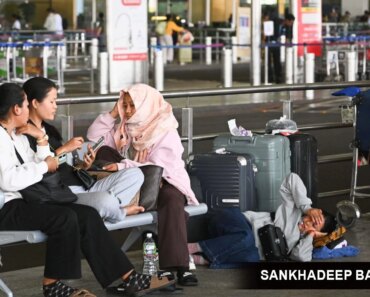
Gulf airspace has been closed and oil production and supplies have been disrupted after Iran attacked US assets located in Gulf countries in retaliation for US and Israeli attacks on the country since February 28.
Recommended stories
list of 3 itemsend of list
Bahrain’s state energy company Bapco declared force majeure after waves of Iranian attacks targeted its energy facilities.
Bapco “hereby notifies force majeure on its group operations which have been affected by the ongoing regional conflict in the Middle East and the recent attack on its refinery complex,” the company said in a statement on Monday.
Saudi Arabia intercepted four drones heading to the Shaybah oil field, while the United Arab Emirates, Qatar and Kuwait reported missile attacks.
On Sunday, at least two people were killed and 12 injured after a projectile landed in a residential area of al-Kharj governorate in Saudi Arabia.
Al Jazeera’s Mohammed Jamjoom, reporting from Doha, said the alerts were issued around 3:15 a.m. local time (00:15 GMT).
“A few minutes after that, we started hearing the sound of explosions due to interceptor missiles countering the missiles coming from Iran. We heard the sound of around 12 to 13 explosions,” he said.
“In Bahrain, at least 32 citizens, including children, were injured in an Iranian drone attack in Sitra, an area south of the capital Manama, according to state media. In the United Arab Emirates, it has been another busy night and morning countering the attacks, and the Ministry of Defense said air defenses were responding to incoming missile and drone threats from Iran.
“We also know that there was a fire in the Fujairah oil industrial zone that was the result of falling debris from an intercepted drone,” Jamjoom said.
Meanwhile, Saudi Arabia lashed out at Iran, calling its attacks on the kingdom and its Gulf neighbors “reprehensible.”
Saudi Arabia “renews the categorical condemnation of the Kingdom of Saudi Arabia of the reprehensible Iranian aggressions against the Kingdom, the States of the Gulf Cooperation Council, a series of Arab and Islamic countries and friendly nations, which cannot be accepted or justified under any circumstances,” reads the statement published on the official X account of the country’s Ministry of Foreign Affairs.
Qatari Prime Minister Sheikh Mohammed bin Abdulrahman bin Jassim Al Thani urged all parties to de-escalate tensions in an interview with Sky News.
“We will continue talking to the Iranians, we will continue trying to seek a reduction in tension,” the prime minister said.
He described the attacks on Qatar as a “great sense of betrayal” by Iranian leaders.
“Perhaps just an hour after the start of the war, Qatar and other Gulf countries were immediately attacked,” Sheikh Mohammed said, adding that the attack took place despite statements by several countries in the region that they would not participate in any war against Iran, and despite concerted efforts to find a diplomatic solution.
New supreme leader
Israel launched a new wave of attacks on Monday, targeting infrastructure in central Iran after Mojtaba Khamenei was named successor to his late father, Ayatollah Ali Khamenei, who was killed on February 28 in joint US-Israel strikes. The country’s leading political figures have pledged loyalty to the new supreme leader.
At least 1,255 people have been killed and thousands injured in Israeli and American attacks across Iran. On Sunday, Israel bombed multiple oil facilities in Iran for the first time during the conflict.
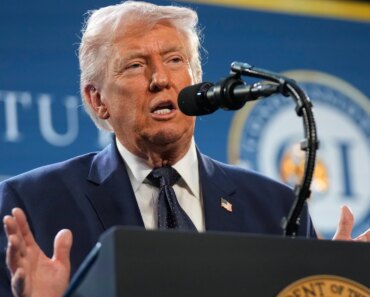
US President Donald Trump, who had previously called Mojtaba Khamenei a “lightweight”, insisted on Sunday that he should have had a say in the appointment of a new leader.
Israel’s Defense Minister Israel Katz warned last week that the new supreme leader would become “a target”, while the military vowed to pursue any successor.
As Iran retaliates against its oil-rich Arab Gulf neighbors, the benchmark price of a barrel of crude oil has soared beyond $100 for the first time since Russia’s invasion of Ukraine four years ago.
Trump dismissed the price hike, a politically sensitive issue in the United States, as a “small price to pay” for eliminating the perceived threat of Iran’s nuclear program.
Rafael Grossi, head of the International Atomic Energy Agency, has stated that while Iran continues to enrich uranium to high levels, there is currently no evidence or indication of a systematic and ongoing program to produce a nuclear weapon.
In a sign that the United States does not expect a quick end to the war, the State Department ordered non-emergency personnel to leave Saudi Arabia, days after a drone attack on the US embassy.
As questions arise about the length of the war, Trump told The Times of Israel that any decision on when to end hostilities will be a joint decision with Israeli Prime Minister Benjamin Netanyahu.
“I think it’s mutual… a little bit. We’ve been talking. I’ll make a decision at the right time, but everything will be taken into account,” Trump said, in response to a question about whether he alone will decide.
The multi-front war intensified in Lebanon on Monday, when the Iranian-backed Lebanese group Hezbollah said it was confronting Israeli forces who landed in eastern Lebanon in 15 helicopters across the Syrian border.
Lebanon was drawn into the Middle East war last week when Hezbollah attacked Israel in response to the assassination of Ali Khamenei.
Lebanon’s state-run National News Agency earlier reported “fierce clashes” around the town of Nabi Chit, where an Israeli operation over the weekend killed 41 people.
Israel had attacked a hotel in central Beirut on Sunday, targeting five commanders of the Hezbollah-sponsor International Quds Force of the Islamic Revolutionary Guard Corps, as they met at a Beirut hotel.
According to the latest estimates, at least 390 people have been killed in Lebanon and more than 1,000 injured since the US-Israel war against Iran began on February 28.
In Israel, Iranian missile attacks have killed at least 10 people and injured nearly 2,000.