Mojtaba Khamenei has been confirmed as the new supreme leader of Iran – only the third in its history.
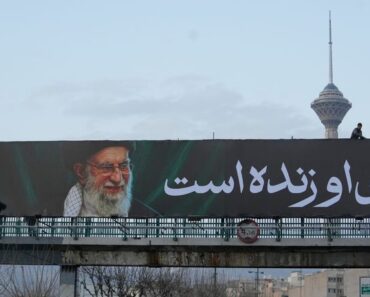
The 56-year-old succeeds his father, Ayatollah Ali Khamenei, who was killed in his Tehran compound on the first day of the war. He was the supreme leader for more than 37 years before his death.
Mojtaba was not there, and therefore survived, but his mother, wife and daughter were killed.
Iran War Latest Live Blog Updates
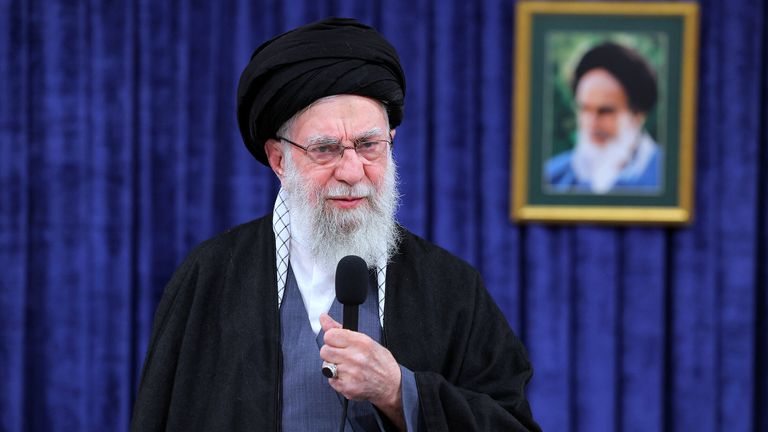
Ayatollah Khamenei led Iran from 1989 until his death in an Israeli airstrike.
The supreme leader is chosen by an assembly of experts, a body of 88 Islamic scholars chosen for their loyalty to the regime.
The building it meets was leveled in an air raid but it is thought none of them were there at the time.
Little is known about Mojtaba Khamenei.
He is the second eldest son of Ayatollah Ali Khamenei and has kept a low profile over the years, rarely speaking in public or attending Friday prayers.
The 56-year-old is a hardline conservative who served in the Habib Battalion of the Islamic Revolutionary Guard Corps (IRGC) during the Iran-Iraq War in the 1980s and has been associated with violent suppression of protests in his country.
His time in the IRGC helped build influential contacts with men who now hold senior positions in the country.
Tara Kangarlou, author of The Heartbeat of Iran, told Sky News that Mojtaba Khamenei “has a lot of power in the IRGC apparatus; he has his hands in every infrastructure you can imagine in Iran: so a lot of money, power and influence”.
Khamenei is under US sanctions but has reportedly amassed a valuable empire of properties around the world, including in London.
Unlike his father, who was a noted intellectual, student of Persian poetry, and powerful orator with a following within Iran, Khamenei did not have a strong reputation in the country before becoming supreme leader.
The position of supreme leader is not just the ultimate authority IranHe (and it is always man) is the guardian of the Islamic Republic.
Although Khamenei studied in the holy city of Qom, he was a mid-ranking cleric, not a senior ayatollah.
By inheriting the role, the assembly of experts created a dynasty – not unlike a monarchy.
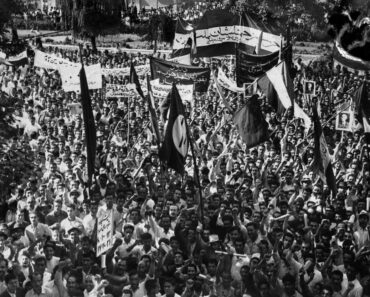
But Iranians don’t like dynasties: they overthrew the Qajar dynasty in 1925 and the Pahlavi monarchy in 1979.
Read more:
The strategy behind the US-Israeli attack
A Royal Navy destroyer will arrive in Cyprus late
Although Khamenei wielded influence in the inner circles of Iranian politics, he never held public office or was elected to any government role.
In 1989, when her father became supreme leader, she worked in his offices and became his “principal gatekeeper” and “power behind the outfit”, according to US diplomatic cables published by WikiLeaks.
They are close to the IRGC and that is important because they play a key role in their recruitment and this means the hardliners retain some power – which does not bode well for negotiations to end the war.