US President Donald Trump has again vowed to exert influence over who is chosen as Iran’s next Supreme Leader, saying that without Washington’s approval, whoever is chosen for the position “won’t last long.”
Sunday’s statement came just hours after a member of Iran’s Assembly of Experts said the clerical body had selected a replacement for Ayatollah Ali Khamenei, who was assassinated hours after the United States and Israel launched war against Iran on February 28.
Recommended stories
list of 3 itemsend of list
“He’s going to have to get our approval,” Trump told ABC News, referring to the new supreme leader. “If it doesn’t get our approval, it won’t last long.”
Trump added that he did not want future administrations to have to “step back” in the years to come, in apparent reference to future military actions.
“I don’t want people to have to come back in five years and have to do the same thing again, or worse yet, let them have a nuclear weapon,” he said.
Officials in Iran, which has launched retaliatory attacks across the Middle East, have repeatedly rejected the idea that Washington exerts influence over the selection.
Earlier on Sunday, Iranian Foreign Minister Abbas Aragchi again pledged that “we will not allow anyone to interfere in our internal affairs.”
“It is up to the Iranian people to choose their new leader,” he said, adding that Iranians had elected the Assembly of Experts, which will choose the next supreme leader.
Oman says nuclear talks were ‘making progress’
Trump’s comments came as the war entered its ninth day, with the death toll in Iran rising to 1,332, with at least 11 dead across the Gulf, 11 dead in Israel and six US soldiers killed to date.
The US president has offered shifting justifications for the war, repeatedly pointing to Iran’s nuclear ambitions, its ballistic missile program, as well as the entirety of Iran’s actions in the region since the 1979 Islamic Revolution.
Critics, including most Democratic U.S. lawmakers, have said Trump has provided little evidence to show that Iran poses an immediate threat.
On Sunday, Omani Foreign Minister Badr Albusaidi, who had been overseeing indirect talks between the United States and Iran over Iran’s nuclear program, again rejected claims by American officials that Tehran had not entered into the negotiations in good faith.
During an Arab League ministerial meeting, Albusaidi said diplomatic initiatives seeking a “just and honorable solution were moving forward” when the attacks between the United States and Israel began.
He also warned that the region faces “a dangerous turning point” as fighting intensifies.
‘Short-term disruption’
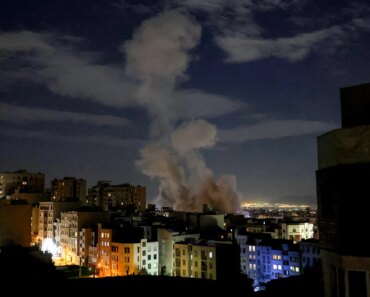
Attacks by both sides appeared to have expanded, with the United States and Israel first attacking oil refining and storage facilities in Tehran, and Iran launching more attacks across the Gulf, including a drone strike that caused material damage to a desalination plant in Bahrain.
Both Bloomberg and Axios News have reported that the United States and Israel have considered a special ground operation to seize Iran’s enriched uranium, and Israeli Ambassador to the United States Yechiel Leiter told CBS’ Face the Nation news program that securing the nuclear fuel is “on our radar screen and we’re going to take care of it.”
For their part, senior Trump administration officials spent Sunday trying to ease concerns about the war’s effects on global oil and gas prices.
The rapid rise in prices represents a particular political vulnerability for Trump as his Republican Party faces midterm congressional elections in November.
Speaking to Fox News, White House spokeswoman Karoline Leavitt said the administration was responding to what she called a “short-term disruption.”
He said the administration was “taking advantage of our new market in Venezuela,” referring to the access that American companies had gained to the South American country’s oil industry in the wake of the Jan. 3 kidnapping of Venezuelan leader Nicolás Maduro by the United States.
Energy experts have said rebuilding Venezuela’s oil industry would likely be a multi-year process and have questioned what immediate impact it could have in offsetting current shortages.
Speaking on CBS’ Face the Nation, Energy Secretary Chris Wright also maintained that the war would not be prolonged and that any economic consequences would be temporary.
Trump, who took office promising to end so-called “endless wars,” has said operations against Iran could last “four to five weeks” but also said the conflict “has no time limit.”
Wright noted “a temporary period of high energy prices” but denied there were any energy shortages “at all in the Western Hemisphere.”
He also stressed that the United States has 400 million gallons of oil in strategic reserves and the administration is “more than happy to use them if necessary.”
“What you want is emotional reactions and fear that this is a long-term war,” Wright said. “This is not a long-term war; it is a temporary move.”