As President Donald Trump uses American military force abroad, his calculation has been that he can launch military operations with the loss of few American lives and minimal disruption to the economy.
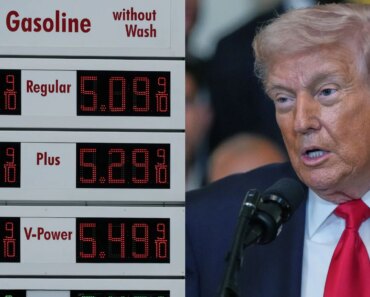
Six Americans have already died. Gulf allies are under attack. The stock market faltered. Gas prices are rising. The US military spends, by some estimates, hundreds of millions of dollars a day. In Iran, an airstrike on a girls’ elementary school killed 175 people, according to local health officials and Iranian state media, and the Trump administration says it is investigating who was responsible.
While no US ground troops have yet been sent to Iranian soil, the administration has not ruled out deploying soldiers. Defense Secretary Pete Hegseth suggested Wednesday that the conflict may not be short.
“We’re accelerating, not slowing down,” Hegseth told reporters, adding, “More bombers and more fighters are arriving today.”
Before deciding to launch a new round of missile strikes against Iran that began Saturday, Trump had been emboldened by what his administration sees as a series of rapid military achievements.
Story continues below this ad.
Under Trump’s leadership, the US military captured Venezuelan President Nicolás Maduro in a quickly executed operation; attacked Iran’s nuclear facilities in a surprise attack; attacked Houthi militants in Yemen; blew up a succession of suspected drug trafficking ships in the Caribbean; and bombed targets in Iraq, Nigeria and Somalia as part of counterterrorism operations.
All of these operations were carried out quickly and, in the administration’s opinion, successfully, with little cost to American lives or the treasury.
But the war that the United States and Israel have launched against Iran risks going beyond those quick-strike operations, particularly if the administration becomes even more involved in regime change.
Story continues below this ad.
Rep. Jason Crow, D-Colo., a former Army Ranger who served in Iraq and Afghanistan, warned Wednesday that the United States was headed down the same path of endless war that he had seen firsthand and that Trump had campaigned against.
“After trillions of dollars, thousands of American lives, decades of endless conflict, my entire adult life, a quarter century of American war, here we go again,” Crow said. “Donald Trump campaigned on ending wars because he knew at the time that that’s what Americans wanted, and still want, and yet here we go again.”
Trump has encouraged the people of Iran to “take control” of their country, but has not endorsed any specific entity to lead the fight against the government.
Since launching the attacks, Trump has spoken with Kurdish leaders but has not agreed to any plans to arm them to overthrow the Iranian government, White House press secretary Karoline Leavitt said Wednesday.
Story continues below this ad.
“Trump is a guy who likes low costs and flashy victories,” said Jon Hoffman, a defense and foreign policy researcher at the Cato Institute. “All I hear from people in the administration and around the administration is that after Maduro, he was on top. He felt untouchable in many ways. But this is fundamentally different than Venezuela. The costs are already piling up.”
Hoffman pointed to American military deaths and rising oil and natural gas prices.
“I think natural gas prices in Europe are up about 40%, and this is only going to get worse,” he said. “These prices are going to continue to increase.”
Still, Elliott Abrams, a senior fellow in Middle East studies at the Council on Foreign Relations who worked for three Republican presidents, including Trump, said he believed there were many benefits to killing Iran’s leaders and dismantling the country’s military capabilities.
Story continues below this ad.
“The costs so far are lives lost among American service members,” he said. “I think the benefits are enormous. This regime has been trying, and at times successful, to kill Americans for more than 40 years.”
Abrams said that if Trump refuses to send ground troops, American deaths could remain low. But a decimated Iranian regime, he said, was ultimately in the interests of the United States and its allies. “Even if the remnants of the regime remain in power, they will have no nuclear program, essentially no ballistic missile program and no ability to project power in the region,” he said.
But Hoffman is not so sure, arguing that a destabilized Iran could pose a high risk to the United States and its allies.
“If indeed the plan is to start arming separatist ethnic groups and attempt to Balkanize Iran,” he said, “not only would it be a proxy war on a scale the United States has never engaged in before in the Middle East, but it would impose incredible costs on the region.”
Story continues below this ad.
In that scenario, Hoffman said, “we’re probably talking about mass flows of refugees, we’re probably talking about time and space for groups like ISIS to start taking hold.” He added: “These are groups that simply thrive on chaos. You’re opening Pandora’s box.”
This article originally appeared in The New York Times.