Over the past year, investors have learned that Donald Trump has an unlimited ability to quickly reverse course in the face of acute political or market pressures.
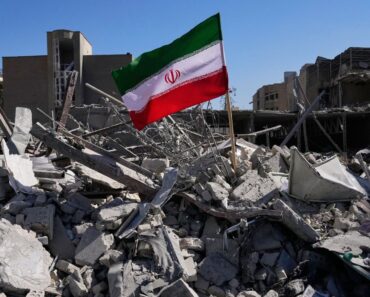
But a week after the United States and Israel launched missile attacks on Iran, there are fears that the war could turn into a protracted conflict.
In purely economic terms, the war has led to what was long considered the worst-case scenario for a conflict in the Middle East: the closure of the Strait of Hormuz, through which a fifth of the world’s oil and gas supplies pass.
Since the start of hostilities, the global oil benchmark price has risen 17% to more than $85 a barrel, sending shock waves through financial markets.
The Australian share market has been relatively shielded from the worst of the fallout, but still suffered a steep 3.8% loss over the week.
Sign Up: AU Breaking News Email
Asian markets, many of them located in countries that rely heavily on imported energy, were affected.
In South Korea, the stock market plunged 13% in a single session to record its worst day in history.
But on Wall Street, the S&P 500 index had lost less than 1% heading into its latest session Friday night.
Just another shock
As the Trump administration mulled Friday about using the U.S. strategic oil reserve to ease some of the pressure on prices, Shane Oliver, chief economist at AMP, said he was concerned that “markets are getting a little complacent.”
“The softness of the response has surprised me,” Oliver said.
“And that partly reflects the experience of last year with Trump, where there have been numerous shocks – especially around the US tariff announcements – and then we got some kind of pushback.
“Markets are assuming that there will be some kind of pullback and that this will not be a long, drawn-out war.”
The essential challenge for investors is that it is not clear why Trump decided to launch the war and, therefore, what it will take to end it.
That has left markets in a holding pattern: discounted for a sharp but relatively short conflict that will last another two or three weeks, but not months.
It is a high-risk bet, but defensible.
The fact that the Australian dollar has remained above 70 cents is testament to the relatively optimistic response to what is known as the third Gulf War.
Ray Attrill, head of foreign exchange strategy at National Australia Bank, said the Australian dollar’s resilience partly reflects the fact that Australia is a major energy exporter through our LNG and coal resources.
“With oil prices in the 80s, the underlying assumption is that oil will start traveling through the Strait of Hormuz sooner rather than later, and the big disruption won’t last too long,” Attrill said.
Bets placed in derivatives markets suggest that oil prices will return to around $60 or $70 within a month.
But a much larger and prolonged shock would cause the dollar to fall much further, Attrill said.
“If that assumption starts to be challenged, then $90 or $100 oil will start to become very viable. And in that environment, there would be a much deeper sell-off.”
The stagflationary impact of oil
An oil price shock is stagflationary, since higher fuel costs raise inflation even as they hurt growth.
It’s a dynamic that puts central bankers in a bind: raise rates to contain inflation or ease monetary policy to support the economy?
This is not the 1970s, when a doubling of the price of oil drove inflation and unemployment in Australia into double digits.
Which does not mean that there has not been and will not be any impact.
Jim Chalmers warned this week of the potential for “substantial” consequences on the local and global economy as a result of the war.
For now, the focus is on what higher oil prices mean for inflation and interest rates.
NAB economists estimate that inflation is likely to peak at around 4.75% in the year to June, or half a percentage point higher than expected before the start of the war with Iran.
This occurs with Brent crude oil prices around current levels.
They estimate that a sustained move toward $100 a barrel could push inflation above 5% and to its highest level since late 2023.
Those kinds of numbers show why investors, central bankers and politicians around the world are so obsessed with the price of oil.
Reserve Bank Governor Michele Bullock made clear on Tuesday that she was alert to the risk that rising gasoline prices entrench the view that inflation will stay high for longer, which may make it harder to bring price pressures back under control.
The RBA typically looks beyond temporary price shocks, but Bullock said it was not clear that was the right approach.
“This might be a little bit more difficult, because… we already have high inflation, and I think there’s a risk that inflation expectations become a little bit unanchored,” he said.
This time it could be different
Brett Solomon, senior portfolio manager in QIC’s fixed income team, said investors have become accustomed to geopolitical uncertainty in recent years, but this time could be different.
“In recent years, investors have seen that geopolitical headlines only last a week. We’ve seen that many, many times. So we’ve gotten used to that,” Solomon said.
“What’s different this time is that this could be longer lasting, and that could be a really big difference.”
Solomon said that for now he stood by his view that the RBA would raise its interest rate once again in May.
But he, like other investors, will be watching to see whether oil prices rise enough for long enough to prompt central bankers and investors to fundamentally reevaluate their positions.
Kerry Craig, global market strategist at JP Morgan, said “the base case for most hasn’t changed: that this isn’t going to be something that drags on for months and that the outlook for the global economy is pretty decent.”
“Really, when you change that view, it’s because you think we’re headed toward a recession now.”